Introduction: Mobility Transformation Accelerates
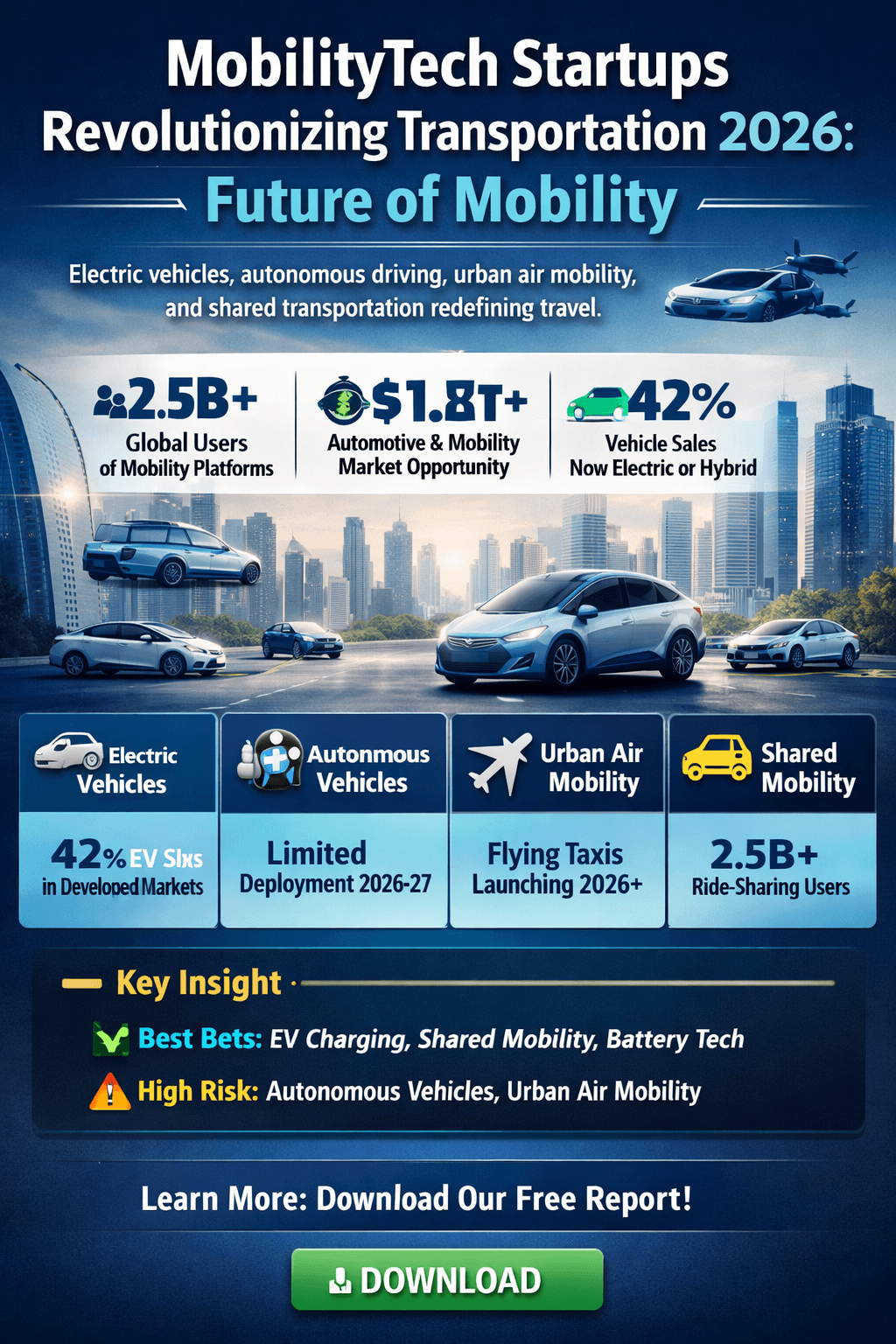
2026 establishes transportation as inflection point for mobility innovation with electric vehicles (EVs) reaching 42% of new sales in developed markets and autonomous vehicle (AV) technology transitioning from testing to limited commercial deployment. Post-pandemic mobility patterns (work-from-home normalizing 40-50% of workforces, urban congestion reduction, last-mile delivery criticality) reshaping transportation demand. March 2026 breakthrough announcements showcase maturation: autonomous truck deployments (Aurora, Waymo Trucks) achieving regulatory approval for limited routes, urban air mobility (Lilium, Joby) commencing commercial air taxi operations (2026-2027 timeline), EV adoption reaching cost parity with internal combustion (ICE) vehicles in key markets, and micro-mobility platforms (e-scooters, e-bikes) serving 500M+ daily users globally. Battery technology (cost declining 15-20% annually) and charging infrastructure (1M+ public chargers globally) enabling EV mainstream adoption. Supply chain shortages resolving (semiconductor availability improving), production scaling accelerating. Whether analyzing mobility investments, implementing fleet electrification, or seeking transportation innovation exposure, 2026's mobility landscape demonstrates how technology addresses fundamental transportation challenges—emissions, congestion, safety, and cost.
Pro Tip
👉 Key Insight: Mobility market bifurcating into four distinct segments: (1) Electric vehicles (mature, mainstream), (2) Autonomous vehicles (5-10 year timeline, still R&D heavy), (3) Urban air mobility (emerging, 3-7 year commercial timeline), (4) Shared mobility platforms (mature, consolidating). Investment returns and timelines vary dramatically by segment—EV infrastructure showing profitability, AV still speculative.
1. Electric Vehicles and EV Manufacturing
Electric vehicle startups disrupting 100-year automotive industry with manufacturing, platform, and next-generation vehicle designs achieving cost parity and performance superiority.
| EV Company | Valuation (₹ Crore) | Vehicles Delivered/Produced | Key Innovation | Price Point (USD) | Founded | Market Position |
|---|---|---|---|---|---|---|
| Tesla | ₹3,000,000+ Crore (public, market leader) | 2M+ vehicles delivered cumulatively | Vertical integration, supercharger network, autonomous features | $45,000-120,000 range | 2003 | EV market leader, profitability achieved |
| Rivian | ₹350,000+ Crore (public SPAC) | 500,000+ pre-orders, 150,000+ production target 2026 | Electric trucks and vans (adventure focus), tri-motor platform | $70,000-140,000 range | 2009 | Adventure vehicle category leader |
| Lucid Motors | ₹200,000+ Crore (Saudi PIF backed) | 200,000+ vehicles planned production | Luxury electric sedan, 500-mile range, premium positioning | $70,000-170,000 range | 2007 | Luxury EV segment, Saudis funding |
| Nio | ₹400,000+ Crore (public, China) | 600,000+ vehicles delivered | Battery swap innovation, Chinese market dominance | 40,000-80,000 USD equivalent | 2014 | China EV leader, global expansion |
| XPeng | ₹300,000+ Crore (public, China) | 500,000+ vehicles delivered | Smart EVs, autonomous features, Chinese premium market | 35,000-100,000 USD equivalent | 2014 | Chinese smart EV leader |
| BYD | ₹3,000,000+ Crore (public, China) | 3M+ NEV sold (EV+PHEV), global scale | Battery manufacturing + EV production, vertical integration | 20,000-100,000 USD equivalent | 1995 | World's largest EV manufacturer |
| Fisker | ₹100,000+ Crore | 500,000+ vehicles planned, first model Ocean | Ocean electric SUV, premium positioning, design focus | $69,990-80,000 range | 2016 | Premium EV challenger emerging |
| Geely-Volvo (Polestar) | ₹150,000+ Crore (Volvo division) | 400,000+ vehicles produced | Premium EV and performance vehicles, Volvo scale | $50,000-150,000 range | 1997 (EV focus recent) | Legacy automaker EV transition |

Electric Vehicle Transformation
2. EV Charging Infrastructure and Battery Technology
Charging infrastructure and battery technology startups enabling EV adoption through accessible charging and cost-effective energy storage.
| Charging/Battery Company | Valuation (₹ Crore) | Infrastructure/Technology | Charging Points or Technology Focus | Founded | Market Impact |
|---|---|---|---|---|---|
| Tesla Supercharger | ₹3,000,000+ Crore (Tesla division) | 50,000+ global superchargers | Proprietary fast-charging network, industry standard emerging | 2012 | Charging network scale leader |
| ChargePoint | ₹200,000+ Crore (public SPAC) | 300,000+ charging points globally | Network management and workplace/commercial charging | 2007 | Public charging network leader |
| EVgo | ₹150,000+ Crore (public merger) | 2,400+ DC fast charging stations (US) | Fast charging network focus, car-agnostic | 2010 | US DC fast charging specialist |
| Nio Power | ₹400,000+ Crore (Nio division) | Battery swap infrastructure (2,000+ swap stations China) | Battery-as-a-service model, no battery ownership | 2020 | Battery swap innovation leader |
| CATL | ₹500,000+ Crore (public, China) | Battery manufacturing, 50%+ market share | LFP battery focus, cost leadership | 2011 | World's largest battery manufacturer |
| Contemporary Amperex (CATL) | ₹500,000+ Crore | Advanced battery cell and pack | Sodium-ion batteries (emerging), LFP dominating | 2011 | Battery innovation and manufacturing |
| Solid Power | ₹80,000+ Crore | Solid-state battery development | Next-gen battery (2027-2030 production potential) | 2012 | Next-gen battery innovator |
| Eos Energy | ₹100,000+ Crore | Long-duration battery storage (10-hour+) | Iron-air batteries, grid-scale energy storage | 2014 | Grid energy storage solution |
Charging Infrastructure Transformation
3. Autonomous Vehicles and Self-Driving Technology
Autonomous vehicle startups advancing self-driving technology from testing to limited commercial deployment (trucks, robotaxis) with 5-10 year mainstream adoption timeline.
| AV Company | Valuation (₹ Crore) | Testing/Deployment | Technology Focus | Commercial Status | Founded | Timeline to Mainstream |
|---|---|---|---|---|---|---|
| Waymo (Alphabet division) | ₹1,000,000+ Crore (Alphabet division) | Robotaxi Phoenix, San Francisco; Trucks Arizona-California | Level 4 autonomy, lidar + camera + radar | Commercial limited deployment, scaling 2026+ | 2009 | 2025-2030 broader adoption |
| Cruise (GM division) | ₹500,000+ Crore (GM division) | Robotaxi San Francisco operations | Level 4 autonomous taxi, GM integration | Commercial operations suspended/restarting 2026 | 2013 | 2025-2028 scaling |
| Aurora Innovation | ₹150,000+ Crore | Autonomous trucks piloting major routes (Texas-California) | Level 4 trucking focus, partnership with OEMs | Commercial limited deployment 2025-2026 | 2017 | 2026-2030 trucking transformation |
| Tesla FSD (Full Self-Driving) | ₹3,000,000+ Crore (Tesla division) | Beta program 2M+ US vehicles | Vision-only approach, camera-based (no lidar) | Beta scaling, still Level 3/approaching 4 | 2016 (FSD project) | 2027+ Level 4 potential |
| Mobileye (Intel division) | ₹500,000+ Crore (Intel division) | Chauffeur platform deployment in partnerships | Vision-based autonomous driving | Level 4 ready partnerships 2025-2027 | 2016 (acquired 2017) | 2025-2027 commercial readiness |
| Aptiv/BlackBerry Partnership | ₹200,000+ Crore (Aptiv division) | Robotaxi services Las Vegas, Singapore | Level 4 robotaxi platform | Commercial operations 2024-2026 | 2017 partnership | 2025+ scaling |
| Nuro (delivery robots) | ₹80,000+ Crore | Autonomous delivery robot deployments | Purpose-built delivery vehicles | Commercial delivery operations limited | 2018 | 2026-2027 scaling |
| Motional (Hyundai-Aptiv) | ₹150,000+ Crore | Robotaxi partnerships and testing | Level 4 autonomous driving platform | Commercial limited deployment | 2020 (new entity) | 2025-2027 expansion |
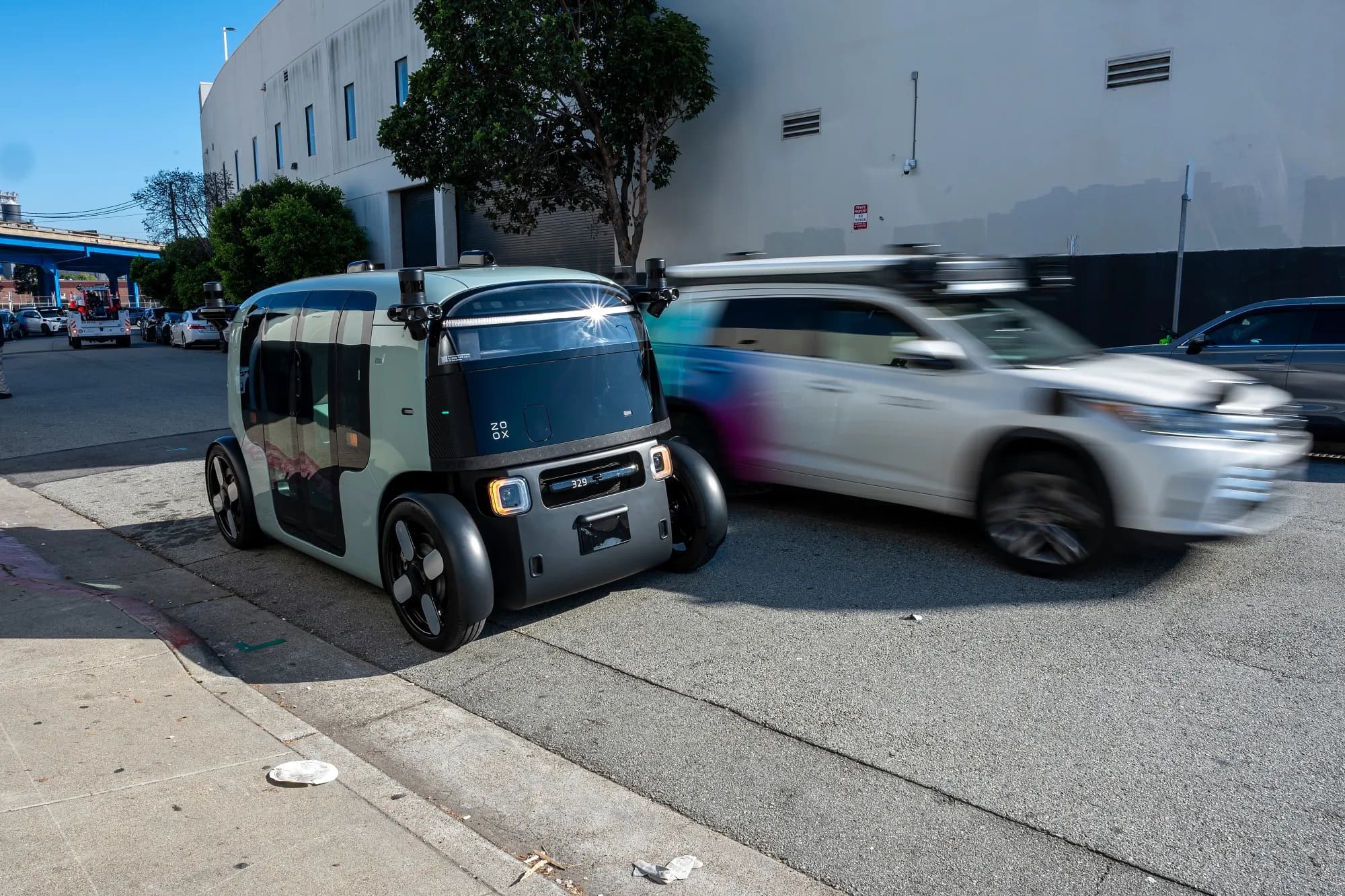
Autonomous Vehicle Reality Check
1. Lidar-based (Waymo, Aurora): 3D mapping, expensive (₹2,00,000-5,00,000 per unit), proven reliable
2. Vision-only (Tesla FSD): Camera-based, cheaper, controversial reliability
3. Hybrid (Mobileye, Motional): Cameras + radar, balance of cost and performance
4. Urban Air Mobility and Flying Taxis
Urban air mobility (UAM) startups developing electric vertical takeoff and landing (eVTOL) aircraft for urban air taxi and cargo services with 2026-2028 commercial operation timeline.
| UAM Company | Valuation (₹ Crore) | Aircraft Status | Route Planning | Commercial Status | Founded | Launch Timeline |
|---|---|---|---|---|---|---|
| Lilium | ₹35,000+ Crore (public SPAC) | 6-seater jet-powered eVTOL | Routes planned globally (15-30 minute flights), premium pricing | First commercial operations 2026-2027 | 2015 | 2026-2027 commercial launch |
| Joby Aviation | ₹100,000+ Crore (public SPAC) | 4-seater electric aircraft, 150-mile range | US (LA, San Francisco, NY) routes planned | FAA certification 2024, operations 2025-2026 | 2009 | 2025-2026 commercial launch |
| Archer Aviation | ₹60,000+ Crore (public SPAC) | 4-seater electric aircraft | US urban routes (LA, NYC focus) | Development and FAA certification path | 2018 | 2026-2027 launch targeting |
| Beta Technologies | ₹100,000+ Crore (private) | 5-seater electric aircraft (UPS partnership) | Cargo delivery focus (UPS integration) | Certification and operational testing | 2017 | 2026+ cargo operations |
| EHang | ₹100,000+ Crore (China, limited IPO) | 2-seater autonomous eVTOL | China operations (Guangzhou, others), tourism/cargo | Commercial operations limited 2026 | 2014 | 2025+ scaling |
| Airbus CityAirbus | ₹500,000+ Crore (Airbus division) | 4-seater autonomous eVTOL | Urban air taxi concept, technology development | Demonstration flights 2024-2026, operations 2026+ | 2018 | 2026-2027 deployment |
| Vertical Aerospace | ₹80,000+ Crore (UK, SPAC) | 6-seater aircraft for air taxi | UK and US routes planned | Development and certification path | 2014 | 2026-2027 launch targeting |
| Wisk (Boeing partnership) | ₹150,000+ Crore (Boeing partnership) | Autonomous air taxi | Joint development with Boeing | Certification and testing 2024-2026 | 2019 | 2026-2028 deployment |
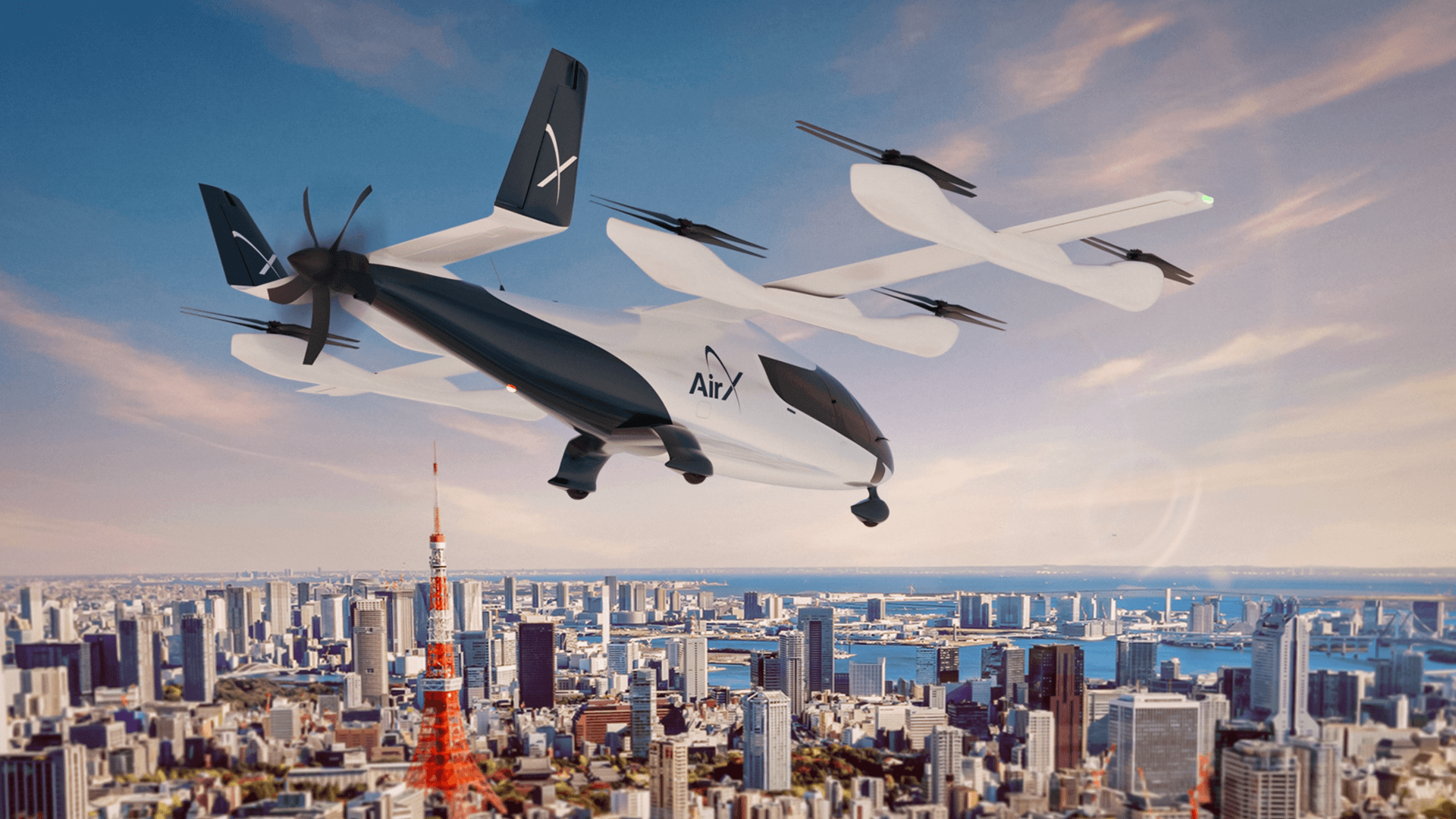
Urban Air Mobility Emergence
Shared mobility platforms (ride-sharing, car-sharing, micro-mobility) achieving profitability through scale and fleet electrification improving unit economics.
| Mobility Platform | Valuation (₹ Crore) | Users/Trips Daily | Service Model | Profitability Status | Founded | Market Position |
|---|---|---|---|---|---|---|
| Uber | ₹1,200,000+ Crore (public) | 100M+ daily active users, 10M+ daily trips | Ride-sharing, food delivery, freight (multiservice) | Approaching profitability, corporate level | 2009 | Ride-sharing market leader, conglomerate |
| Lyft | ₹200,000+ Crore (public) | 30M+ monthly users, 1M+ daily trips (US) | Ride-sharing (US focused) | Profitable operations 2022-2026 | 2012 | US ride-sharing #2, profitable |
| Didi (China) | ₹600,000+ Crore (delisted from US, China focus) | 500M+ monthly users, 30M+ daily trips (China) | Ride-sharing, fleet services (China dominant) | Profitable, China market leader | 2012 | World's largest ride-sharing by volume |
| Grab (Southeast Asia) | ₹300,000+ Crore (SPAC merger) | 1M+ daily active users SE Asia | Ride-sharing, food, payments (SE Asia focused) | Path to profitability 2025-2027 | 2012 | SE Asia mobility leader |
| Bird (scooter sharing) | ₹40,000+ Crore (private) | 50M+ rides annually | E-scooter sharing platform | Profitability path emerging | 2017 | Scooter sharing consolidation |
| Lime (scooter + bike sharing) | ₹200,000+ Crore (private) | 100M+ rides annually | E-scooter and e-bike sharing | Profitability 2024 achieved | 2017 | Micro-mobility market leader |
| Angi (car-sharing) | ₹80,000+ Crore (India-focused) | 500,000+ users India | Car-sharing and subscription model | Growing rapidly, India expansion | 2015 | India car-sharing leader |
| Zipcar (car-sharing) | ₹100,000+ Crore (Avis owned) | 1M+ subscribers, 1M+ vehicles | Car-sharing fleet, Avis integration | Integrated into Avis, scaling | 2000 | Car-sharing pioneer, legacy |
Shared Mobility Profitability
6. Software and Intelligence Platforms
Mobility software platforms (fleet management, routing, autonomous driving stacks) enabling intelligent transportation and operational efficiency.
| Software Company | Valuation (₹ Crore) | Focus Area | Customers | Key Innovation | Founded | Market Position |
|---|---|---|---|---|---|---|
| Tesla Autopilot/FSD | ₹3,000,000+ Crore (Tesla division) | Autonomous driving software | 2M+ vehicles using beta FSD | Vision-only approach, continuous improvement | 2016 | Most deployed autonomous system |
| Apollo (Baidu) | ₹500,000+ Crore (Baidu division) | Autonomous driving platform (open-source) | Partnerships with 100+ companies | Open platform, Chinese AV ecosystem | 2017 | China autonomous driving platform |
| Mobileye (Intel division) | ₹500,000+ Crore | Autonomous driving vision system | 100M+ vehicles with Mobileye chips | Chauffeur platform, hardware+software | 2016 (acquired) | Most deployed vision-based system |
| Nvidia Drive | ₹800,000+ Crore (Nvidia division) | Autonomous driving compute platform | 50+ OEM partnerships | AI computing platform for autonomous vehicles | 2015 | AV compute standard platform |
| Waymo Driver (stack) | ₹1,000,000+ Crore (Alphabet) | Full autonomous driving stack | 10+ partnerships, internal deployment | Level 4 stack (perception, planning, control) | 2009 | Most mature Level 4 stack |
| Lyft's Level 5 | ₹500,000+ Crore (Lyft division) | Autonomous driving development (acquired) | Partnership with Waylift (combined entity) | Hardware and software platform | 2018 | Ride-sharing AV integration |
| Mapbox (mapping + mobility) | ₹200,000+ Crore (private) | Location intelligence platform | 1M+ developers, 1B+ users | Real-time maps and navigation for mobility | 2010 | Mobility mapping standard |
| Sensorless (traffic prediction) | ₹50,000+ Crore | AI traffic prediction and optimization | Traffic management for cities | ML-based traffic optimization | 2018 | Urban mobility intelligence |
Autonomous Driving Stack Evolution
1. Perception: Sensor fusion (lidar, camera, radar), object detection
2. Prediction: Forecasting other vehicle/pedestrian behavior
3. Planning: Route and trajectory decision-making
4. Control: Vehicle operation (steering, acceleration, braking)
5. Mapping: Real-time HD maps and localization
7. Mobility Funding, Consolidation, and Market Dynamics
Mobility sector funding reaching record levels driven by electrification acceleration, autonomous vehicle advancement, and urban mobility demand.
| Trend | 2020 Reality | 2026 Reality | Driver | Market Impact |
|---|---|---|---|---|
| Annual Funding | ₹150,000-180,000 Crore | ₹250,000-300,000 Crore | EV acceleration, AV development, fleet electrification | 2-3x funding growth |
| EV Capex | ₹500,000+ Crore annually (legacy) | ₹1,000,000+ Crore (legacy + startups combined) | Manufacturing scale, new entrants, competition | Massive capital requirements |
| Mega-Rounds | ₹5,000-10,000 Crore for EV startups | ₹20,000-50,000 Crore for AV and EV leaders | Scale capital requirements increase | Concentration in well-funded |
| M&A Activity | Limited consolidation | Major acquisitions (Tesla, traditional OEMs acquiring startups) | Incumbents responding to disruption | Ecosystem consolidation |
| IPO Wave | Few mobility IPOs (Uber, Lyft, Nio, XPeng) | Multiple IPOs (Rivian, Lucid, Lilium, Joby, others) | Market validation and exit enablement | Public market interest |
| Traditional OEM Capex | ₹500,000+ Crore annually ICE vehicles | Shifting to EV (₹300,000-500,000 Crore EV, declining ICE) | Industry transformation underway | Legacy declining, EV growth |
| Startup Success Rate | High failure rate (70%+ startups failed) | Still high (50-60% failure rate) but improving | Capital discipline, market validation | Survival dependent on scale/capital |
| Geographic Focus | US/Europe dominant | China 40%+ of funding, SE Asia/India emerging | Market size and growth drivers | Global capital dispersal |
Mobility Market Consolidation
8. Regulatory Landscape and Government Policies
Regulatory frameworks accelerating EV adoption and autonomous vehicle deployment through government incentives, mandates, and standardization.
Regulatory Drivers for Mobility:
EV Mandates:
- ✓EU: 100% EV sales mandate 2035
- ✓California: ICE vehicle sales ban 2035
- ✓UK: 2030 ICE vehicle sales ban
- ✓India: EV promotion and manufacturing targets
- ✓China: 40%+ NEV sales mandate by 2030
- ✓Global: 100+ countries with EV adoption targets
EV Incentives:
- ✓Purchase subsidies: ₹500,000-2,000,000 typical
- ✓Tax credits: Up to ₹3,000,000 in some markets
- ✓Charging infrastructure investment: ₹100,000+ Crore
- ✓Company EV tax incentives: Fleet conversion support
- ✓Fuel economy standards: Carbon pricing and taxes
Autonomous Vehicle Regulations:
- ✓Testing permits: Level 3/4 testing in controlled conditions
- ✓Insurance requirements: Liability and safety standards
- ✓Data recording: Black box and telemetry mandates
- ✓Safety standards: SAE J3016 (automation levels standard)
- ✓Federal standards development: NHTSA (US), EASA (EU)
- ✓Timeline: Slow approval process (5-10 years typical)
Charging Infrastructure Policy:
- ✓Public investment: ₹100,000+ Crore globally
- ✓Building codes: EV charging requirements for new construction
- ✓Workplace requirements: Employee charging access mandates
- ✓Payment standardization: Open payment/interoperability
- ✓Grid integration: Smart charging and demand management
Urban Air Mobility Regulations:
- ✓FAA Special Federal Airworthiness Certification (SFAC): UAS type certification
- ✓Local approval processes: Vertiport and route approval
- ✓Noise limits: Community acceptance barriers
- ✓Insurance and liability: Coverage and responsibility frameworks
- ✓Integration with air traffic: Separate airspace vs. shared airspace debate
Labor and Safety Regulations:
- ✓Driver classification (ride-sharing): Independent contractor vs. employee
- ✓Autonomous vehicle liability: Manufacturer vs. vehicle owner vs. operator
- ✓Safety standards: Crash testing and autonomous performance
- ✓Cybersecurity: Vehicle hacking and software security requirements
- ✓Data privacy: Vehicle data collection and ownership
Government Support Success Factors:
- ✓Long-term policy consistency (reducing uncertainty)
- ✓Cross-party alignment (not reversible with election cycle)
- ✓Infrastructure co-investment (public-private partnerships)
- ✓Standards harmonization (international coordination)
- ✓Liability frameworks (enabling innovation)
- ✓Gradual rollout (pilot programs before mandates)
9. Mobility Challenges and Investment Barriers
Despite favorable market conditions and government support, mobility startups face significant technical, economic, and adoption challenges.
Major Mobility Challenges:
Capital Intensity:
- ✓EV manufacturing: ₹100,000-500,000+ Crore per manufacturer
- ✓Autonomous vehicle R&D: ₹50,000-500,000+ Crore for scale
- ✓Charging infrastructure: ₹100,000+ Crore (each major market)
- ✓Profitability timeline: 5-15 years (extensive burn before returns)
- ✓Venture scale challenges: Many startups require corporate/government backing
Technology Challenges:
- ✓Autonomous driving: Edge cases and rare scenario learning (millions of testing miles)
- ✓Battery technology: Energy density limitations and cost (target ₹50,000-60,000/kWh)
- ✓Charging speed: 15-30 minute charging vs. 5-minute ICE refueling
- ✓Range anxiety: Cold weather, altitude, towing reducing range 20-40%
- ✓Manufacturing complexity: Supply chain and production scaling
Supply Chain Constraints:
- ✓Lithium and cobalt scarcity: Mining and recycling challenges
- ✓Semiconductor shortage: Affecting vehicle production (2021-2024 crisis ongoing)
- ✓Labor availability: EV manufacturing requires different skill sets
- ✓Vertical integration pressure: Supply chain reliability concerns
- ✓Pricing leverage: Raw material cost inflation 30-50%
Market and Economic Challenges:
- ✓Profitability difficult: 40-50% gross margins requirement challenging
- ✓Price competition: Race to cost parity reducing margins
- ✓Used vehicle market: EV resale value uncertainty
- ✓Dealer channel disruption: Traditional distribution model displacement
- ✓Stranded assets: ICE vehicle inventory and dealership obsolescence
Regulatory and Political Uncertainty:
- ✓Policy reversals: Changing administrations shifting EV/AV policy
- ✓Local opposition: Autonomous vehicle skepticism, Luddite concerns
- ✓Safety liability: Legal framework uncertain for autonomous vehicles
- ✓International harmonization: Vehicle standards varying by region
- ✓Cybersecurity standards: Evolving requirements for connected vehicles
Consumer Adoption Barriers:
- ✓Range anxiety: Insufficient charging infrastructure perception
- ✓Cost premium: EV and autonomous vehicles more expensive than ICE
- ✓Brand trust: New manufacturers lacking reputation (Tesla exception)
- ✓Driving experience: Autonomous vehicles requiring behavior change
- ✓Safety concerns: Autonomous vehicle accident liability fear
- ✓Job displacement: Driver resistance to autonomous vehicle adoption
Autonomous Vehicle Timeline Risk:
- ✓5-10 year extension from 2020 predictions: Technology harder than expected
- ✓Edge cases: Rare scenarios requiring millions of testing miles
- ✓Regulatory approval: Slow government approval processes
- ✓Consumer trust: Building confidence in autonomous systems
- ✓Profitable operations: Path to positive unit economics unclear
Competitive and Incumbent Threats:
- ✓Traditional OEM capacity: Established manufacturers scaling EV production
- ✓Talent acquisition: Competing with Tesla, Google, others for top talent
- ✓Capital access: Venture funding drying up for unprofitable startups
- ✓Startup failure rate: 50-60% of mobility startups failing despite capital
10. Mobility Investment Framework and Risk Assessment
Evaluating mobility startups requires understanding segment maturity, capital requirements, and profitability timelines varying dramatically across categories.
Mobility Investment Framework
1. EV Charging Infrastructure (proven profitability, regulatory support)
2. EV Component Suppliers (essential to supply chain, less capital intensive)
3. Shared Mobility Platforms (profitability achieved, market mature)
4. Battery Technology (critical to EV success, consolidation)
5. Fleet Management Software (recurring revenue, operational efficiency)
Conclusion: Mobility Transformation Reshaping Transportation
2026 establishes mobility as transformation point for transportation with electric vehicles reaching 42% of developed market sales and autonomous vehicles entering limited commercial deployment. EV technology maturity—cost parity, charging infrastructure availability, manufacturing scale—enabling mainstream adoption. Traditional automotive industry fundamentally disrupted (BYD largest vehicle manufacturer by volume, Tesla most valuable by market cap). Autonomous vehicles progressing slower than 2020 predictions (5-10 year timeline to mainstream vs. 2-3 years predicted) but regulatory approval pathways clear. Urban air mobility launching commercial operations 2026-2027 with premium air taxi services but significant capital requirements and long profitability timelines. Shared mobility platforms achieving profitability (Uber, Lyft, Lime) through scale and efficiency. Regulatory tailwinds (EV mandates, autonomous vehicle testing authorization, charging infrastructure investment) accelerating transformation. Investment opportunities bifurcating by segment: EV charging infrastructure showing profitability and growth (best risk-adjusted returns), EV startups requiring massive capital (50-60% failure rate), autonomous vehicles 10+ year speculative bets, urban air mobility experimental. Challenges persist—supply chain constraints, capital intensity, profitability timelines, autonomous vehicle technical barriers, consumer acceptance. Future transportation characterized by electric dominance (100% EV sales by 2040-2050), autonomous limited deployments (10-15% fleet by 2035), shared mobility expansion (subscription vs. ownership), and urban air mobility (premium niche market). Overall mobility transformation complete—industry-wide shift to electric, digital-first connectivity, and autonomous progression underway, creating ₹1.8T+ market opportunity but requiring massive capital investment and 5-20 year timelines for full transformation.
🚗 **Download the Complete Mobility Investment Guide 2026** — Detailed startup profiles, segment-by-segment analysis, investment frameworks, risk assessment, and market opportunity analysis.
Share This Article
📤 Share This