Introduction: The Sustainability Startup Revolution
2026 marks a critical inflection point for sustainability startups—a sector that has transformed from niche impact investing to a $10 trillion+ economic opportunity at the intersection of climate necessity, technological innovation, and market demand. With global carbon emissions needing 50% reduction by 2030 to meet Paris Agreement targets, and corporations racing to achieve net-zero commitments (70% of Fortune 500 have climate targets), sustainability startups are scaling solutions across every sector: energy, transportation, agriculture, materials, manufacturing, and consumer goods. The investment landscape has matured dramatically: climate tech attracted $100+ billion annually, with mega-rounds exceeding $500 million common for scaling carbon removal, alternative proteins, and green hydrogen startups. The paradigm has shifted from "doing good" to "good business"—sustainability startups now compete on performance, cost, and scale, with many achieving parity or superiority to incumbent technologies. This comprehensive guide profiles the most innovative sustainability startups of 2026 across key categories: carbon removal and capture, alternative proteins and regenerative agriculture, circular economy and sustainable materials, energy transition and storage, green mobility and logistics, and emerging technologies. Whether you're an investor seeking the next unicorn, a corporate leader seeking partnership, an entrepreneur building in climate tech, or a consumer making sustainable choices, this guide provides the landscape, players, and trends shaping the sustainability startup ecosystem.
Pro Tip
👉 Key Insight: The most significant shift in 2026 is the maturation of sustainability startups from early-stage R&D to scaled commercial deployment. Carbon removal companies are delivering tons to customers like Microsoft and Stripe; alternative protein startups have achieved taste and cost parity with conventional meat in key categories; circular economy startups are displacing virgin plastics at scale. The question is no longer "if" these technologies work, but how fast they can scale.
2. Carbon Removal and Capture: From Atmosphere to Permanent Storage
Carbon removal—the intentional extraction of CO₂ from the atmosphere for permanent storage—has emerged as a critical sector for achieving net-zero targets. Corporate buyers (Microsoft, Stripe, Shopify, etc.) have committed billions to carbon removal, creating a robust demand signal for startups scaling direct air capture (DAC), enhanced rock weathering, biochar, and ocean-based removal.
| Startup | Technology | Funding (2026) | Key Differentiator | Customers/Partners | Scale (Tons CO₂) | Commercial Status |
|---|---|---|---|---|---|---|
| Climeworks | Direct Air Capture (DAC) with geological storage (Orca, Mammoth) | $800M+ (Series B, debt) | First commercial DAC at scale; Swiss-based; Orca plant (4,000 t/yr); Mammoth plant (36,000 t/yr) | Microsoft, Stripe, Shopify, JPMorgan, Boston Consulting Group | 4,000+ tons (current); 36,000+ (Mammoth) | Commercial; scaling |
| Charm Industrial | Bio-oil injection into geological formations (pyrolysis) | $100M+ (Series B) | Permanent carbon removal via bio-oil; leverages existing oil/gas infrastructure | Stripe, Microsoft, Shopify, JPMorgan | 10,000+ tons (cumulative) | Commercial; scaling rapidly |
| Heirloom | Enhanced mineralization (carbonation of limestone) | $150M+ (Series A, B) | Low-cost DAC via accelerated mineral carbonation; DOE funding | Microsoft, Striple, JPMorgan; US Department of Energy | 1,000+ tons (current); 100,000+ (planned) | Commercial; scaling |
| Running Tide | Ocean-based carbon removal (kelp cultivation, sinking) | $50M+ | Ocean-based; leverages marine carbon cycle; scalable | Stripe, Shopify, Microsoft | 1,000+ tons | Commercial; scaling |
| Eion | Enhanced rock weathering (olivine on agricultural lands) | $10M+ | Carbon removal + soil health; leverages existing agricultural infrastructure | Stripe, Frontier buyers | 1,000+ tons | Pilot to commercial |
| Verdox | Electrified carbon capture (for industrial point sources) | $100M+ | Energy-efficient carbon capture using electricity; lower cost than thermal | Various industrial partners | Pilot scale | Scaling from pilot |
| CarbonCure | Carbon mineralization in concrete (CO₂ injected into concrete) | $100M+ | Carbon removal + reduced cement footprint; existing concrete industry adoption | 800+ concrete plants globally; Microsoft, Shopify | 1M+ tons (cumulative) | Commercial; scaled |
| LanzaTech | Carbon capture and utilization (fermentation of waste gases to ethanol) | $1B+ (public via SPAC) | Commercial carbon capture and utilization; waste-to-fuel; aviation fuel | Virgin Atlantic, Lululemon, Total | 200,000+ tons CO₂/yr | Commercial; public company |
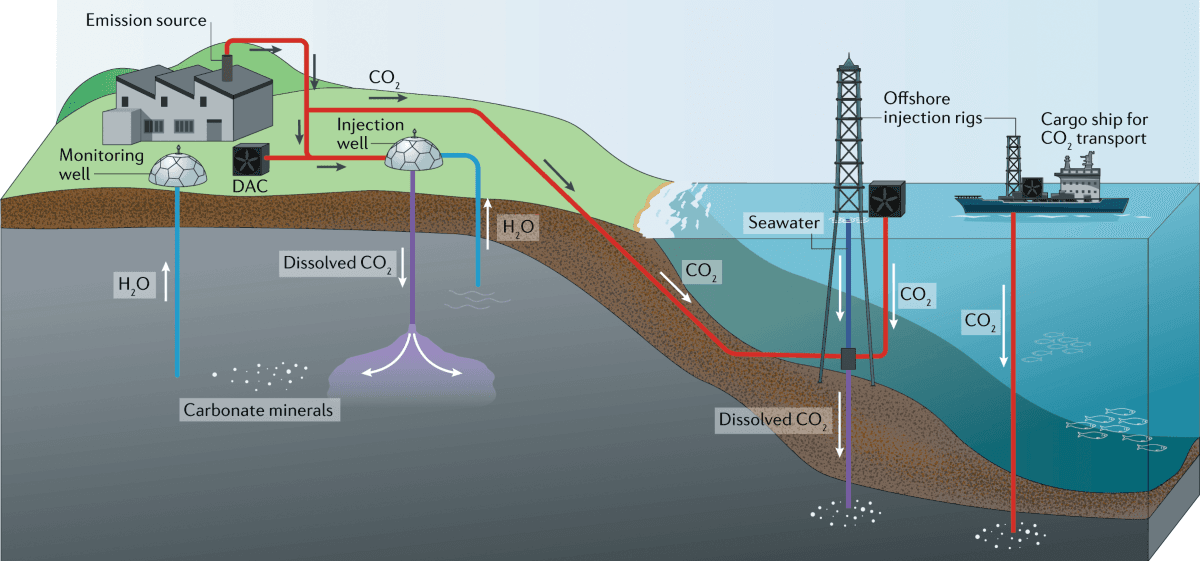
Carbon Removal: Market Dynamics and Key Players
Overview of corporate buyers, technologies, investment trends, and regulatory drivers shaping carbon removal.
Corporate Buyer Ecosystem
Advanced market commitments (AMCs) from corporates create demand certainty, enabling carbon removal startups to scale.
- ✓Frontier: $1B+ commitment; portfolio across DAC, weathering, ocean solutions
- ✓Microsoft: Carbon negative by 2030; 1M+ tons contracted
- ✓Stripe: Early buyer; focuses on permanent removal
Technology Categories
| Category | Examples | Cost ($/t CO₂) | Permanence | Scalability |
|---|---|---|---|---|
| DAC | Climeworks, Heirloom | $300–600 → $100–200 | Permanent | High |
| Bio-oil | Charm | $200–400 | Permanent | Medium |
| Weathering | Eion, Lithos | $100–300 | Permanent | High |
| Ocean | Running Tide | $200–500 | Variable | High |
| Biochar | Various | $50–200 | Centennial | Medium |
| Mineralization | CarbonCure | $50–100 | Permanent | High |
Investment Landscape
- ✓Climate tech: $100B+ (2025)
- ✓Carbon removal: $5–10B annually (50% YoY growth)
- ✓Major funding: Climeworks, Heirloom, Charm
- ✓Public markets emerging
Challenges
- ✓High cost (DAC $300–600/t today)
- ✓Limited scale vs 10Gt needed
- ✓MRV standards evolving
- ✓Permanence concerns
- ✓High energy requirements
Regulatory Landscape
- ✓US 45Q: $180/t (storage), $60/t (utilization)
- ✓EU certification framework emerging
- ✓Voluntary carbon market standards improving
Corporate Buyer Ecosystem
Advanced market commitments (AMCs) from corporates create demand certainty, enabling carbon removal startups to scale.
- ✓Frontier: $1B+ commitment; portfolio across DAC, weathering, ocean solutions
- ✓Microsoft: Carbon negative by 2030; 1M+ tons contracted
- ✓Stripe: Early buyer; focuses on permanent removal
Technology Categories
| Category | Examples | Cost ($/t CO₂) | Permanence | Scalability |
|---|---|---|---|---|
| DAC | Climeworks, Heirloom | $300–600 → $100–200 | Permanent | High |
| Bio-oil | Charm | $200–400 | Permanent | Medium |
| Weathering | Eion, Lithos | $100–300 | Permanent | High |
| Ocean | Running Tide | $200–500 | Variable | High |
| Biochar | Various | $50–200 | Centennial | Medium |
| Mineralization | CarbonCure | $50–100 | Permanent | High |
Investment Landscape
- ✓Climate tech: $100B+ (2025)
- ✓Carbon removal: $5–10B annually (50% YoY growth)
- ✓Major funding: Climeworks, Heirloom, Charm
- ✓Public markets emerging
Challenges
- ✓High cost (DAC $300–600/t today)
- ✓Limited scale vs 10Gt needed
- ✓MRV standards evolving
- ✓Permanence concerns
- ✓High energy requirements
Regulatory Landscape
- ✓US 45Q: $180/t (storage), $60/t (utilization)
- ✓EU certification framework emerging
- ✓Voluntary carbon market standards improving
3. Alternative Proteins: Plant-Based, Fermentation, and Cultivated Meat
Alternative proteins—plant-based, fermentation-derived, and cultivated meat—have become a $10B+ market, with startups achieving taste, texture, and cost parity with conventional meat. 2026 marks the scaling of precision fermentation for animal-free dairy and egg proteins, and cultivated meat entering limited commercial markets.
| Startup | Category | Product | Funding (2026) | Key Differentiator | Commercial Status | Key Milestones |
|---|---|---|---|---|---|---|
| Impossible Foods | Plant-Based | Plant-based meat (soy, heme) | $1.5B+ | Heme (soy leghemoglobin) for meat-like flavor; broad distribution | Commercial; retail, foodservice (Burger King, etc.) | 10,000+ restaurant partners; 20,000+ retail locations |
| Beyond Meat | Plant-Based | Plant-based meat (pea protein) | $1B+ (public) | First-mover in retail; broad distribution | Commercial; public company | Retail, foodservice; facing competition |
| Eat Just / GOOD Meat | Cultivated + Plant-Based | Cultivated chicken; mung bean-based egg | $1B+ | First cultivated meat approved (Singapore, US); plant-based egg | Commercial (plant-based); limited cultivated (Singapore, US) | Cultivated chicken approved in US (2023); scaling production |
| Upside Foods | Cultivated | Cultivated chicken, beef | $600M+ (Series C) | First cultivated meat approved (US); pilot facility | Limited commercial (restaurant partners) | FDA, USDA approvals (2023); scaling production |
| Perfect Day | Fermentation (Precision) | Animal-free dairy (whey protein via fermentation) | $800M+ | First precision fermentation dairy; B2B ingredient supplier | Commercial (B2B); consumer brands (Brave Robot, etc.) | 100+ consumer products; cost parity with conventional dairy |
| MyForest Foods | Fermentation (Mycelium) | Mycelium-based bacon, whole cuts | $50M+ | Mycelium (fungus) for whole-cut meats; low processing | Commercial (retail, foodservice) | Scaling production; retail expansion |
| Nature's Fynd | Fermentation (Microbial) | Fy protein (from geothermal microbe); dairy-free, meat alternatives | $500M+ | Novel microbe (from Yellowstone); sustainable fermentation | Commercial (retail, foodservice) | Retail launch; partnership with McDonald's (McPlant) |
| MeliBio | Plant-Based | Honey without bees (precision fermentation) | $10M+ | First animal-free honey; beeswax alternatives | Commercial (B2B, retail) | Retail launch; foodservice partnerships |
| Formo | Fermentation | Animal-free cheese (precision fermentation) | $100M+ | European leader; functional cheese products | Commercial (Europe) | Retail launch; scaling |
| Remilk | Fermentation | Animal-free dairy (whey, casein) | $200M+ | Full dairy proteins (whey + casein) for functional dairy | Commercial (B2B) | US, EU approval; scaling |
Alternative Proteins: Market Dynamics and Scaling
Overview of key technologies, market growth, regulatory landscape, and scaling challenges shaping the alternative protein industry.
Technology Categories
| Category | Process | Examples | Cost Status | Scale Status | Environmental Impact |
|---|---|---|---|---|---|
| Plant-Based | Texturizing plant proteins (soy, pea, wheat) | Impossible, Beyond, others | Cost parity with meat | Industrial scale | 70–90% lower GHG |
| Precision Fermentation | Microbes produce proteins (whey, casein) | Perfect Day, Remilk | Near parity | Commercial B2B | 90% lower GHG |
| Mycelium | Fungi fermentation for meat | Meati, Quorn | Premium | Scaling | Low processing, low emissions |
| Cultivated Meat | Animal cells grown in bioreactors | Upside Foods, Eat Just | High cost ($10–50/lb) | Limited scale | No slaughter, lower emissions |
Market Size and Growth
- ✓Global market: $15B+ (2026) → $100B+ by 2035
- ✓Plant-based: 80% market share
- ✓Precision fermentation: fastest growth (40% CAGR)
- ✓Cultivated meat: 100+ startups globally
Regulatory Landscape
- ✓US: FDA + USDA regulation
- ✓EU: Strict novel food rules
- ✓Singapore: First approval leader
- ✓Asia: Japan, Korea, Israel advancing
Investment Trends
- ✓$5B+ total funding (2025)
- ✓Major rounds: Perfect Day, Upside Foods, Eat Just
- ✓Corporate backing: Nestlé, Tyson, Cargill
- ✓Public markets volatile
Challenges
- ✓High cost for cultivated meat
- ✓Consumer skepticism
- ✓Regulatory delays
- ✓Scaling infrastructure
- ✓Nutritional concerns
Scaling Milestones
| Category | 2026 Status | 2030 Target |
|---|---|---|
| Plant-Based | Mass distribution | 10–15% market share |
| Precision Fermentation | Scaling B2B | 10–20% dairy share |
| Mycelium | Commercial stage | Whole-cut meats |
| Cultivated Meat | Early stage | Cost parity |
4. Circular Economy: Sustainable Materials and Packaging
Circular economy startups are transforming materials and packaging—moving from linear "take-make-dispose" models to circular systems where materials are designed for reuse, recycling, or composting. 2026 marks scaling of bio-based materials, chemical recycling, and reuse platforms.
| Startup | Category | Technology/Product | Funding (2026) | Key Differentiator | Commercial Status | Impact |
|---|---|---|---|---|---|---|
| Bolt Threads | Bio-Based Materials | Mylo (mycelium leather); spider silk proteins | $300M+ | Sustainable alternatives to leather, silk; partnerships with major brands | Commercial (B2B); Stella McCartney, Adidas, Lululemon | Mycelium leather in production; spider silk scaling |
| Ecovative | Bio-Based Materials | Mycelium packaging, leather, food (mushroom root) | $100M+ | Mycelium-based materials; composting; scalable | Commercial (packaging, leather, food) | Packaging partners (IKEA, etc.); mycelium leather |
| LanzaTech | Carbon Utilization | Waste gas to ethanol, jet fuel, chemicals | $1B+ (public) | Carbon capture and utilization; commercial scale | Commercial; multiple facilities | 200,000+ tons CO₂/yr to products |
| Amcor | Sustainable Packaging | Recyclable, compostable packaging (public) | $10B+ market cap | Large-scale sustainable packaging; global reach | Commercial; global packaging leader | 100% recyclable packaging by 2025 target |
| NotCo | Food Tech | AI-formulated plant-based products (milk, meat, mayo) | $500M+ | AI (Giuseppe) for ingredient optimization; Latin America leader | Commercial; global expansion (US, EU, LATAM) | Plant-based products with fewer ingredients; cost parity |
| Solugen | Sustainable Chemicals | Plant-based chemicals (hydrogen peroxide, etc.) | $500M+ | Enzymatic manufacturing; replacing petrochemicals | Commercial; scaling production | Lower carbon, cost-competitive chemicals |
| Renewcell | Textile Recycling | Circulose (textile-to-textile recycling) | $200M+ (public) | First commercial textile-to-textile recycling (cotton, viscose) | Commercial; partners H&M, Zara | 50,000+ tons/yr capacity |
| Genomatica | Sustainable Chemicals | Plant-based chemicals (nylon, etc.) | $300M+ | Fermentation-based chemicals; partnerships with major brands | Commercial; scaling | Nylon from plants; lower carbon footprint |
| LanzaJet | Sustainable Aviation Fuel (SAF) | Alcohol-to-jet (ATJ) from waste gases, ethanol | $100M+ | First commercial ATJ facility; partnership with LanzaTech | Commercial (first facility) | SAF production; airline partnerships |
| TerraCycle / Loop | Reuse Platform | Reusable packaging platform (Loop) | $50M+ (acquisitions) | Circular delivery system for consumer goods | Commercial (US, UK, FR, etc.) | 500+ brands; reusable packaging |
Circular Economy: Key Sectors and Innovations
Key innovations across sustainable materials, packaging, aviation fuel, and investment trends driving circular economy adoption globally.
Sustainable Materials
| Material Category | Startup Examples | Application | Circularity | Scalability |
|---|---|---|---|---|
| Mycelium | Bolt Threads, Ecovative | Leather, packaging | Compostable; renewable | Commercial; scaling |
| Spider Silk | Bolt Threads | Textiles, fabrics | Biodegradable | Emerging |
| Bio-Based Chemicals | Solugen, Genomatica | Chemicals, plastics | Renewable feedstocks | Commercial |
| Textile Recycling | Renewcell | Recycled fabrics | Closed-loop textile cycle | Scaling |
| Carbon Utilization | LanzaTech | Fuel, ethanol | Carbon reuse | Commercial |
Sustainable Packaging
| Approach | Examples | Applications | Benefits | Challenges |
|---|---|---|---|---|
| Compostable | Ecovative | Food packaging | Biodegradable | Requires compost infra |
| Reusable | Loop | Containers | Reduces waste | Logistics complexity |
| Recyclable Mono | Amcor | Flexible packaging | Works with existing systems | Contamination issues |
| Plant-Based Plastics | PLA, PHA | Bottles | Renewable | Higher cost |
Sustainable Aviation Fuel (SAF)
- ✓Market: 100M+ gallons (2025) → 1B+ by 2030
- ✓Key players: LanzaJet, Neste
- ✓Feedstocks: waste oils, gases, residues
- ✓Cost: 2–5x traditional fuel (declining)
- ✓Airlines targeting 10% SAF usage by 2030
Investment Landscape
- ✓$10B+ investment in 2025
- ✓Major rounds: Solugen, Renewcell, Ecovative
- ✓Corporate backing: IKEA, H&M, Unilever
- ✓Public companies: LanzaTech, Renewcell
Challenges
- ✓Higher cost vs traditional materials
- ✓Limited recycling/compost infrastructure
- ✓Performance limitations in some materials
- ✓Greenwashing risks
- ✓High capital needed for scaling
5. Energy Transition: Green Hydrogen, Storage, and Grid Flexibility
Energy transition startups are accelerating the shift to renewable energy through green hydrogen, long-duration energy storage, grid flexibility, and advanced solar/wind technologies. 2026 marks the scaling of electrolyzers, battery storage, and virtual power plants.
| Startup | Category | Technology | Funding (2026) | Key Differentiator | Commercial Status | Scale |
|---|---|---|---|---|---|---|
| Ohmium | Green Hydrogen | PEM electrolyzers (modular) | $250M+ | Modular, scalable electrolyzers; cost reduction | Commercial; multiple facilities | 100+ MW deployed; scaling |
| Electric Hydrogen | Green Hydrogen | Large-scale electrolyzers (100MW+ scale) | $500M+ | Gigawatt-scale electrolyzer manufacturing; cost target $2/kg H₂ | Commercial; facility build-out | First 100MW facility; scaling |
| Form Energy | Long-Duration Storage | Iron-air batteries (100-hour duration) | $500M+ | Multi-day storage (100 hours); cost <$20/kWh | Commercial; first project (Minnesota) | 100-hour storage; utility contracts |
| Energy Vault | Grid Storage | Gravity-based storage (EVx) | $300M+ (public) | Gravity storage; low-cost; long-duration | Commercial; multiple projects | First commercial projects; scaling |
| Antora Energy | Thermal Storage | Thermal battery (carbon block, 1,500°C) | $100M+ | High-temperature heat storage for industrial processes | Commercial; pilot to scaling | Industrial decarbonization |
| Nexamp | Solar + Storage | Community solar + storage development | $500M+ | Community solar platform; scale | Commercial; national | 1GW+ solar; scaling |
| GridX | Grid Flexibility | Grid management software (DERs) | $100M+ | Distributed energy resource (DER) management | Commercial; utility partners | Utilities, load management |
| Span | Home Energy | Smart electrical panels; EV integration | $100M+ | Smart panel; load management; home battery integration | Commercial; EV, solar partners | Home energy management |
| Verdox | Industrial Carbon Capture | Electrified carbon capture (point source) | $100M+ | Electrified process; lower energy than thermal | Pilot to commercial | Industrial decarbonization |
| Commonwealth Fusion Systems | Fusion Energy | SPARC fusion reactor (tokamak) | $2B+ | High-temperature superconducting magnets; fastest path to fusion | R&D to pilot | Demonstration plant (2026-27); commercial target 2030s |
Energy Transition: Key Technologies and Scaling
Overview of green hydrogen, long-duration storage, virtual power plants, and fusion shaping the energy transition.
Green Hydrogen
Green hydrogen (via electrolysis using renewable energy) is critical for hard-to-abate sectors like steel, chemicals, and heavy transport.
| Category | Players | Current Cost ($/kg H₂) | 2030 Target ($/kg) | Scale |
|---|---|---|---|---|
| PEM Electrolyzers | Ohmium, Electric Hydrogen, Nel | $4–6 | $2–3 | 100MW+ → GW scale |
| Alkaline Electrolyzers | Various | $3–5 | $2–3 | Commercial |
| Solid Oxide | Various | $5–8 | $3–4 | Emerging |
- ✓Investment: $10B+ (2025)
- ✓Key rounds: Electric Hydrogen ($500M), Ohmium ($250M)
IRA Impact (US)
- ✓$3/kg tax credit (45V)
- ✓$0.60–1.00/kg for clean hydrogen
- ✓Major boost to project economics
Long-Duration Energy Storage
| Technology | Examples | Duration | Cost ($/kWh) | Application | Status |
|---|---|---|---|---|---|
| Iron-Air | Form Energy | 100 hrs | <$20 | Seasonal storage | Commercial 2025+ |
| Gravity | Energy Vault | 4–24 hrs | $50–100 | Grid storage | Commercial |
| Thermal | Antora, Rondo | 4–24 hrs | $10–50 | Industrial heat | Pilot |
| Flow Batteries | Various | 4–12 hrs | $100–200 | Grid storage | Scaling |
- ✓Investment: $1B+ (2025)
- ✓Leaders: Form Energy, Energy Vault
Virtual Power Plants (VPPs)
VPPs aggregate distributed resources like solar, batteries, EVs, and appliances to provide grid services.
| Startup | Focus | Capabilities | Partners |
|---|---|---|---|
| GridX | DER software | Load optimization | Utilities |
| Span | Smart panels | Home energy + EV | Installers |
| Tesla | VPP platform | Powerwall aggregation | Grid operators |
- ✓Market: 50GW+ by 2030
- ✓Size: $5B+ opportunity
Fusion Energy
| Company | Approach | Funding | Timeline | Milestone |
|---|---|---|---|---|
| CFS | Tokamak | $2B+ | 2030s | SPARC demo |
| Helion | Inertial | $500M+ | Near-term | Demo facility |
| General Fusion | Magnetized | $300M+ | 2030s | Demo |
Regulatory Drivers
- ✓US IRA: $370B clean energy incentives
- ✓EU Green Deal: €500B+
- ✓RE100: 100+ companies committed to renewables
6. Green Mobility and Logistics: EVs, Micromobility, and Sustainable Transport
Green mobility startups are transforming transportation through electric vehicles (EVs), micromobility, sustainable logistics, and EV charging infrastructure. 2026 marks EV market maturity (20%+ of new car sales globally) and scaling of EV charging networks, battery recycling, and last-mile logistics.
| Startup | Category | Technology | Funding (2026) | Key Differentiator | Commercial Status | Scale |
|---|---|---|---|---|---|---|
| Rivian | EV Manufacturing | Electric trucks, SUVs, vans (R1T, R1S, EDV) | $15B+ (public) | Adventure vehicles; Amazon delivery vans; vertically integrated | Commercial; production scaling | 50,000+ vehicles (2025); scaling |
| Lucid Motors | EV Manufacturing | Luxury EVs (Lucid Air) | $10B+ (public) | Longest range EVs (500+ miles); efficiency leadership | Commercial; production scaling | 10,000+ vehicles; scaling |
| Proterra | EV Buses + Charging | Electric transit buses; charging infrastructure | $1B+ (public) | Transit bus leader; charging infrastructure | Commercial; public transit | 1,000+ buses; charging stations |
| ChargePoint | EV Charging | EV charging network (hardware, software) | $2B+ (public) | Largest EV charging network (North America) | Commercial; public company | 200,000+ charging ports |
| Volta Charging | EV Charging + Media | Ad-supported EV charging (free for users) | $500M+ (public) | Media-funded charging; retail partners | Commercial; retail partnerships | 3,000+ charging stations |
| Redwood Materials | Battery Recycling | Lithium-ion battery recycling (EVs, electronics) | $1B+ | Closed-loop battery recycling; JB Straubel (Tesla co-founder) | Commercial; scaling | Gigafactory-scale recycling |
| Ascend Elements | Battery Recycling | Lithium-ion battery recycling (cathode materials) | $500M+ | Direct precursor synthesis; high recovery rates | Commercial; scaling | Multiple facilities |
| Lime | Micromobility | E-scooter, e-bike sharing | $1B+ | Global micromobility leader; profitable (2025) | Commercial; global | 100M+ rides; 200+ cities |
| Bird | Micromobility | E-scooter sharing | $500M+ (public) | Early micromobility entrant; consolidation | Commercial; operational focus | Reduced scale; consolidation |
| Einride | Autonomous Electric Trucks | Autonomous, electric freight trucks | $500M+ | Autonomous EV trucking; freight capacity | Commercial; pilot to scaling | Freight partners (GE, etc.) |
| BrightDrop (GM) | EV Delivery Vans | Electric delivery vans (BrightDrop) | $1B+ (GM investment) | GM-backed; FedEx, Walmart partners | Commercial; scaling | 10,000+ vans (2025) |
Green Mobility: Market Dynamics and Scaling
Overview of EV adoption, charging infrastructure, battery recycling, and micromobility shaping the transition to sustainable transport.
EV Market Maturity
| Region | EV Market Share (2025) | 2030 Target | Key Drivers |
|---|---|---|---|
| China | 30–35% | 50%+ | Government mandates; local manufacturing |
| Europe | 20–25% | 50%+ | CO₂ regulations; ICE phase-out |
| US | 10–15% | 30–50% | IRA incentives; state policies |
Charging Infrastructure
| Category | Key Players | Scale (2026) | Growth Drivers |
|---|---|---|---|
| DC Fast Charging | Tesla, Electrify America | 50,000+ ports (US) | NEVI funding |
| Level 2 Charging | ChargePoint, Blink | 100,000+ ports | Retail, workplace |
| Home Charging | Tesla, Wallbox | 1M+ installations | EV adoption |
NEVI Program
- ✓$7.5B investment in charging infrastructure
- ✓500,000 chargers target by 2030
- ✓Nationwide rollout accelerating
Battery Recycling
| Player | Capacity (2026) | Technology | Partners |
|---|---|---|---|
| Redwood Materials | 100K+ tons/year | Closed-loop recycling | Tesla, Ford |
| Ascend Elements | 50K+ tons/year | Precursor synthesis | Multiple |
| Li-Cycle | 50K+ tons/year | Hydrometallurgical | Multiple |
Market Drivers
- ✓Critical minerals demand (lithium, cobalt, nickel)
- ✓Recycling reduces cost and environmental impact
- ✓IRA incentives ($7,500 EV credit)
Micromobility
| Category | Leaders | Market Size | Trends |
|---|---|---|---|
| E-Scooters | Lime, Bird | $5B+ | Profitability focus |
| E-Bikes | Trek, Rad Power | $10B+ | Commuter adoption |
| Bike Sharing | Uber, Lyft | Growing | Transit integration |
Challenges
- ✓Charging infrastructure gaps
- ✓Environmental impact of mining
- ✓Recycling scale requirements
- ✓EV affordability and access
7. Regenerative Agriculture and AgTech
Regenerative agriculture and agtech startups are transforming food production from carbon source to carbon sink, while improving soil health, water efficiency, and farmer economics. 2026 marks scaling of precision agriculture, biological inputs, and supply chain traceability.
| Startup | Category | Technology | Funding (2026) | Key Differentiator | Commercial Status | Scale |
|---|---|---|---|---|---|---|
| Indigo Ag | Regenerative Agriculture | Carbon credits; biologicals; digital platform | $1B+ | Regenerative agriculture marketplace; carbon credits | Commercial; scaling | 1,000+ farmers; carbon credit issuance |
| Pivot Bio | Biological Inputs | Nitrogen-fixing microbes (for corn, wheat) | $500M+ | Synthetic nitrogen replacement; field-proven | Commercial; scaling | 1M+ acres; growing |
| Farmers Business Network (FBN) | AgTech Platform | Direct-to-farm supply chain; data platform | $1B+ | Farmer cooperative; input marketplace | Commercial; scaling | 50,000+ farmers; 100M+ acres |
| Benson Hill | Crop Improvement | AI-enabled crop breeding (soy, yellow pea) | $1B+ (public) | AI-driven plant breeding; novel ingredients | Commercial; scaling | Crop varieties; ingredient supply |
| Pattern Ag | Soil Intelligence | Soil DNA analysis; pest, pathogen prediction | $50M+ | Soil microbiome intelligence; predictive agronomy | Commercial; scaling | 1M+ acres; Midwest expansion |
| Apeel Sciences | Food Preservation | Edible coating for produce (extends shelf life) | $500M+ | Plant-based coating; reduces food waste | Commercial; global retail partners | 30+ produce types; global distribution |
| Imperfect Foods | Food Waste | Ugly produce delivery; food waste reduction | $200M+ | Rescuing imperfect produce; last-mile delivery | Commercial; scaling (acquisition) | National delivery; Misfits Market acquisition |
| Bowery Farming | Vertical Farming | Indoor vertical farming (CEA) | $500M+ | Indoor farming; controlled environment; local produce | Commercial; multiple facilities | Commercial facilities; retail partners |
| Plenty Unlimited | Vertical Farming | Indoor vertical farming (tower design) | $500M+ | Vertical farming; Walmart partnership | Commercial; scaling | Commercial facilities; Walmart partner |
| AgriCapture | Carbon Credits | Regenerative agriculture carbon credits | $50M+ | Carbon credit issuance; monitoring, reporting, verification | Commercial; scaling | Carbon credit market growth |
Regenerative Agriculture: Transforming Food Production
Key principles, technologies, and market trends reshaping sustainable food production.
Regenerative Agriculture Principles
- ✓Minimize soil disturbance (no-till)
- ✓Keep soil covered (cover crops)
- ✓Maintain living roots
- ✓Diversify crops (rotation, polyculture)
- ✓Integrate livestock (managed grazing)
Soil Carbon Sequestration
- ✓Global potential: 2–5 Gt CO₂/year
- ✓Per acre: 0.5–2 tons CO₂/year
- ✓Carbon credits: $50–100/ton incentivizing farmers
Biological Inputs
| Input Type | Examples | Replaces | Market Size |
|---|---|---|---|
| Nitrogen Microbes | Pivot Bio | Synthetic fertilizers | $10B+ |
| Biopesticides | Various | Chemical pesticides | $10B+ |
| Biostimulants | Various | Yield enhancers | $5B+ |
Synthetic nitrogen fertilizers contribute ~5% of global emissions. Biological alternatives reduce emissions and improve soil health.
Precision Agriculture
| Technology | Startup | Capability | Impact |
|---|---|---|---|
| Soil DNA | Pattern Ag | Predict pests/nutrients | Optimized inputs |
| Satellite | Various | Crop monitoring | Water savings |
| AI Advisory | FBN | Farming decisions | Cost reduction |
Food Waste Reduction
- ✓1.3B tons wasted annually (30%)
- ✓8% global emissions
- ✓Startups: Apeel, Imperfect Foods, Too Good To Go
- ✓Market: $1T+ opportunity
Vertical Farming
| Startup | Model | Crops | Scale | Advantages |
|---|---|---|---|---|
| Bowery | Indoor racks | Leafy greens | Commercial | 95% less water |
| Plenty | Vertical towers | Greens, berries | Commercial | High yield density |
Challenges
- ✓High cost vs conventional farming
- ✓Energy-intensive operations
- ✓Limited crop variety
Investment Trends
- ✓AgTech: $10B+ (2025)
- ✓Regenerative ag: $5B+ (30%+ growth)
- ✓Biological inputs: $2B+
- ✓Vertical farming: $1B+ (consolidation phase)
8. Investment Landscape and Market Trends
Sustainability startup investment has matured from early-stage impact investing to mainstream asset class, with institutional investors, corporate venture, and public markets increasingly allocating capital to climate tech.
| Investment Category | 2025 Investment ($B) | YoY Growth | Key Sectors | Geographic Concentration | Investor Types | Exit Activity |
|---|---|---|---|---|---|---|
| Climate Tech (Total) | $100B+ | 15-20% | Energy, transportation, carbon removal, agtech, circular economy | US (50%), Europe (25%), China (15%), ROW (10%) | VC, PE, corporate VC, growth equity | SPACs (cooling); IPOs (select); M&A active |
| Carbon Removal | $5-10B | 50%+ | DAC, enhanced weathering, bio-oil, ocean-based | US (60%), Europe (30%) | Corporate buyers (Frontier, Microsoft), VC, government (DOE) | Limited exits; early-stage; long-cycle |
| Alternative Proteins | $5B | 20% (from peak) | Plant-based (mature), fermentation (growth), cultivated (emerging) | US (50%), Europe (30%), Israel (10%) | VC, corporate VC (Tyson, Cargill, Nestlé) | Public: Beyond Meat (volatile); acquisitions (Kraft-Heinz, etc.) |
| Energy Transition | $50B+ | 20% | Hydrogen, storage, solar, grid, EVs | US (40%), Europe (30%), China (20%) | VC, growth equity, PE, infrastructure funds | Public via SPAC (historic); direct listings |
| Circular Economy | $10B+ | 25% | Sustainable materials, packaging, recycling, chemicals | US (50%), Europe (30%) | VC, corporate VC, PE | Public: Renewcell, LanzaTech; M&A active |
| AgTech & Regenerative Ag | $10B+ | 15% | Biologicals, precision ag, vertical farming, carbon credits | US (60%), Europe (20%) | VC, corporate VC (Bayer, Cargill) | Public: FBN (SPAC), Benson Hill (SPAC); acquisitions |
Investment Landscape: Trends and Opportunities
Overview of top investors, corporate venture activity, geographic trends, and policy drivers shaping sustainability investments.
Top Investors (2026)
| Investor | Focus | Notable Portfolio | Fund Size |
|---|---|---|---|
| BEV | Climate tech | Climeworks, Form Energy | $2B+ |
| Lowercarbon | Carbon removal | Charm, Heirloom | $1B+ |
| Sequoia | Growth climate | LanzaTech, Redwood | $500M+ |
| USV | Early climate | Stripe (Frontier) | Various |
| EIP | Energy transition | Ohmium, Form Energy | $1B+ |
| Temasek | Global sustainability | Impossible, Perfect Day | $5B+ |
| Generation IM | Sustainable growth | Beyond Meat | $20B+ AUM |
Corporate Venture Capital
| Corporation | Fund | Focus | Investments |
|---|---|---|---|
| Microsoft | Climate Fund | Carbon removal | Climeworks |
| Amazon | Climate Pledge | Decarbonization | Rivian |
| GV | Climate tech | Various | |
| Shell | Shell Ventures | Energy | Various |
| Chevron | CTV | Hydrogen, CCS | Various |
| Tyson | Tyson Ventures | Alt protein | Beyond Meat |
| Nestlé | Nestlé Ventures | Nutrition | Perfect Day |
Geographic Trends
| Region | Strengths | Examples | Investment Share |
|---|---|---|---|
| US | All sectors, policy support | Rivian, Form Energy | 50% |
| Europe | Carbon removal, circular | Climeworks, Formo | 25% |
| China | EVs, batteries | BYD, CATL | 15% |
| Israel | Agtech, alt protein | Aleph Farms | 5% |
| Rest | Emerging | Various | 5% |
Exit Landscape
- ✓IPOs limited (market slowdown)
- ✓SPAC activity declining
- ✓M&A active (corporate acquisitions)
- ✓Secondary markets growing
Policy Drivers
- ✓US IRA: $370B incentives
- ✓EU Green Deal: €500B+
- ✓Carbon pricing expanding
- ✓Corporate net-zero commitments rising
9. Challenges and Considerations
Despite momentum, sustainability startups face significant challenges—from scaling and capital intensity to policy uncertainty and greenwashing risks.
Persistent Challenges in 2026:
Scaling and Commercialization:
- ✓Capital intensity: Many sustainability startups require hundreds of millions to billions for commercial-scale facilities (DAC, hydrogen, cultivated meat)
- ✓Manufacturing capacity: Limited supply chains, equipment availability for novel technologies
- ✓Infrastructure needs: Grid connections, pipeline infrastructure, storage facilities require long lead times
- ✓Cost curve: Achieving cost parity with incumbent technologies requires scale; chicken-and-egg problem
Policy and Regulatory Uncertainty:
- ✓Policy stability: IRA incentives (US) subject to political risk; EU, China policies evolving
- ✓Permitting: Lengthy permitting processes for energy, infrastructure projects
- ✓Carbon markets: Voluntary carbon market integrity concerns; regulatory frameworks evolving
- ✓International coordination: Carbon leakage concerns; trade implications
Technology Risk:
- ✓Unproven scale: Many technologies proven at pilot but not at commercial scale (fusion, novel carbon removal)
- ✓Performance variability: Real-world performance may differ from lab/pilot
- ✓Competing technologies: Multiple approaches competing; some will not survive
Greenwashing and Verification:
- ✓Overstated claims: Startups may exaggerate impact, readiness
- ✓Lack of standards: Carbon removal permanence, additionality standards still evolving
- ✓MRV (Measurement, Reporting, Verification): Credible verification essential for carbon markets, corporate claims
Market and Economic Risks:
- ✓Commodity price volatility: Renewable energy, carbon prices, raw materials
- ✓Competition: Incumbents investing in sustainability; emerging startups competing
- ✓Consumer demand: Green premium tolerance; price sensitivity
Talent and Workforce:
- ✓Specialized expertise: Engineers, scientists with relevant experience scarce
- ✓Competition with Big Tech: Climate tech competes for talent with high-paying tech companies
- ✓Diversity: Lack of diversity in climate tech workforce
Equity and Justice:
- ✓Just transition: Ensuring benefits reach affected communities; mitigating negative impacts
- ✓Access: Sustainable products often carry premium; accessibility for lower-income populations
- ✓Global equity: Climate tech investment concentrated in US, Europe, China; developing countries underserved
Supply Chain Resilience:
- ✓Critical minerals: Lithium, cobalt, nickel, rare earth elements concentrated geographically; geopolitical risk
- ✓Manufacturing concentration: Solar, battery manufacturing concentrated in China
- ✓Logistics: Transportation, infrastructure bottlenecks
Exit and Liquidity:
- ✓Public markets: IPOs challenging; valuations volatile
- ✓SPAC hangover: Many SPAC mergers underperforming; reduced appetite
- ✓M&A: Strategic buyers active but selective; valuation expectations mismatch
10. Future Outlook: 2027-2030
The next five years will bring continued scaling of sustainability startups, driven by policy tailwinds, corporate commitments, technology maturation, and growing consumer demand.
The Future of Sustainability Startups
Key trends shaping scaling, policy impact, technology breakthroughs, and long-term market growth.
Scaling to Commercial Reality
| Sector | 2026 Status | 2030 Projection | Key Drivers |
|---|---|---|---|
| Carbon Removal | Pilot stage | 10–100Mt capacity | Corporate demand, IRA |
| Alt Proteins | Commercial + pilot | 10% market share | Scale, regulation |
| Green Hydrogen | $4–6/kg | $2–3/kg | IRA, EU targets |
| Energy Storage | Commercial | 100+ GW | Renewables |
| EVs | 20% share | 30–50% | Incentives, infra |
| Circular Economy | Scaling | $1T+ market | Regulation |
| Regenerative Ag | Early scale | 100M+ acres | Carbon markets |
Policy Catalysts
- ✓US IRA: $500B+ private investment impact
- ✓EU Green Deal: €500B+ allocation
- ✓Carbon pricing expanding globally
- ✓Corporate disclosure mandates rising
Technology Breakthroughs
- ✓Fusion energy (2030s commercialization)
- ✓Direct air capture cost reduction
- ✓Cultivated meat scaling
- ✓Solid-state batteries
- ✓Advanced electrolyzers
Market Maturation
- ✓Startup consolidation
- ✓Climate tech IPOs returning
- ✓Infrastructure capital increasing
- ✓Carbon markets expanding
Equity and Access
- ✓Just transition initiatives
- ✓Global technology transfer
- ✓Reduced green premiums
- ✓Wider accessibility
Market Projections
| Market | 2026 ($B) | 2030 ($B) | Growth |
|---|---|---|---|
| Green Economy | 5000+ | 10000+ | 20% |
| Climate Tech Investment | 100 | 200+ | 20% |
| Carbon Removal | 1 | 10–20 | 100%+ |
| Alt Proteins | 15 | 100 | 60% |
| Green Hydrogen | 10 | 50 | 50% |
| Energy Storage | 1 | 10 | 100%+ |
| Circular Economy | 500 | 1000+ | 20% |
Key Players to Watch
- ✓Carbon: Climeworks, Heirloom, Charm
- ✓Proteins: Perfect Day, Impossible Foods
- ✓Energy: CFS, Form Energy
- ✓Circular: Redwood, Solugen
- ✓AgTech: Pivot Bio, Indigo
Conclusion: The Sustainability Startup Decade
2026 marks the transition of sustainability startups from niche impact investments to mainstream economic drivers. The opportunity is unprecedented: $10 trillion+ green economy by 2030; $100B+ annual climate tech investment; corporate commitments creating demand certainty; policy tailwinds (IRA, EU Green Deal) transforming economics. The technology is maturing: direct air capture moving from lab to commercial; alternative proteins achieving cost and taste parity; green hydrogen scaling with gigawatt-scale facilities; long-duration storage enabling 100% renewable grids. The challenges remain significant: capital intensity, scaling hurdles, policy uncertainty, and the imperative to deploy at climate-relevant scale. Yet the trajectory is clear—sustainability startups are not just the future of investing; they are essential infrastructure for a livable planet. Whether you're an investor allocating capital, a corporate leader seeking partnerships, an entrepreneur building the next breakthrough, or a consumer making sustainable choices, the sustainability startup ecosystem offers opportunities to drive impact and capture value. The next five years will determine whether we can deploy climate solutions at scale—and startups will be at the center of that effort.
📘 **Download the Complete Sustainability Startups Guide 2026** — Detailed profiles of 100+ startups, investment landscape analysis, market projections, and strategic insights for the $10T+ green economy.
Share This Article
📤 Share This