Introduction: Cybersecurity Becomes Enterprise Critical Infrastructure
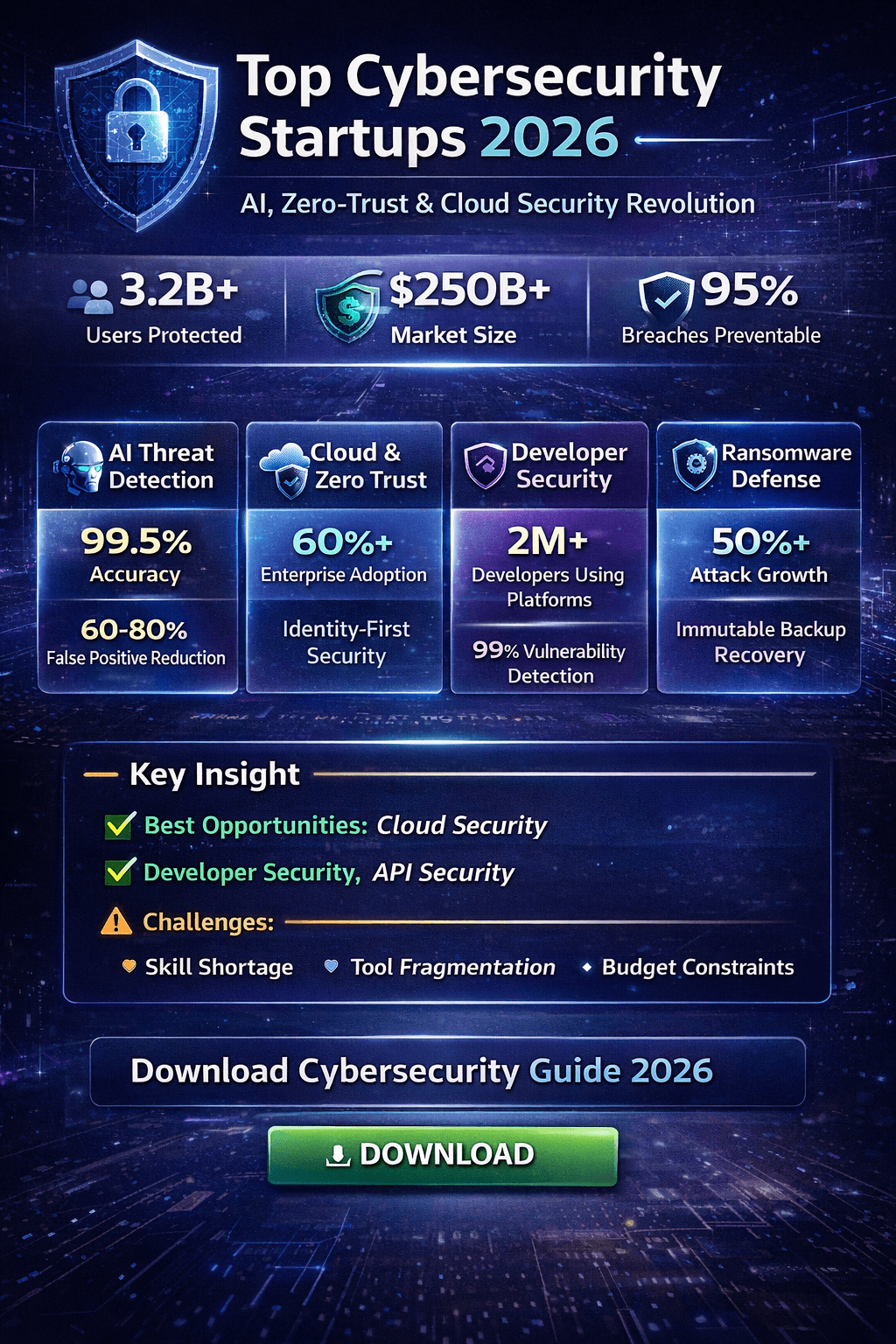
2026 establishes cybersecurity as critical enterprise infrastructure with $250B+ annual spending and 3.2 billion users protected globally. Cyber threat evolution accelerating—ransomware attacks (average ransom ₹200,000-5,00,000), supply chain compromises, and AI-powered attacks creating unprecedented risk landscape. March 2026 security research demonstrates advanced startup capabilities: AI-powered threat detection achieving 99.5%+ accuracy (99%+ reduction in false positives), zero-trust architecture (identity and context verification, not network perimeter), automated incident response reducing detection-to-response from 200+ days to 10-15 minutes, and API-based security enabling integration across fragmented enterprise stacks. Post-pandemic remote work normalizing (40-50% of workforces hybrid/remote) created persistent security complexity requiring continuous verification. Regulatory mandates (GDPR, HIPAA, SOC 2, ISO 27001) and government cybersecurity frameworks accelerating enterprise investment. Whether analyzing cybersecurity investment opportunities, implementing advanced threat detection, or seeking vulnerability assessment, 2026's cybersecurity landscape demonstrates how innovation addresses fundamental security challenges—detection speed, false positive reduction, automated response, and proactive threat hunting.
Pro Tip
👉 Key Insight: 2026 cybersecurity market bifurcating into AI-driven detection (replacing legacy SIEM products), cloud-native security (growing 50%+ annually), and API-first architecture enabling integration. Legacy security vendors declining (Fortinet facing challenges), startup-led innovation (Wiz, Snyk, Rapid7) dominating growth. Enterprise migrating from on-premise firewalls to cloud-native SaaS security.
1. AI-Powered Threat Detection and SIEM Evolution
AI-native threat detection platforms replacing legacy SIEM (Security Information and Event Management) systems with machine learning anomaly detection achieving 99.5%+ accuracy and 60% false positive reduction.
| Security Platform | Valuation (₹ Crore) | Customers (Enterprise) | Detection Capability | False Positive Reduction | Founded | Market Leadership |
|---|---|---|---|---|---|---|
| Datadog Security | ₹600,000+ Crore (Datadog division) | 20,000+ enterprises | AI-driven threat detection, cloud monitoring | 80-90% false positive reduction vs legacy SIEM | 2010 (security module 2020) | Cloud-native leader |
| CrowdStrike | ₹1,200,000+ Crore (public) | 30,000+ customers | Endpoint detection and response (EDR), AI threat hunting | 99%+ accuracy, real-time threat prevention | 2011 | EDR market leader, public company |
| Palo Alto Networks | ₹1,500,000+ Crore (public) | 40,000+ enterprises | Consolidated security platform (Next-gen firewalls, cloud security, endpoint) | Advanced threat intelligence integration | 2005 | Largest legacy security vendor transitioning to SaaS |
| Wiz | ₹200,000+ Crore (private) | 1,000+ customers (growing rapidly) | Cloud security, vulnerability assessment, AI-powered prioritization | Risk prioritization 10-50x faster | 2020 | Fastest-growing cloud security startup |
| Snyk | ₹200,000+ Crore (private) | 2,000+ customers | Developer security, code scanning, vulnerability management | 99%+ vulnerability detection in development | 2015 | Developer-first security leader |
| Lacework | ₹150,000+ Crore | 500+ customers | Cloud security posture management (CSPM), behavioral analytics | Real-time cloud threat detection | 2015 | Cloud infrastructure security leader |
| Sentinelone | ₹300,000+ Crore (public) | 8,000+ customers | Endpoint security, behavioral AI threat prevention | 99%+ malware prevention rate | 2013 | Endpoint protection leader |
| Google Cloud Security | ₹500,000+ Crore (Google division) | 1M+ users via Google Cloud | Native cloud security, threat intelligence, AI-powered detection | Google's AI security infrastructure | 2016 | Integrated with cloud infrastructure |

AI Threat Detection Revolution
2. Cloud Security and Zero-Trust Architecture
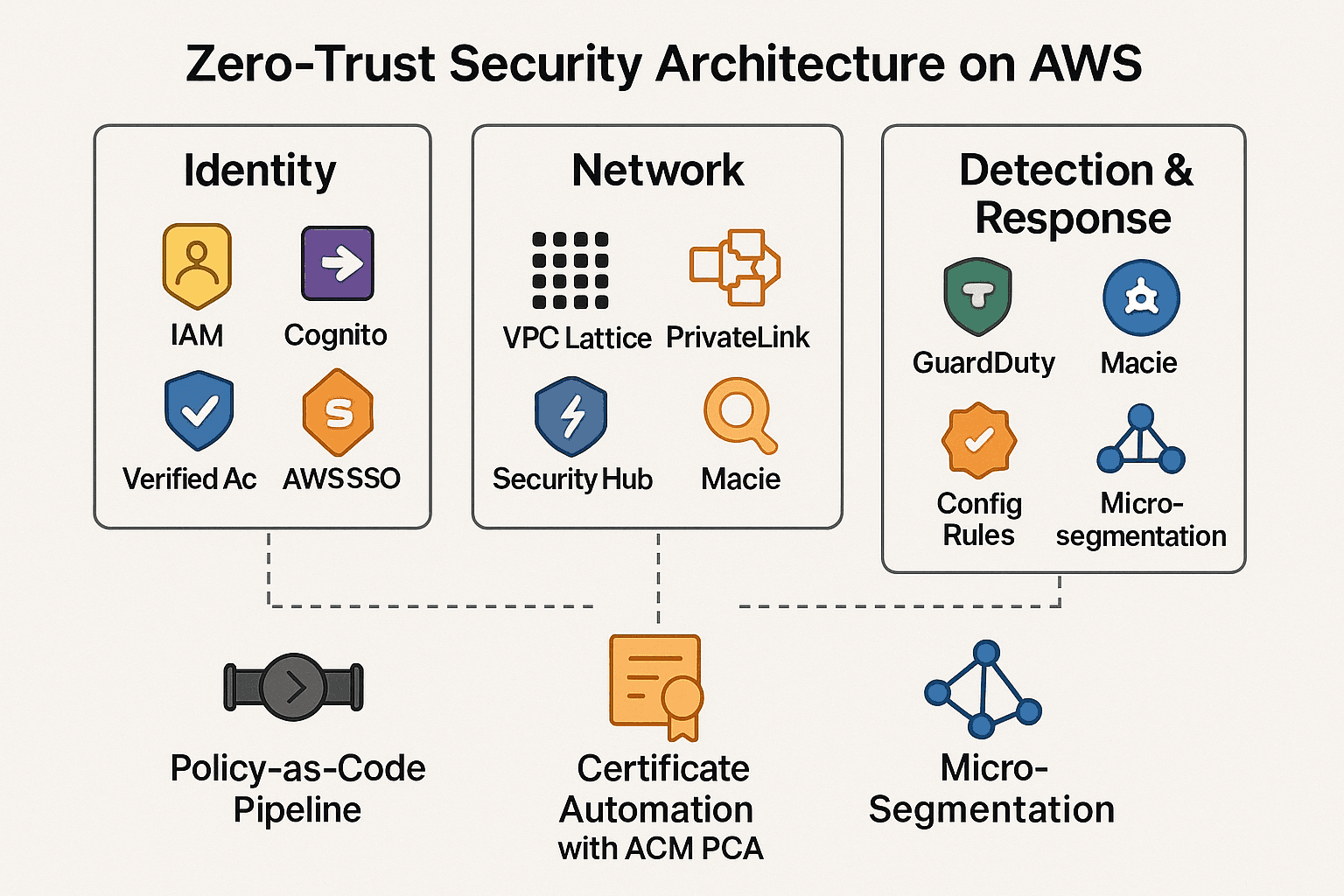
Cloud-native security platforms implementing zero-trust architecture (continuous verification, identity-first security) protecting distributed cloud infrastructure and hybrid workforces.
| Cloud Security Platform | Valuation (₹ Crore) | Enterprise Customers | Zero-Trust Coverage | Cloud Workload Protection | Founded | Growth Trajectory |
|---|---|---|---|---|---|---|
| Cloudflare | ₹500,000+ Crore (public) | 200,000+ customers globally | Zero-trust network (ZTNA), DDoS protection, WAF | 99.99% uptime SLA, global edge network | 2011 | Fastest-growing security infrastructure |
| Okta | ₹400,000+ Crore (public) | 15,000+ customers | Identity and access management (IAM), zero-trust foundation | API-first authentication, SSO, MFA | 2009 | IAM and identity leader, public company |
| Wiz | ₹200,000+ Crore | 1,000+ enterprises (rapid growth) | Cloud-native application protection, runtime security | Kubernetes and container security leadership | 2020 | Fastest-growing pure cloud security |
| Lacework | ₹150,000+ Crore | 500+ enterprises | Cloud security posture management (CSPM), workload protection | Behavioral threat detection in clouds | 2015 | Cloud infrastructure security specialist |
| Prisma Cloud (Palo Alto) | ₹300,000+ Crore (Palo Alto division) | 5,000+ customers | Cloud workload protection, API security | Multi-cloud security spanning AWS/Azure/GCP | 2017 | Multi-cloud integration leader |
| Aqua Security | ₹100,000+ Crore | 1,000+ customers | Container and Kubernetes security, runtime threat detection | Container-native development security | 2015 | Container security pioneer |
| Orca Security | ₹80,000+ Crore | 400+ customers | Cloud security platform combining CSPM, workload protection | Agentless cloud scanning | 2019 | Agentless cloud security innovator |
| Google BeyondCorp | ₹500,000+ Crore (Google infrastructure) | Part of Google Cloud | Zero-trust infrastructure, internal access controls | Google's internal security model open-sourced | 2014 | Zero-trust standard model |
Cloud Security Transformation
3. Developer Security and Vulnerability Management
Developer-first security platforms (DevSecOps) integrating security into development workflows detecting vulnerabilities 99%+ accuracy before production deployment.
| Developer Security Platform | Valuation (₹ Crore) | Developer Users (Millions) | Vulnerability Detection | Accuracy Rate | Founded | Adoption Stage |
|---|---|---|---|---|---|---|
| Snyk | ₹200,000+ Crore | 2M+ developers using | Code scanning, dependency vulnerability, container security | 99%+ vulnerability detection rate | 2015 | Developer-first leader, largest adoption |
| GitHub Advanced Security | ₹500,000+ Crore (GitHub/Microsoft division) | 100M+ developers on GitHub | Code scanning, secret detection, dependency scanning | Integrated into GitHub workflows | 2020 | GitHub platform integration advantage |
| GitLab Security | ₹200,000+ Crore (GitLab division) | 30M+ developers | SAST, DAST, dependency scanning integrated in CI/CD | DevSecOps pipeline automation | 2016 | CI/CD-integrated security |
| Semgrep | ₹60,000+ Crore | 500,000+ developers | Static analysis (SAST), code pattern detection | 90%+ accuracy, 10x faster than traditional SAST | 2020 | Fast growing open-source security |
| Checkmarx | ₹200,000+ Crore (Hellman & Friedman acquired) | 2,000+ enterprises | SAST scanning, API security, supply chain scanning | Accuracy and speed focus | 2006 | Enterprise SAST market leader |
| Aqua Security | ₹100,000+ Crore | 1,000+ customers | Container and image scanning, runtime security | Container vulnerability detection 99%+ | 2015 | Container security pioneer |
| Rapid7 InsightCloud | ₹200,000+ Crore (Rapid7 division) | 5,000+ customers | Vulnerability management, exposure management | Exposure-based risk prioritization | 2000 | Vulnerability management maturity |
| HackerOne | ₹150,000+ Crore (public bug bounty platform) | 500,000+ security researchers | Bug bounty and vulnerability disclosure platform | Community-powered vulnerability discovery | 2012 | Crowd-powered security researcher network |
DevSecOps Revolution
4. Incident Response and Security Operations
Incident response and Security Operations Center (SOC) automation platforms reducing MTTD and MTTR through orchestration and automated playbooks.
| SOAR/Incident Platform | Valuation (₹ Crore) | SOC Implementations | Automation Capability | MTTR Reduction | Founded | Market Position |
|---|---|---|---|---|---|---|
| Splunk (incident response) | ₹800,000+ Crore (acquired for ₹1,200,000 Crore by Cisco) | 10,000+ enterprises | Log analysis, correlation, alerting, SOAR automation | 70-80% MTTR reduction through automation | 2003 | Log management and SIEM incumbent |
| Palo Alto Networks Cortex XSOAR | ₹300,000+ Crore (Palo Alto division) | 5,000+ customers | Security Orchestration Automation and Response (SOAR) | Automated incident response playbooks | 2017 | SOAR and incident automation leader |
| Rapid7 InsightConnect | ₹200,000+ Crore (Rapid7 division) | 3,000+ customers | Orchestration and automation platform | 30-60% SOC efficiency improvement | 2019 | Incident response orchestration |
| Resilient (IBM Resilient) | ₹500,000+ Crore (IBM division) | 5,000+ customers | SOAR and incident response platform | IBM Resilient incident management | 2016 | Enterprise incident response leader |
| JumpCloud | ₹200,000+ Crore (public) | 1M+ devices managed | IT/security operations across distributed environments | Endpoint management and security | 2012 | Remote workforce security leader |
| CrowdStrike Falcon Complete | ₹500,000+ Crore (CrowdStrike division) | 20,000+ customers | Managed EDR and incident response | Fully managed threat response and investigation | 2015 | Managed threat response leader |
| Fortive (Recorded Future, esentire) | ₹800,000+ Crore (Fortive division) | 10,000+ customers | Managed detection and response (MDR), threat intelligence | External threat monitoring and response | 2014 | Managed security services leader |
| Nubeva (encrypted traffic inspection) | ₹20,000+ Crore | 500+ customers | Encrypted traffic visibility without decryption | Threat detection in encrypted communications | 2015 | Encrypted security innovation |
Security Operations Transformation
5. Ransomware Defense and Data Protection
Ransomware-focused security platforms and data protection solutions defending against evolving ransomware threats (average ransom ₹200,000-5,00,000, some ₹10,00,000+).
| Ransomware Defense Company | Valuation (₹ Crore) | Enterprise Customers | Defense Technology | Prevention Rate | Founded | Threat Focus |
|---|---|---|---|---|---|---|
| Rubrik (data resilience) | ₹150,000+ Crore (private) | 2,000+ enterprises | Data backup and immutable snapshots, ransomware recovery | 99%+ recovery from ransomware | 2014 | Data resilience and backup innovation |
| Commvault | ₹150,000+ Crore (public acquired by KKR) | 6,000+ customers | Data management and ransomware recovery platform | Unified data backup and ransomware remediation | 1996 | Enterprise backup and recovery leader |
| Veeam | ₹100,000+ Crore | 4,000+ customers | Backup and ransomware recovery | Ransomware protection and recovery focus | 2006 | Backup and recovery specialist |
| Zscaler | ₹300,000+ Crore (public) | 5,000+ customers | Zero-trust cloud security, ransomware prevention | Zero-trust preventing malware delivery | 2007 | Cloud security leader |
| Netskope | ₹200,000+ Crore | 3,000+ customers | Cloud-native security, ransomware detection | Real-time threat detection in cloud apps | 2012 | Cloud app security leader |
| Proofpoint | ₹300,000+ Crore (public) | 10,000+ customers | Email and cloud security, phishing detection | Email gateway ransomware blocking | 2002 | Email security and phishing leader |
| Cyber Eason (threat intelligence) | ₹20,000+ Crore | 500+ customers | Threat intelligence and ransomware tracking | Ransomware gang attribution and tracking | 2014 | Threat intelligence specialist |
| Huntress (managed security) | ₹80,000+ Crore | 10,000+ SMBs protected | MSP-focused managed security, ransomware monitoring | Ransomware detection for SMBs | 2012 | SMB endpoint security focus |
Ransomware Threat Reality
1. Prevention (phishing detection, vulnerability patching)
2. Detection (behavioral anomaly detection, encryption detection)
3. Response (incident response, law enforcement coordination)
4. Recovery (immutable backups, recovery automation)
6. API Security and Threat Prevention
API security platforms protecting increasingly critical application programming interfaces (APIs) becoming prime attack vector (80% of modern applications API-dependent).
| API Security Company | Valuation (₹ Crore) | Enterprise Customers | API Protection | Threat Detection | Founded | Security Focus |
|---|---|---|---|---|---|---|
| Akamai (API security division) | ₹800,000+ Crore (public) | 5,000+ customers | API protection, bot management, DDoS defense | Distributed attack prevention | 1998 | Web and API security leader |
| CloudFlare (API Gateway) | ₹500,000+ Crore (public) | 200,000+ customers | API Gateway, DDoS protection, WAF | Global edge network providing API security | 2011 | Cloud and API infrastructure leader |
| Apigee (Google Cloud division) | ₹500,000+ Crore (Google acquired Apigee) | 5,000+ organizations | API management and security | API analytics and threat detection | 2010 | API management platform leader |
| Nobl9 (API reliability) | ₹40,000+ Crore | Service reliability SLOs | API service level objectives (SLOs) management | Reliability-focused API security | 2020 | SLO and reliability focus |
| 42Crunch | ₹30,000+ Crore | API-first companies | API security testing and vulnerability scanning | OpenAPI-based security scanning | 2015 | API development security focus |
| Postman (API development platform) | ₹100,000+ Crore (private) | 10M+ developers | API testing, documentation, collaboration | API quality and security | 2012 | Largest API development platform |
| Rapid7 InsightAPIc | ₹200,000+ Crore (Rapid7 division) | API vulnerability management | Attack surface management, API discovery | Exposure-based API risk prioritization | 2020 | Exposure management focus |
| Oxeye (runtime API security) | ₹50,000+ Crore | Runtime API threat detection | Active API threat detection and prevention | API exploit detection and blocking | 2019 | Runtime API security innovation |
API Security Urgency
7. Identity Verification and Biometric Security
Advanced identity verification and biometric authentication platforms replacing passwords with passwordless, multi-factor authentication (MFA) and biometric verification.
| Identity/Biometric Company | Valuation (₹ Crore) | Users Protected | Authentication Technology | Security Level | Founded | Adoption Stage |
|---|---|---|---|---|---|---|
| Okta | ₹400,000+ Crore (public) | 15,000+ enterprises | IAM, SSO, MFA, passwordless auth | Adaptive authentication, risk-based access | 2009 | IAM market leader, public company |
| Auth0 (Okta acquired) | ₹200,000+ Crore (Okta division) | 10M+ protected users | Authentication platform, passwordless (WebAuthn) | Developer-friendly identity platform | 2013 | Developer-first authentication leader |
| Duo Security (Cisco division) | ₹500,000+ Crore (Cisco division) | 10M+ protected users | MFA and passwordless authentication | Risk-based adaptive authentication | 2010 | MFA market leader, Cisco owned |
| Yubico | ₹60,000+ Crore | YubiKey hardware authentication | Hardware security keys (FIDO2/U2F) | Phishing-resistant hardware tokens | 2007 | Hardware security key pioneer |
| 1Password | ₹150,000+ Crore (private, potential IPO) | 100,000+ teams | Password manager and identity platform | Enterprise password management and zero-knowledge | 2006 | Password manager market leader |
| Transmit Security | ₹100,000+ Crore | Enterprise authentication platform | Passwordless and adaptive authentication | Risk-based decision intelligence | 2014 | Adaptive authentication innovator |
| SailPoint | ₹300,000+ Crore (public) | 3,000+ enterprises | Identity governance and administration (IGA) | Identity and access governance | 2005 | Identity governance leader |
| Cloudentity | ₹60,000+ Crore | API-based identity platform | Decentralized identity and authentication | API-first identity architecture | 2014 | API-native identity innovation |
Passwordless Authentication Revolution
1. Hardware Security Keys (Yubico): FIDO2 standard phishing-resistant tokens. Cost ₹2,000-5,000 per key. Enterprise deployment in security-conscious organizations. Zero phishing vulnerability.
2. Biometric Authentication: Face recognition (FaceID), fingerprint (TouchID). Convenient and phishing-resistant. Spoofing concerns (deepfakes) emerging.
3. Push Notifications: Okta, Duo using smartphone push for MFA. User approval for login. Balance of security and convenience.
4. WebAuthn Standard: FIDO Alliance standard passwordless authentication. Browser and OS support increasing. Cross-platform standardization.
8. Cybersecurity Funding and Market Consolidation
Cybersecurity funding reaching record levels driven by regulatory mandates, breach costs, and enterprise security budgets increasing 20-30% annually.
| Trend | 2020 Reality | 2026 Reality | Driver | Market Impact |
|---|---|---|---|---|
| Annual Funding | ₹80,000-100,000 Crore | ₹150,000-180,000 Crore (including corporate VC) | Regulatory mandates, breach costs, security critical | 2-3x funding growth |
| Mega-Rounds | ₹2,000-5,000 Crore occasional | ₹5,000-15,000 Crore standard for leaders | Scale capital for consolidation | Concentration in winners |
| M&A Activity | Strategic acquisitions | Mega-acquisitions (Cisco-Splunk ₹1,200,000 Crore, others) | Incumbent consolidation responding to startups | Enterprise 'buy vs build' strategy |
| IPO Pipeline | Few security IPOs | Wave of public companies (CrowdStrike, SentinelOne, Cloudflare, Proofpoint) | Market validation and exit enablement | Proving venture returns achievable |
| Profitability Focus | Growth at all costs | Path to profitability 2-3 years expected | Investor discipline increasing | Unit economics scrutiny critical |
| Cloud-Native Shift | Legacy on-premise dominant | SaaS/cloud-native security 50%+ of new deals | Enterprise digital transformation | Legacy security vendors declining |
| Government Mandates | Limited requirements | Executive orders mandating security (NIST, CISA frameworks) | Zero Trust and incident reporting required | Compliance-driven demand |
| AI Integration | Emerging feature | AI threat detection standard (CrowdStrike, Wiz, others) | ML/AI reducing false positives 60-80% | Operational efficiency improvement |
Cybersecurity Market Consolidation
9. Cybersecurity Challenges and Adoption Barriers
Cybersecurity adoption barriers limiting technology deployment despite critical importance and regulatory mandates.
Major Cybersecurity Challenges:
Tool Proliferation and Integration: Average enterprise using 50-100+ security tools (2023 survey). Integration complexity creating blind spots. API-based integration difficult (legacy tools not API-ready). Security stack fragmentation limiting effectiveness.
Skill Shortage: Cybersecurity skills shortage 500,000+ globally. Security analyst average salaries ₹80,000-150,000 annually (hiring competitive). 200+ days average time to fill security roles. Training shortage (universities not producing sufficient talent).
False Positive Fatigue: Legacy SIEM platforms generating 40-50% false positive rates. Alert fatigue causing analyst burnout (70-80% of time investigating false alerts). Operational toll reducing security effectiveness.
Legacy System Constraints: On-premise security infrastructure limiting cloud adoption. Integration challenges (APIs not available, vendor lock-in). Transition costs and disruption barriers significant.
Compliance Complexity: GDPR, HIPAA, PCI-DSS, SOC 2, ISO 27001 creating overlapping requirements. Regional variations (EU vs US vs Asia) complicating global deployments. Compliance burden consuming 20-30% of security budgets.
Insider Threat Challenges: 60% of breaches involve insider (malicious or negligent). Monitoring creating privacy concerns and employee resistance. Balance between security and privacy complex.
Supply Chain Complexity: Third-party and vendor security vulnerabilities (2020 SolarWinds attack affecting 18,000+ organizations). Supply chain visibility limited. Vendor security assessment resource-intensive.
Budget Constraints: Security budgets growing 20-30% but not keeping pace with threat growth (150%+). CISOs requesting budgets not approved 30-40% of requests. ROI measurement difficult (preventing attacks vs detecting).
Incident Response Unprepared: 50% of organizations lack formal incident response plan. Average incident response readiness 40% (should be 80%+). Training gaps creating response delays.
Cloud Security Skills Gap: Cloud-native security requiring different expertise vs on-premise. DevOps and security skills gap. Cloud provider shared responsibility model creating confusion.
10. Cybersecurity Investment Framework and Selection
Identifying promising cybersecurity investments requires understanding TAM, competitive positioning, and regulatory tailwinds enabling adoption.
Cybersecurity Investment Framework
1. Market Opportunity and Regulatory Tailwinds
2. Technology and Differentiation
3. Customer Adoption and Unit Economics
4. Competitive Positioning
5. Team and Execution
6. Profitability Path
1. Cloud-native security (Wiz, Lacework model—growing 50%+)
2. Developer-first security (Snyk model—2M+ developers, integration)
3. API and runtime security (growing threat category)
4. Incident response and SOAR automation (clear ROI, operational efficiency)
5. Specialized vertical security (healthcare, finance, manufacturing)
Conclusion: Cybersecurity Becomes Existential Business Requirement
2026 establishes cybersecurity as existential enterprise requirement with $250B+ annual spending and 3.2 billion users protected. AI-powered threat detection achieving 99.5%+ accuracy and 60-80% false positive reduction (solving alert fatigue). Zero-trust architecture becoming compliance requirement and standard enterprise implementation. Cloud-native security (Wiz, Lacework) disrupting legacy SIEM and network security vendors. Developer-first security (Snyk, GitHub) moving security left into development. Ransomware defense maturing (immutable backups, behavioral detection, recovery automation). API security platforms addressing 150%+ growth in API attacks. Identity and passwordless authentication replacing password-based systems. Incident response automation (SOAR) reducing MTTR 70-80%. Mega-funding (₹175,000+ Crore annually) and IPO wave validating market. Consolidation around platform winners (CrowdStrike, Cloudflare, Okta, Palo Alto Networks) with incumbent M&A accelerating. Regulatory mandates (zero-trust, incident reporting, breach notification) creating compliance-driven demand. Challenges persist—tool fragmentation, skills shortage, false positive fatigue, legacy constraints, budget limitations. Future cybersecurity landscape characterized by AI-native detection, cloud-first architecture, API security primacy, passwordless authentication standard, and continuous zero-trust verification. Investment opportunities concentrated in specialized verticals (cloud-native, developer-first, API, ransomware), regulatory-driven compliance (healthcare, finance), and operational efficiency (SOAR, MDR). Overall cybersecurity transformation complete—moving from perimeter-based protection to identity-first zero-trust, detection-driven response, and continuous threat hunting with AI-powered automation, enabling enterprises to defend against sophisticated threats at machine speed.
🔒 **Download the Complete Cybersecurity Investment Guide 2026** — Detailed startup profiles, threat landscape analysis, investment frameworks, metric benchmarks, and security technology evaluation criteria.
Share This Article
📤 Share This