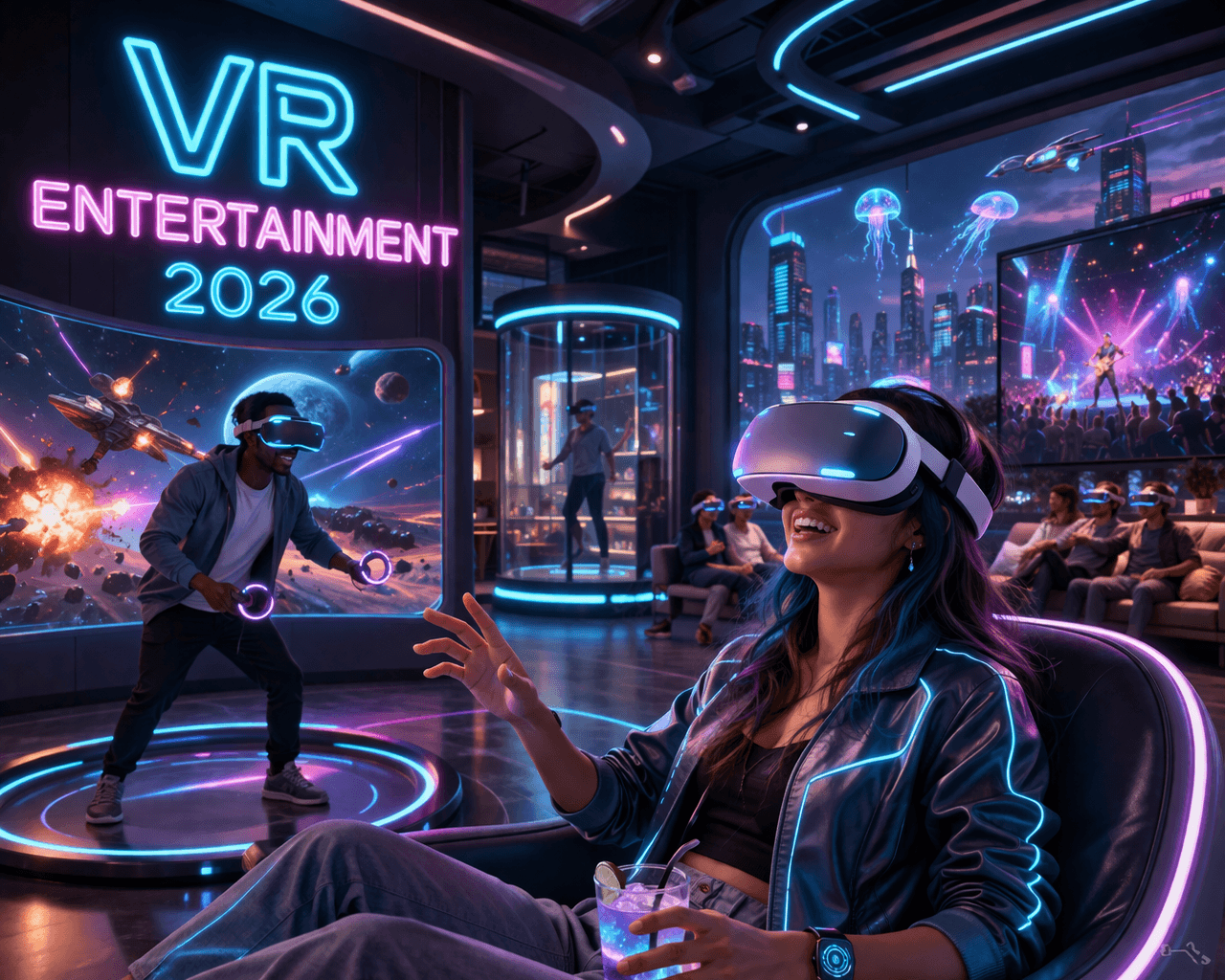
Introduction: VR Entertainment Reaches Mainstream
2026 marked VR entertainment's definitive transition from niche enthusiast activity to mainstream entertainment medium. With 85M+ VR headsets in consumer hands, $32.4B market revenue, and 450K+ VR entertainment venues globally, virtual reality achieved mainstream viability. From immersive concerts and interactive narratives to social VR experiences and location-based entertainment, VR transformed how audiences experience entertainment across all genres.
Pro Tip
👉 The Immersion Revolution: VR in 2026 isn't about technology—it's about creating emotional and sensory experiences impossible in traditional media. The competitive advantage shifted from hardware specs to content quality and experience design.
1. VR Gaming: From Niche to Mainstream
VR gaming evolved from experimental novelty to mature entertainment category, with AAA-quality games, diverse genres, and mainstream audience adoption.
| VR Game Genre | Notable Titles 2026 | Player Base | Revenue Model | Experience Type |
|---|---|---|---|---|
| Action/Combat | Half-Life Alyx 2, Blade & Sorcery Evolution, Boneworks 2 | 18M active players | Premium purchase + DLC | Physics-based interaction, spatial combat |
| Puzzle/Adventure | Portal VR, Myst Immersion, Outer Wilds VR | 12M active players | Subscription/Purchase | Spatial reasoning, exploration, storytelling |
| Social VR | VRChat Evolution, Meta Horizon Worlds 2.0, VirtualLand | 35M active players | Free-to-play + cosmetics | Avatar customization, social interaction, events |
| Rhythm/Music | Beat Saber 2, Sound Boxing Evolution, Music Warp | 8M active players | Subscription/$19.99 | Full-body motion tracking, immersive music |
| Sports/Fitness | VR Tennis, Supernatural 2, Thrill of the Fight 2 | 15M active players | Subscription $9.99-14.99 | Full-body exercise, competitive sports, fitness |
| Story-Driven | Alyx Narrative: Aftermath, Lone Echo Evolution, Chronos II | 6M active players | Premium purchase $29.99-49.99 | Cinematic storytelling, character-driven narrative |

Gaming Hardware Integration
VR gaming achieved console-quality graphics and performance. Haptic feedback suits, advanced motion controllers, and full-body tracking created increasingly immersive physical interaction with virtual environments. Advanced hand-tracking technology eliminated need for controllers in many applications.
2. Virtual Concerts and Live Music Experiences
Virtual concerts evolved from pandemic-era emergency broadcasting to premium entertainment experiences attracting millions of participants and generating significant revenue.
VR Concert Experience Categories:
Live Artist Performances — Real-time concerts where artists performed to live VR audiences. Avatar interactions enabled audience-performer connection; real-world performers captured via volumetric video technology enabled photorealistic presence.
Recorded Immersive Concerts — High-production value recorded concerts featuring 360-degree camera, surround sound, and interactive elements. Artists controlled virtual concert aesthetics—custom venues, visual effects, and immersive environments.
Music Festival Experiences — Multi-artist festival experiences recreating festival atmospheres in virtual venues. Attendees interacted with avatars representing other participants; social elements replicated physical festival experiences.
Artist Collaboration Concerts — Impossible real-world collaborations became feasible in VR. Deceased artists (via holographic recreations), geographically distant performers, and artistic crossovers created unprecedented concert experiences.
Personalized Concert Experiences — AI-generated concerts customized to individual taste, featuring artist performances trained on historical concert data. Personalization created unique concert experiences for each participant.
| Concert Type | Average Attendance | Ticket Price | Revenue per Event | Notable Examples |
|---|---|---|---|---|
| Live Artist Performance | 500K-2M concurrent | $15-$50 | $15M-$80M | Beyoncé VR Tour, The Weeknd Immersion, Coldplay Experience |
| Music Festival Experience | 1M-5M concurrent | $20-$75 | $30M-$300M | Coachella VR, Tomorrowland Universe, Burning Man Virtual |
| Recorded Immersive Concert | 100K-500K concurrent | $10-$25 | $2M-$10M | Historical concert reproductions, artist archive experiences |
| Personalized Concerts | On-demand | $5-$20 | Per-person payment | AI-generated artist concerts, nostalgia experiences |
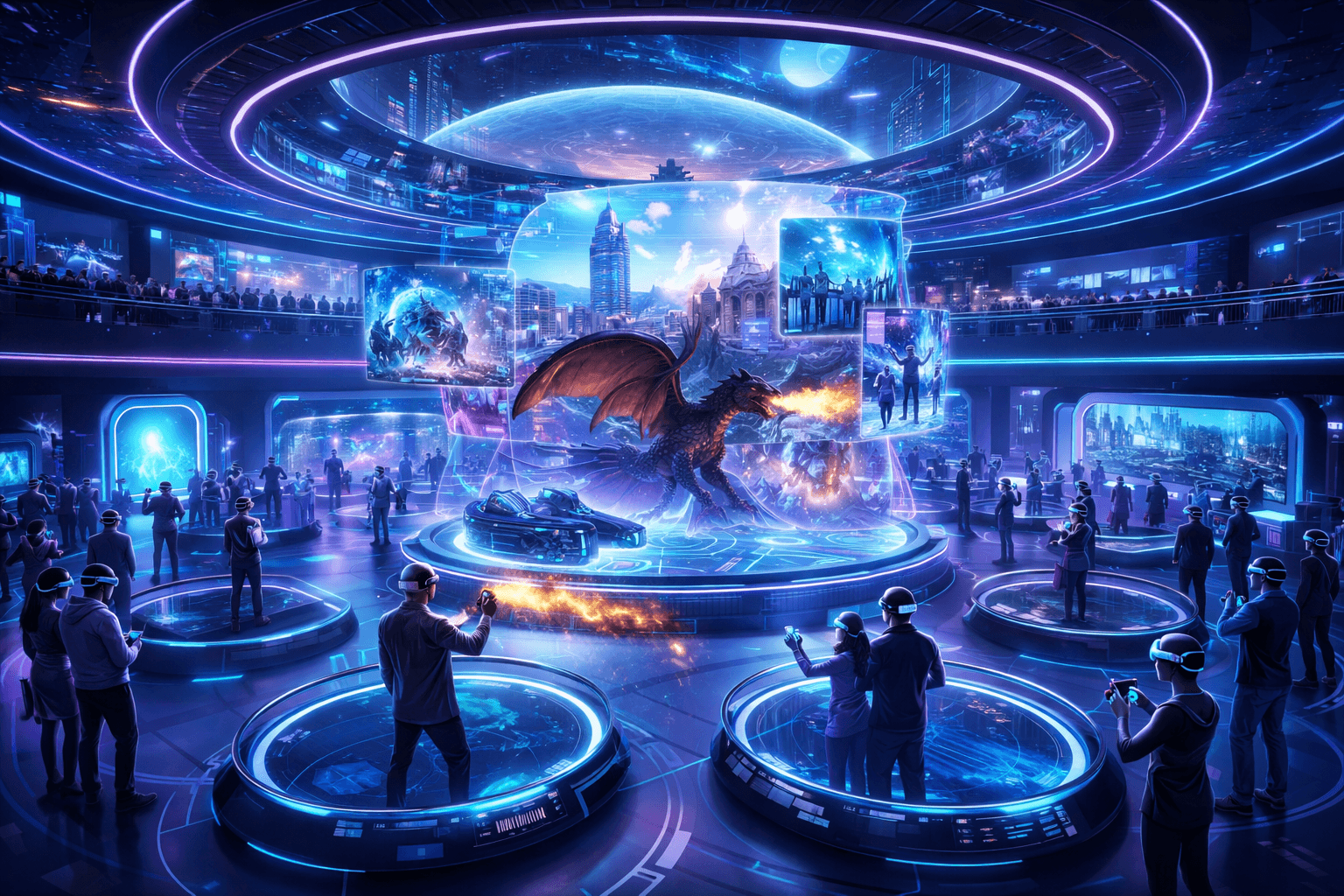
Concert Revenue Model Shift
Musicians increasingly generated more revenue from VR performances than traditional touring. Virtual concert economics—unlimited venue capacity, no travel costs, international simultaneous accessibility—created superior revenue potential compared to physical touring constraints.
3. Interactive Storytelling and Narrative VR
VR storytelling evolved beyond passive film-like experiences to interactive narratives where audience choices influenced story outcomes.
VR Storytelling Innovations:
Choice-Driven Narratives — VR experiences where audience decisions influenced narrative direction, character relationships, and story outcomes. Multiple endings and branching storylines rewarded replaying experiences.
Environmental Storytelling — Rich virtual environments conveyed narrative through environmental detail, architectural design, and spatial relationships. Players discovered story elements through exploration and observation.
Multiplayer Narrative Experiences — Shared VR experiences where multiple players influenced shared narratives. Cooperative storytelling and collaborative problem-solving defined multiplayer VR narratives.
Educational Narratives — Historical events, scientific concepts, and educational content presented through immersive narrative experiences. Learning through immersive storytelling increased retention and engagement.
Psychological Horror and Thriller Experiences — VR's immersive nature amplified horror and psychological thriller experiences. Spatial presence and sensory immersion created intense emotional reactions previously impossible in traditional media.
4. Location-Based VR Entertainment Venues
Physical VR entertainment venues thrived as social destinations, offering high-end experiences inaccessible to home consumers.
| Venue Type | Global Locations | Average Revenue per Venue | Primary Experience | Market Growth |
|---|---|---|---|---|
| VR Arcades/Gaming Centers | 185K locations | $450K-$800K annually | Competitive gaming, arcade experiences | Stable maturity |
| VR Theme Parks/Attractions | 12K locations | $2M-$8M annually | Large-scale motion experiences, narrative attractions | Strong growth |
| Social VR Lounges | 42K locations | $300K-$600K annually | Social hangouts, multiplayer gaming | Rapid growth |
| VR Fitness Studios | 28K locations | $500K-$1.2M annually | Full-body fitness, dance, sports training | Explosive growth |
| Premium Entertainment Venues | 8K locations | $5M-$20M+ annually | High-end experiences, flagship attractions | Steady expansion |
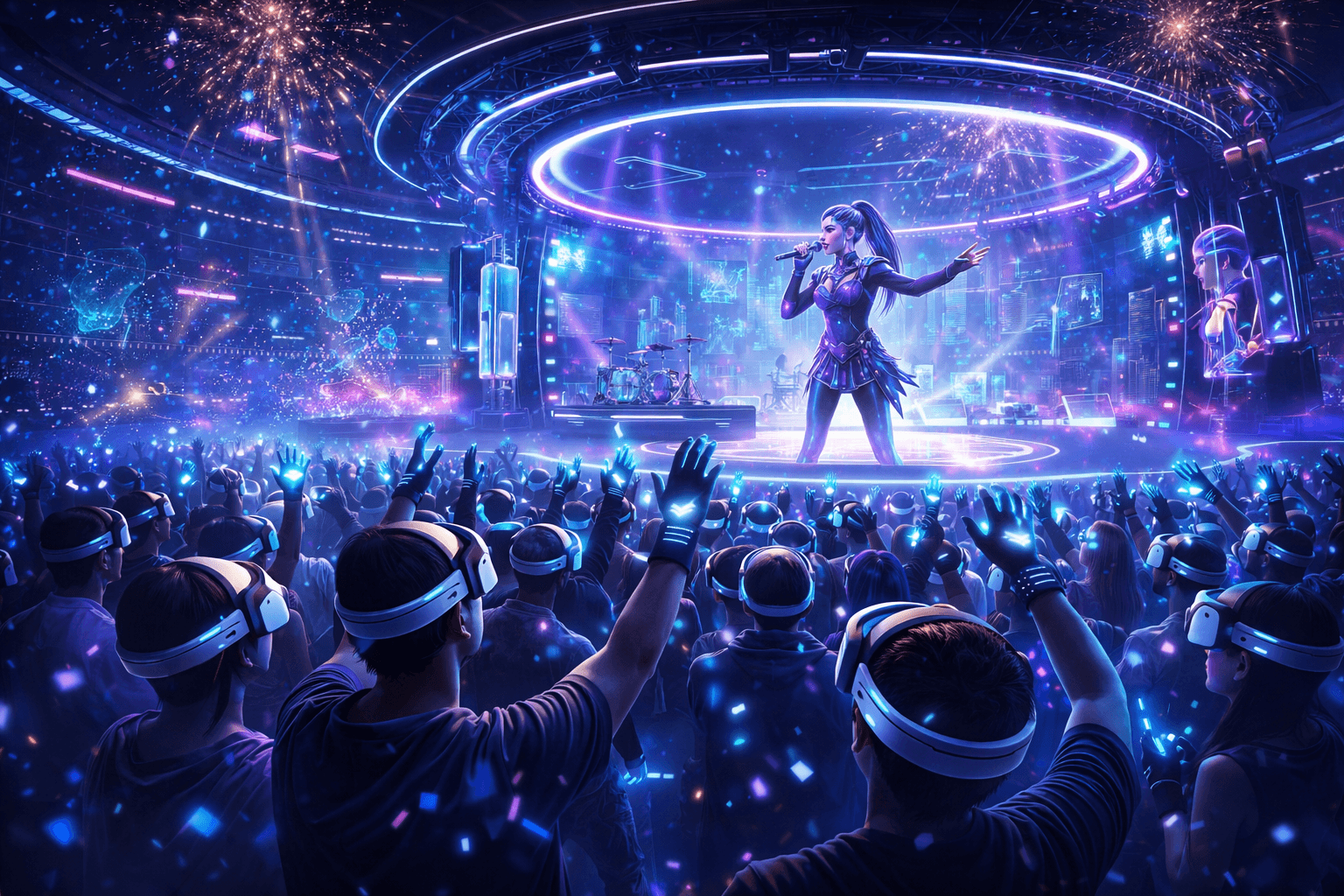
Venue Revenue Growth
VR entertainment venues represented one of fastest-growing entertainment sectors. Location-based experiences generating superior ROI compared to home VR, particularly for premium experiences requiring expensive hardware or large play spaces. Social aspects of venue-based experiences drove sustained growth.
Social VR platforms and metaverse entertainment created persistent virtual worlds where users socialized, attended events, and participated in shared experiences.
| Platform | Active Users | Key Features | Revenue Model | Social Emphasis |
|---|---|---|---|---|
| Meta Horizon Worlds 2.0 | 22M monthly active | Avatar customization, world creation, events | In-world purchases, sponsorships | Mainstream social focus |
| VRChat Evolution | 18M monthly active | Community-driven worlds, social interaction | Free-to-play cosmetics | Creator economy emphasis |
| AltspaceVR 2.0 | 8M monthly active | Events, concerts, educational experiences | Event ticketing, sponsorships | Event-focused community |
| Roblox VR Integration | 15M VR users | User-generated content, gaming, socializing | In-game purchases, developer revenue share | Creator-driven content |
| Decentraland Enhanced | 5M monthly active | Virtual real estate, events, digital economy | Cryptocurrency, NFT trading, sponsorships | Web3/blockchain integration |
Metaverse Entertainment Economy
Social VR platforms developed mature economic systems. Users generated income through content creation, event hosting, virtual real estate development, and digital goods sales. Top creators earned $50K-$500K+ annually through metaverse activities.
6. VR Hardware Evolution and Accessibility
VR hardware matured significantly in 2026, with improved affordability, performance, and accessibility features expanding market reach.
| Headset Category | Price Range | Key Features | Market Share | Target Audience |
|---|---|---|---|---|
| Entry-Level Standalone | $199-$299 | Integrated processor, no PC required, basic graphics | 35% | Casual users, new adopters |
| Mid-Range Standalone | $349-$499 | Enhanced performance, improved optics, larger library | 42% | Mainstream consumers, enthusiasts |
| Premium/PC-Connected | $599-$999 | Ultra-high resolution, advanced tracking, AAA gaming | 18% | Hardcore gamers, professionals |
| Enterprise/Professional | $1,000-$5,000+ | Industrial-grade performance, specialized tracking | 5% | Business applications, training |
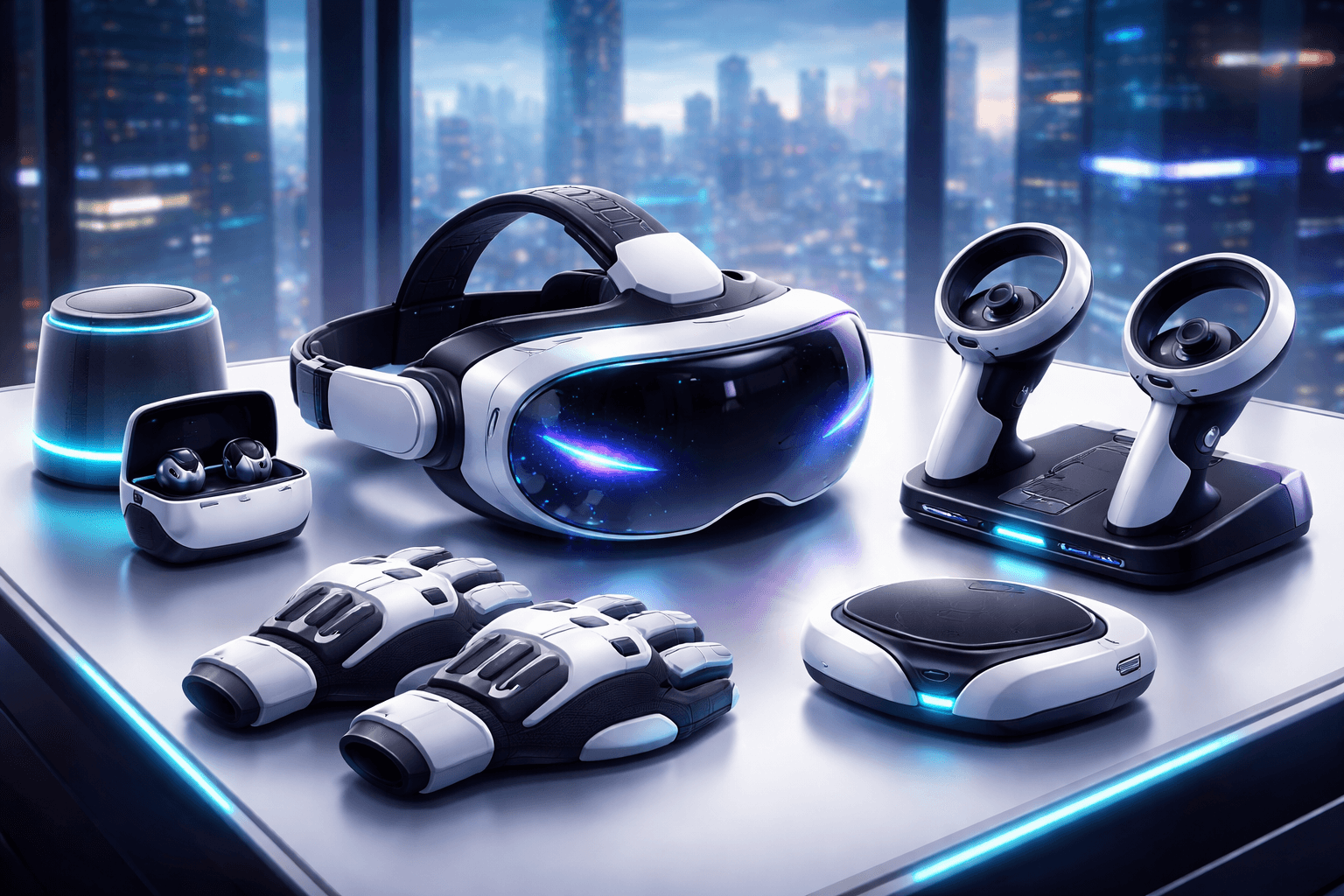
Accessibility Innovations
2026 VR hardware incorporated accessibility features—customizable hand tracking for users with limited mobility, audio descriptions for visually impaired users, and haptic feedback alternatives for hearing-impaired users. Universal accessibility design expanded VR audience beyond traditional tech-savvy demographics.
7. VR Film and Cinematic Experiences
VR filmmaking evolved as artistic medium, with independent creators and major studios producing cinematic VR experiences rivaling traditional film in production quality.
VR Cinema Innovations:
360-Degree Cinematic Narratives — Feature-length VR films exploiting 360-degree perspective and spatial sound. Immersive cinematography created emotional intensity impossible in traditional film medium.
Interactive Cinema — VR films where audience gaze direction influenced narrative elements and camera focus. User choices subtly influenced storytelling, creating personalized cinematic experiences.
Volumetric Capture Films — Actor performances captured via volumetric technology enabling photorealistic presence and interaction in virtual narratives.
VR Film Festivals — Dedicated VR film festivals showcased independent and professional VR cinema. Film awards legitimized VR as artistic filmmaking medium. VR films received major festival recognition (Sundance, Tribeca, Venice).
Distributed VR Cinema — VR films distributed via streaming platforms and VR arcades. Independent filmmakers reached global audiences without traditional film distribution infrastructure.
8. Education and Training VR Experiences
Educational and training VR applications achieved significant adoption across corporate, academic, and healthcare sectors.
VR Education Applications:
Professional Training — VR simulations trained pilots, surgeons, military personnel, and other professionals in high-risk scenarios without real-world risk. Training effectiveness improved 40-60% compared to traditional methods.
Academic Education — Immersive virtual field trips, science labs, and historical recreations enhanced learning outcomes. Students experienced content impossible to access physically.
Language Learning — Immersive virtual environments enabled conversation-based language learning with AI-powered conversation partners.
Corporate Training — Soft skills training, safety protocols, and procedural training via VR improved retention and application compared to traditional training methods.
Healthcare Training — Medical students and healthcare professionals trained on complex procedures in safe VR environments. Surgical training via VR improved outcomes when transitioning to real procedures.
9. AR Integration and Mixed Reality Evolution
Augmented reality and mixed reality technologies blurred boundaries between virtual and physical experiences, creating hybrid entertainment formats.
AR/Mixed Reality Entertainment Evolution:
Mobile AR Games — Location-based AR games (evolved Pokémon GO successors) generated $3.2B revenue. Mass-market AR gaming adoption exceeded VR by 15:1 user base.
AR Entertainment Experiences — Theme parks, museums, and venues incorporated AR overlays enhancing physical experiences with digital information and interactive elements.
Social AR Filters — AR filters on social platforms (Instagram, TikTok, Snapchat) became primary AR consumer experience. Entertainment filters generated viral moments and cultural impact.
Enterprise AR — Retail AR try-on experiences, architectural visualization, and industrial AR applications demonstrated practical AR entertainment and utility integration.
Spatial Computing — Apple Vision Pro and similar spatial computing devices created mixed reality experiences blending digital and physical spaces. Spatial computing represented next evolution beyond pure VR or AR.
Conclusion: VR Entertainment Maturity
2026 confirmed VR entertainment's transformation from experimental technology to mainstream entertainment medium. With 85M+ headsets installed, $32.4B market revenue, and diverse entertainment applications, VR achieved parity with established entertainment formats. The competitive advantage shifted from hardware innovation to content quality and experience design. VR's future depends on content development, accessibility expansion, and sustained consumer engagement—technological capabilities are now sufficient; content creation and market development are primary growth levers.
🥽 **Explore VR Entertainment Guide** — Hardware recommendations, platform comparisons, experience guides, and venue directories for finding VR entertainment near you.
Share This Article
📤 Share This