Introduction: Wearables Transform Health Monitoring
2026 establishes fitness wearables as essential health monitoring devices beyond fitness enthusiasts. With 1.8 billion global users and 52% of healthcare professionals recommending wearables to patients, smartwatches and fitness trackers have transcended gadgets to become legitimate health tools. March 2026 launches showcase revolutionary capabilities: blood glucose monitoring without finger pricks, advanced sleep analysis with actionable insights, continuous heart rhythm monitoring detecting irregular heartbeats, and AI-powered wellness coaching personalizing health optimization. Price accessibility has improved dramatically—premium health features now available at ₹8,000-15,000 price points previously reserved for luxury watches. Whether prioritizing fitness optimization, chronic disease management, or general wellness monitoring, 2026's wearables landscape offers unprecedented health insights empowering informed decisions about personal wellness.
Pro Tip
👉 Key Insight: 2026 wearables shift from counting steps to actionable health insights. AI analysis of sleep, stress, heart rate variability, and recovery creates personalized health recommendations—differentiating premium devices. Data accuracy now rivals medical-grade devices, with many models clinically validated.
Premium smartwatches integrate advanced health monitoring with comprehensive fitness tracking and mobile device functionality.
| Model | Price (₹) | Display | Health Features | Fitness Modes | Battery Life | Best For |
|---|---|---|---|---|---|---|
| Apple Watch Series 10 | ₹39,900-49,900 | LTPO OLED 1.9-2.1" | ECG, SpO2, fall detection, temperature sensing | 100+ workout types | 18 hours (42mm), 36+ hours with dual core | iPhone users, health monitoring |
| Samsung Galaxy Watch 7 | ₹29,999-34,999 | AMOLED 1.2-1.4" | BioActive sensor, SpO2, fall detection, body composition | 100+ workout types | 40 hours typical | Android users, balanced features |
| Garmin Epix Gen 2 | ₹64,990-74,990 | AMOLED 1.3-1.4" | Pulse Ox, ECG, skin temperature, training metrics | 100+ sport modes | 11-16 days battery | Athletes, outdoor enthusiasts |
| Fitbit Sense 2 | ₹24,999-28,999 | AMOLED 1.58" | ECG, skin temperature, stress detection, SpO2 | 100+ exercise modes | 6+ days battery | Health-conscious, fitness tracking |
| Whoop 5.0 | ₹24,999-34,999 | No display (strap) | Heart rate variability, strain/recovery metrics, sleep science | Automatic activity detection | 5 days battery | Athletes, optimization priority |
| Oura Ring (Gen 4) | ₹49,999-59,999 | Smart ring (no display) | Sleep analysis, activity, readiness, temperature, heart rate | Passive tracking (no modes) | 3-7 days battery | Sleep optimization, minimalist design |
| Polar Grit X2 | ₹34,999-39,999 | B&W LCD 1.2" | Training load, recovery time, sleep, HR zones | 130+ sport modes | 14 days battery | Endurance athletes, battery life priority |
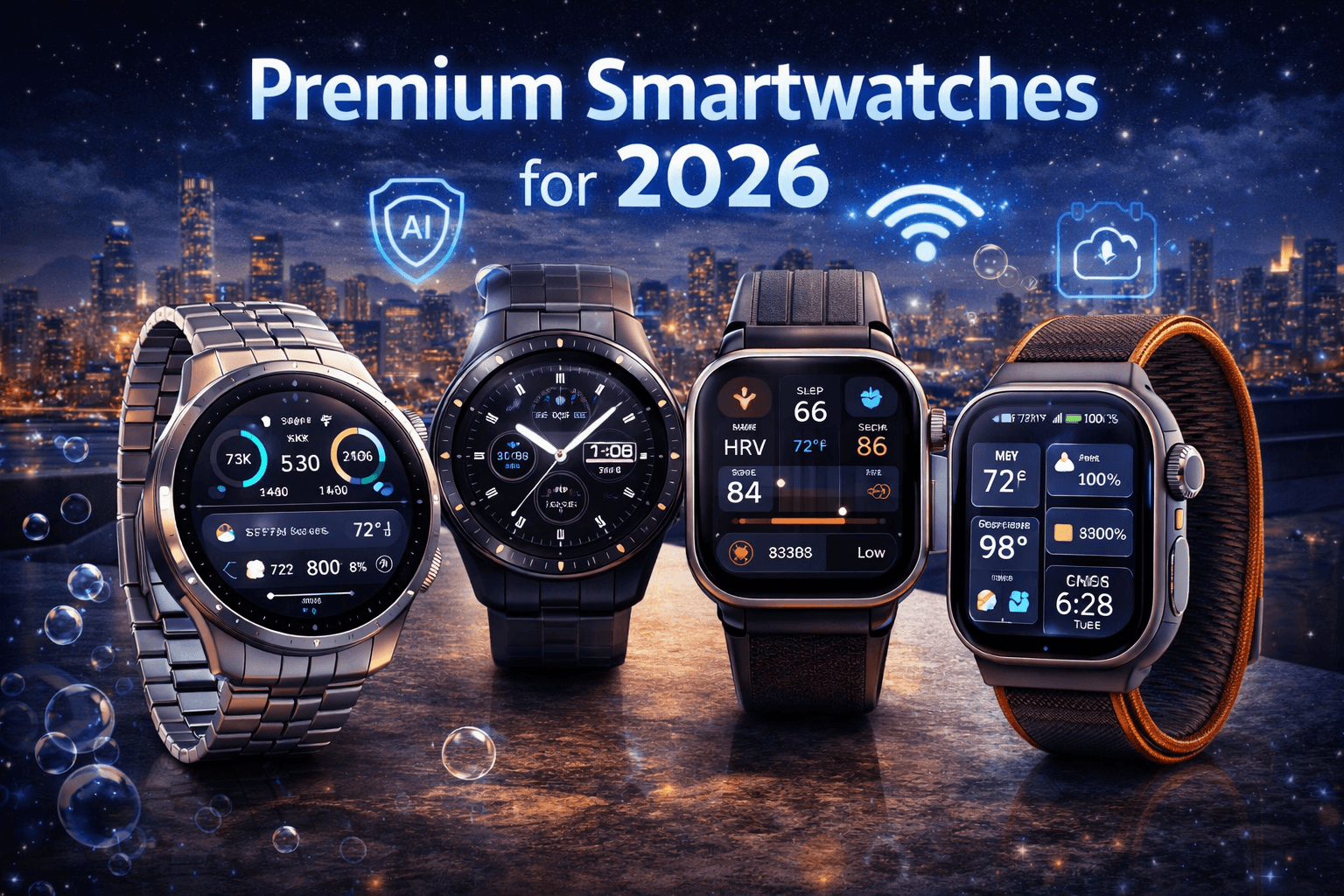
Premium Smartwatch Leaders
2. Mid-Range Smartwatches: Balanced Value
Mid-range smartwatches deliver substantial health monitoring and fitness tracking at accessible price points (₹8,000-20,000).
| Model | Price (₹) | Display | Health Features | Fitness Modes | Battery Life | Best For |
|---|---|---|---|---|---|---|
| OnePlus Watch 2 | ₹12,999-15,999 | AMOLED 1.43" | Heart rate, SpO2, stress monitoring, sleep tracking | 100+ workout modes | 5-7 days battery | Android users, balanced features |
| Realme Watch T1 | ₹8,999-10,999 | AMOLED 1.4" | Heart rate, SpO2, stress, sleep, breathing exercises | 100+ workout modes | 5-7 days battery | Budget-conscious, Android users |
| Xiaomi Watch S1 Pro | ₹13,999-16,999 | AMOLED 1.43" | Heart rate, SpO2, stress, sleep analysis, menstrual cycle | 100+ workout modes | 14 days battery | Battery life priority, excellent value |
| Amazfit GTR 4 | ₹14,999-18,999 | AMOLED 1.43-1.5" | Heart rate, SpO2, stress, sleep, body composition | 150+ sport modes | 24 days battery (non-AMOLED) | Longest battery, budget-friendly |
| COROS APEX 2 | ₹19,999-24,999 | MIP reflective LCD 1.2" | Heart rate, GPS accuracy, training metrics, elevation | 170+ sport modes | 14-21 days battery | Outdoor enthusiasts, battery priority |
| Fitbit Charge 6 | ₹14,999-17,999 | Color display 1.04" | Heart rate variability, SpO2, stress, ECG functionality | 40+ exercise modes | 7+ days battery | Health tracking priority, compact form |
| Huami Amazfit GTS 4 | ₹10,999-13,999 | AMOLED 1.65" | Heart rate, SpO2, stress, sleep, female health tracking | 150+ workout modes | 11 days battery | Value seekers, good all-rounder |
Mid-Range Value Leaders
3. Budget Fitness Trackers: Accessible Health Monitoring
Budget fitness trackers under ₹8,000 deliver essential health monitoring at entry-level price points, making wearable technology accessible.
| Model | Price (₹) | Form Factor | Health Features | Tracking | Battery Life | Best For |
|---|---|---|---|---|---|---|
| Redmi Band 2 | ₹2,499-3,499 | Band/bracelet | Heart rate, SpO2, stress, sleep | Steps, distance, calories | 14 days | Budget entry-level users |
| Realme Band 2 | ₹3,499-4,999 | Band/bracelet | Heart rate, SpO2, stress, female health | Steps, distance, calories, workout modes | 9 days | Indian market value |
| Boat Xtend | ₹3,999-5,999 | Band/bracelet | Heart rate, SpO2, stress, sleep, female cycle | Steps, distance, calories, 100+ modes | 10 days | Affordable with solid features |
| Noise ColorFit Ultra | ₹5,999-7,999 | Small watch display | Heart rate, SpO2, stress, sleep, female health | 100+ workout modes | 7 days | Color display budget option |
| Fitbit Inspire 3 | ₹7,999-9,999 | Band/small watch | Heart rate, SpO2, sleep patterns | 25+ exercise modes | 10 days | Health-focused budget option |
| Amazfit Band 7 | ₹4,999-6,999 | Band/small display | Heart rate, SpO2, stress, sleep, blood oxygen | 100+ workout modes | 14 days | Amazfit ecosystem, long battery |
| Decathlon Geonaute | ₹2,999-4,999 | Watch/band style | Step counting, sleep, basic HR (some models) | Basic activity tracking | 7-10 days | Ultra-budget fitness tracking |
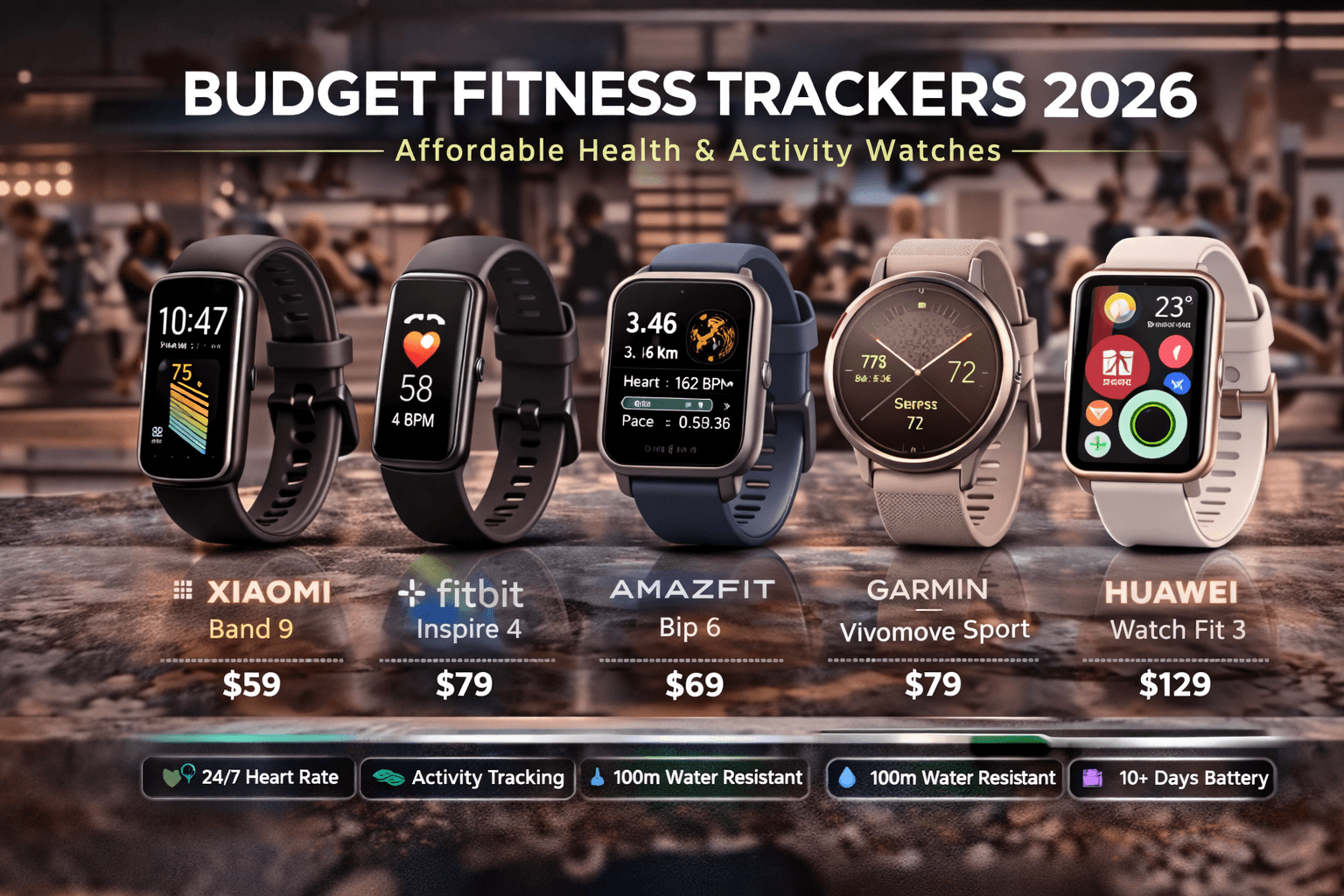
Budget Tracker Highlights
4. Health Monitoring Sensors: The Technology Behind Tracking
Understanding sensor technology enables informed comparison of wearable health capabilities beyond marketing claims.
| Sensor Type | Technology | Accuracy | Clinical Validation | Usefulness | Common in Price Tier |
|---|---|---|---|---|---|
| Heart Rate (PPG) | LED light reflection on blood vessels | ±5-10 bpm typical | Validated for resting HR | Excellent for fitness, good for health monitoring | All tiers (₹2,500+) |
| SpO2 (Pulse Oximetry) | LED light absorption (red + infrared) | ±2-3% typical | Validated for spot measurements, less accurate continuous | Good for sleep apnea detection, high altitude | Mid-range+ (₹5,000+) |
| ECG (12-lead equivalent) | Electrical impulse detection | Clinically validated, ±5% accuracy | FDA/CE approved models available | Excellent for arrhythmia detection, irregular heartbeats | Premium only (₹25,000+) |
| Body Temperature | Infrared thermal sensors | ±0.3-0.5°C typical | Validated for trends, not absolute temperature | Useful for ovulation tracking, illness detection | Premium (₹20,000+) |
| Blood Pressure Estimation | PPG waveform analysis (not measurement) | ±10-15 mmHg typical | Trend tracking validated, not diagnostic | Useful for trends, not for clinical diagnosis | Mid-range+ (₹8,000+) |
| Sleep Tracking | Movement + heart rate combination | Validates sleep/awake, duration good, stages moderate | Moderate correlation with polysomnography | Good for patterns, less accurate stage detection | All tiers (₹2,500+) |
| Stress Monitoring | Heart rate variability analysis | Qualitative assessment (relative stress levels) | Research-based algorithms, not standardized | Useful for relative trends, not medical diagnosis | Mid-range+ (₹6,000+) |
| Blood Glucose (Non-invasive) | Emerging technology (optical/thermal) | Still in development for consumer devices | Not yet clinical-grade accuracy | Experimental, not yet reliable for daily monitoring | Premium experimental (₹40,000+) |
Sensor Accuracy Reality
5. Fitness Tracking Capabilities: Workout Optimization
Advanced fitness tracking extends beyond step counting to provide detailed workout metrics, training guidance, and performance optimization.
| Feature | Budget Trackers | Mid-Range | Premium Watches | Athlete Focus | Value for Users |
|---|---|---|---|---|---|
| Workout Modes | 20-50 modes | 100+ modes | 100+ modes | 150+ sport-specific modes | More modes = better categorization |
| GPS Tracking | Some models | All models | All models | Multi-GNSS (GPS, GLONASS, Galileo) | Essential for runners, cyclists, hikers |
| Real-time Metrics | Limited | Good (distance, pace, HR) | Excellent (splits, cadence, form) | Advanced (power, VO2 load, grade) | Helps optimize training in real-time |
| Training Plans | None | Some apps (Strava integration) | Built-in coaching | Periodized plans (base, build, peak) | Guides progressive training progression |
| Recovery Tracking | None | Some models | Good (recovery time, readiness) | Excellent (HRV, sleep, training load) | Prevents overtraining, suggests recovery days |
| VO2 Max Estimation | No | Some models | Yes (estimated) | Yes (measured via GPS + HR) | Indicates aerobic fitness level |
| Race Prediction | No | Some models | Some models | Yes (predicts race time based on fitness) | Useful for goal-setting, performance planning |
| Form Analysis | No | No | Limited (cadence only) | Advanced (running dynamics, power output) | Prevents injuries through form optimization |
Fitness Tracking Recommendations
6. Battery Life and Charging: Practical Considerations
Battery life significantly impacts wearable practicality. Understanding battery dynamics prevents purchasing surprises.
| Battery Type | Single Charge | Usage Pattern Impact | Charging Method | Yearly Cycles | Typical Lifespan |
|---|---|---|---|---|---|
| Standard Li-Ion (AMOLED) | 4-7 days | Display always-on: -50%, GPS continuous: -70% | Magnetic dock (5-60 min) | 130 cycles/year | 2-3 years (80% capacity) |
| Extended Li-Ion (traditional display) | 10-14 days | GPS continuous: -30%, always-on: -20% | USB charging (30-120 min) | 26-52 cycles/year | 3-4 years (85% capacity) |
| Ultra-extended (non-display) | 14-24 days | GPS continuous: -40%, light usage: -5% | USB charging (30-90 min) | 15-26 cycles/year | 3-4 years (85% capacity) |
| Premium optimization | 36+ hours (watch mode) / 48+ hours | Dual core technology, conditional charging | Wireless/USB (20-40 min) | 260 cycles/year | 2 years (heavy use) |
Battery Life Reality
7. Sleep Analysis and Optimization
Advanced sleep tracking analyzes sleep quality, duration, and patterns enabling data-driven sleep optimization improving health outcomes.
| Sleep Metric | Measured By | Accuracy | Clinical Value | Actionable Insight | Device Tiers |
|---|---|---|---|---|---|
| Sleep Duration | Movement + heart rate | ±10-15 minutes | High (correlates with medical) | Target 7-9 hours nightly | All tiers |
| Sleep Stages (Light/Deep/REM) | HR + movement (simplified) | ±20-30% error vs medical | Moderate (3-4 stages vs 5 medical) | Deep sleep recovery, REM dreaming | Mid-range+ (₹6,000+) |
| Sleep Score (0-100) | Composite metric (duration, consistency, quality) | Proprietary algorithm | Moderate (correlates with subjective feeling) | Daily optimization feedback | All mid-range+ |
| Sleep Latency (time to sleep) | Movement + HR | ±5-10 minutes | Good (identifies sleep onset delays) | Detects sleep disorders early | Premium (₹20,000+) |
| Sleep Timing Consistency | Daily sleep schedule tracking | Excellent (objective data) | High (identifies irregular patterns) | Optimize circadian rhythm | All tiers |
| Snoring/Sleep Apnea | HR + oxygen patterns (non-diagnostic) | Moderate (screening tool only) | Useful for identifying potential disorders | Medical consultation trigger | Premium (₹25,000+) |
| REM Sleep Percentage | HR variability patterns | ±15-20% accuracy | Moderate (indicates mental health) | Stress level indicator | Premium+ (₹20,000+) |
| Nap Detection | Movement + HR during day | Good (identifies rest periods) | Useful for recovery tracking | Validates rest day effectiveness | Mid-range+ (₹8,000+) |
Sleep Optimization Through Wearables
1. Baseline sleep metrics (7-night average): understand current sleep pattern
2. Identify factors affecting sleep: caffeine timing, exercise timing, stress levels
3. Experiment with interventions: earlier bedtime, exercise timing, relaxation techniques
4. Measure improvements: quantify sleep duration and quality changes
8. Ecosystem Integration and App Connectivity
Wearable value multiplies through ecosystem integration with health apps, fitness platforms, and smart home devices.
| Ecosystem | Primary Apps | Third-party Integration | Health Data Export | Smart Home Control | Best For |
|---|---|---|---|---|---|
| Apple Watch/iOS | Apple Health (native) | Strava, MyFitnessPal, Oura, Withings | Easy export to health platforms | HomeKit control possible | iPhone users, seamless integration |
| Samsung Galaxy Watch | Samsung Health | Strava, MyFitnessPal, Google Fit, Spotify control | Google Fit export available | SmartThings control available | Android users, balanced approach |
| Garmin Watch | Garmin Connect | Strava, MyFitnessPal, TrainingPeaks, Apple Health sync | Easy CSV export | IFTTT automation available | Athletes, data export priority |
| Fitbit | Fitbit App | Google Fit (owned by Google), MyFitnessPal, Strava | Google Fit export available | Google Home integration | Google ecosystem users |
| Whoop | Whoop App (subscription) | Strava, TrainingPeaks, Apple Health export | Apple Health export available | None | Optimization-focused athletes |
| Oura Ring | Oura App | Apple Health, Strava, AutoSleep, IFTTT | Apple Health export available | IFTTT smart home automation | Sleep-focused users |
Ecosystem Decision Framework
9. Wearable Health Features: Real-World Medical Value
Understanding which wearable health features provide legitimate medical value prevents overestimating diagnostic capabilities.
| Health Feature | Medical Grade? | Accuracy vs Devices | Real-World Value | Medical-Approved? | Limitations |
|---|---|---|---|---|---|
| Heart Rate Monitoring | No (differs ±5-10 bpm) | ±5-10 bpm vs medical HR monitors | High (detects unusual elevations, training zones) | Yes (validated by medical literature) | Less accurate during intense exercise |
| ECG/EKG Detection | Some models (Apple Watch) | Comparable to medical ECG | Excellent (detects irregular heartbeats, AFib) | FDA-approved (Apple Watch) | Single-lead (vs 12-lead medical) |
| Blood Oxygen (SpO2) | No (differs ±2-3%) | ±2-3% vs pulse oximeter | Good for trends, screening; not diagnostic | No (not medical-grade) | Night-time measurements more reliable |
| Blood Pressure Estimation | No (estimation only) | ±10-15 mmHg vs medical BP cuff | Trends useful, NOT diagnostic | No (not medical measurement) | Cannot replace medical BP monitoring |
| Temperature Sensing | No (surface only) | ±0.3-0.5°C vs core temp | Fever detection, ovulation tracking | Research ongoing | Surface temp ≠ core temp |
| Sleep Apnea Screening | No (screening only) | Moderate accuracy for apnea detection | Good for identifying risk (needs medical confirmation) | No (not diagnostic) | Requires medical sleep study confirmation |
| Stress and Anxiety Detection | No (relative only) | Qualitative assessment vs clinical | Useful for relative trends and awareness | Research-based, not medical | Cannot replace mental health assessment |
| Blood Glucose Monitoring | Not yet available (experimental) | N/A (development phase) | Potentially revolutionary if accurate | No (not yet approved) | Non-invasive glucose still in development |
Realistic Health Value Assessment
10. Wearable Buying Guide: Decision Framework
Systematic evaluation ensures optimal wearable selection aligned with health priorities, budget, and usage patterns.
Wearable Selection Framework
11. Common Wearable Mistakes to Avoid
Warning
❌ **Display Fixation Without Battery Reality:** Selecting AMOLED display without understanding 4-7 day battery consequence. Beautiful display costs meaningful battery life. Prioritize battery requirement aligned with charging frequency acceptable.
Mistakes to Avoid:
Medical Feature Misinterpretation — Overestimating diagnostic capabilities of SpO2, temperature, blood pressure features. These provide trends only, not medical measurements. Abnormal readings require healthcare professional confirmation.
Ecosystem Incompatibility — Purchasing smartwatch without verifying operating system compatibility (Apple Watch requires iPhone, not all Android phones). Incompatible ecosystems create frustration and wasted investment.
Ignoring Battery Reality — Manufacturer battery claims assume ideal usage conditions. Real-world battery 20-30% less. Budget for 40-50% of claimed battery life in normal usage.
Spec Over Practicality — Selecting devices based on sensor count without considering whether features will be used. More sensors = higher cost and faster battery drain. Prioritize personally relevant features.
Subscription Trap — Underestimating ongoing subscription costs (Whoop ₹500-1,000/month, some premium features). Calculate annual subscription cost before premium purchase.
Accuracy Overestimation — Expecting medical-grade accuracy from consumer devices. ±5-10 bpm heart rate, ±20-30% sleep stage accuracy normal. Accept device limitations.
No Baseline Assessment — Purchasing expensive device without establishing baseline health metrics. Free measurement tools (smartphone heart rate apps) establish baseline before premium investment.
Underutilization — Purchasing comprehensive device then using basic functions only. Start with mid-range, upgrade to premium only after establishing consistent usage patterns.
Conclusion: Wearables Democratize Health Monitoring
2026 wearables democratize health monitoring previously exclusive to medical professionals and premium users. Budget options (₹2,500-8,000) deliver essential tracking; mid-range devices (₹8,000-20,000) provide comprehensive health insights; premium models (₹20,000-75,000) enable optimization-focused individuals to achieve personalized health goals. Success requires realistic expectations about device limitations while appreciating practical value of trend tracking, motivation through gamification, and early detection of health anomalies. Wearables work best as health motivation tools combined with medical monitoring rather than replacements. Individuals with chronic conditions should maintain medical-grade devices for diagnosis while using wearables for trend monitoring and motivation. Strategic selection aligned with genuine health priorities, ecosystem compatibility, and realistic budget assessment enables 3-4 years of valuable health insights and fitness optimization.
⌚ **Download the Complete Fitness Wearables Buying Guide 2026** — Device comparisons by use case, sensor accuracy analysis, ecosystem integration guide, and budget recommendations.
Share This Article
📤 Share This