Introduction: Smart Homes Enter Mainstream Reality
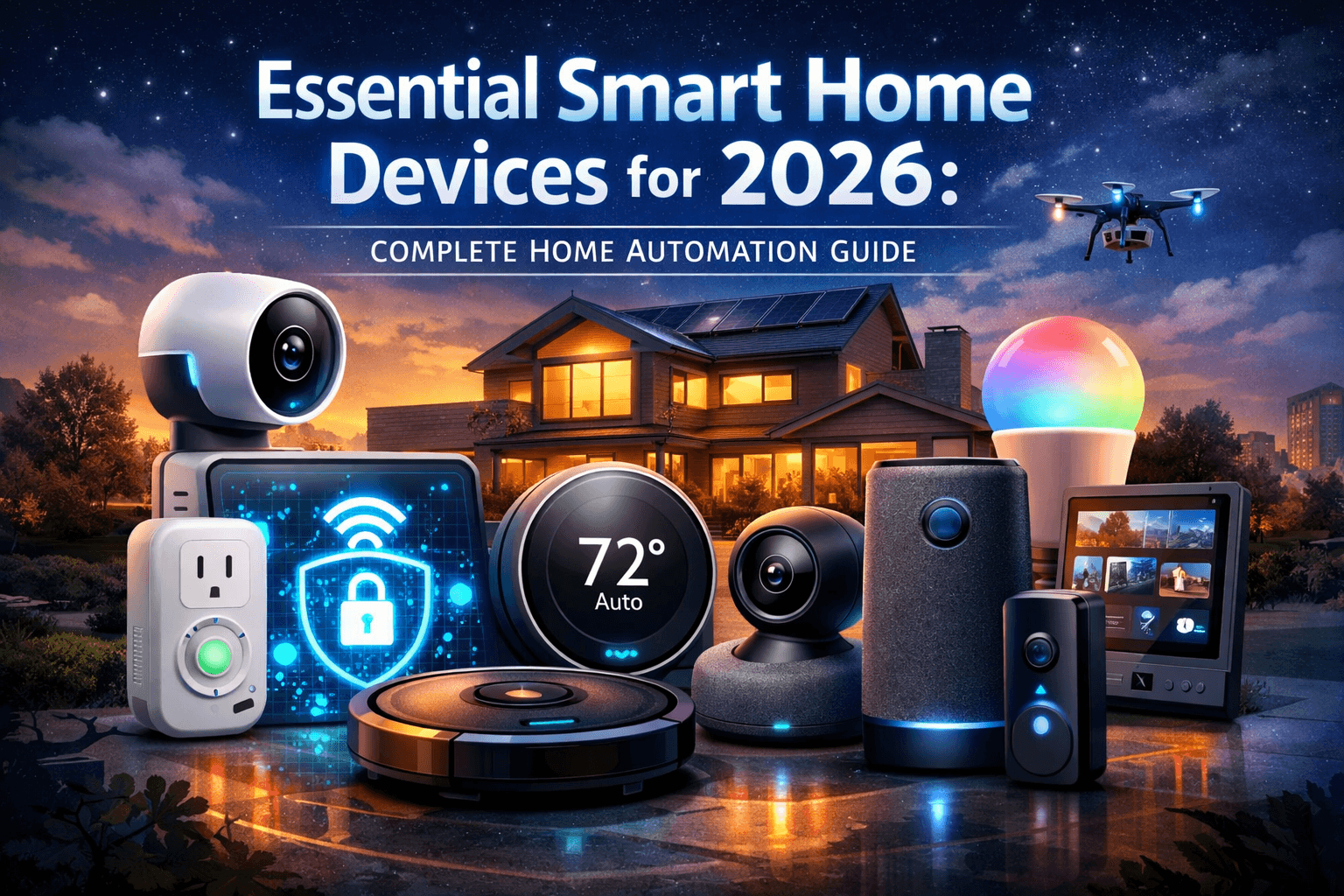
2026 marks the inflection point where smart home technology transitions from enthusiast niche to mainstream household standard. With 1.5+ billion smart home devices installed globally and $210B annual market revenue, intelligent home automation has become economically viable and technologically accessible for average homeowners. March 2026 launches showcase integration sophistication, AI-powered automation, enhanced security features, and dramatic pricing reduction making comprehensive home automation achievable without premium budgets. Whether seeking basic convenience (smart lighting, voice control) or comprehensive automation (multi-room climate control, predictive security, energy optimization), 2026's smart home landscape offers unprecedented choice, interoperability, and value.
Pro Tip
👉 Key Insight: Smart home success in 2026 depends less on individual device quality and more on ecosystem integration and automation rules. Devices working seamlessly across brands through Matter protocol creates comprehensive automation experience previously requiring matching brand ecosystems.
1. Smart Speakers and Voice Assistants: The Hub
Smart speakers serve as intelligent home hubs, controlling connected devices through voice commands and automating household routines.
| Device | Price (₹) | Assistant | Sound Quality | Smart Hub | Key Feature |
|---|---|---|---|---|---|
| Amazon Echo (5th Gen) | ₹4,499 | Alexa | Good (2-speaker system) | Zigbee hub included | Best value, extensive Alexa skills |
| Amazon Echo Studio | ₹12,999 | Alexa | Excellent (premium audio) | Zigbee hub included | High-quality audio, immersive sound |
| Google Nest Audio | ₹6,999 | Google Assistant | Good (dynamic EQ) | Thread/Bluetooth only | Google services integration |
| Google Nest Hub Max | ₹12,999 | Google Assistant | Good + 10" display | Thread/Bluetooth | Video calling, visual controls |
| Apple HomePod (2nd Gen) | ₹9,999 | Siri | Excellent (spatial audio) | Thread support | Apple ecosystem, Spatial Audio |
| Apple HomePod Mini | ₹5,999 | Siri | Good (compact) | Thread support | Compact size, Apple integration |
| Samsung SmartThings Hub | ₹8,999 | Bixby/Google | Good (speaker included) | Zigbee + Z-Wave + Thread | Best multi-protocol support |
Smart Speaker Leaders
2. Smart Lighting: Intelligent Illumination
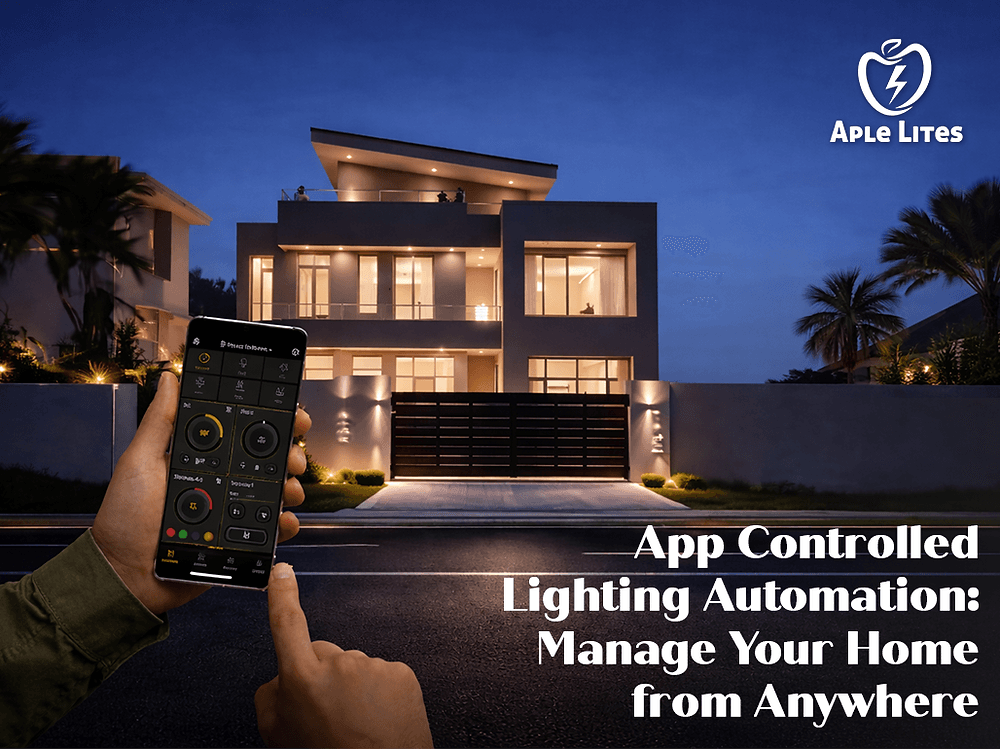
Smart lighting enables convenient control, automation, and energy efficiency through connected bulbs, switches, and lighting systems.
| Product Type | Price Range (₹) | Features | Automation Capability | Energy Savings | Best For |
|---|---|---|---|---|---|
| Smart Bulbs (16M colors) | ₹500-1,500 | Color changing, scheduling, dimming | Automation routines, voice control | 20-30% reduction | Mood lighting, accent colors |
| Smart Bulbs (Warm/Cool only) | ₹300-800 | Color temperature adjustment only | Basic automation, voice control | 30-40% reduction | Budget-conscious, practical use |
| Smart Switches | ₹1,200-2,500 | Control existing bulbs, load capacity | Multi-switch automation, scenes | 40-50% reduction (load control) | Retrofit existing bulbs, room-level control |
| Smart Panels/Dimmers | ₹5,000-15,000 | Professional installation, fine control | Scene creation, motion detection | 50% reduction (smart load management) | Premium homes, multiple room control |
| Smart Light Strips | ₹800-2,000 | Addressable RGB, corner/accent lighting | Animation, music sync, scheduling | Minimal (accent/decorative use) | Entertainment, accent lighting |
| Smart Outdoor Lights | ₹2,000-5,000 | Weather-resistant, motion sensors | Sunset/sunrise automation, motion detection | 30-40% reduction | Security, pathway illumination |
| Smart Ceiling Lights | ₹3,000-8,000 | Integrated brightness/color, sleek design | Complete room lighting, automation | 40-50% reduction | Modern homes, complete room control |
Smart Lighting Strategy
3. Smart Locks and Security: Secure Access Control
Smart locks revolutionize home security through keyless entry, access logs, and remote lock control eliminating traditional key risks.
| Device Type | Price (₹) | Lock Types | Access Methods | Backup Power | Key Features |
|---|---|---|---|---|---|
| Smart Door Locks | ₹8,000-18,000 | Deadbolt replacement | Code, biometric, app, physical key | Battery backup (1yr) | Access logs, temporary codes, real-time alerts |
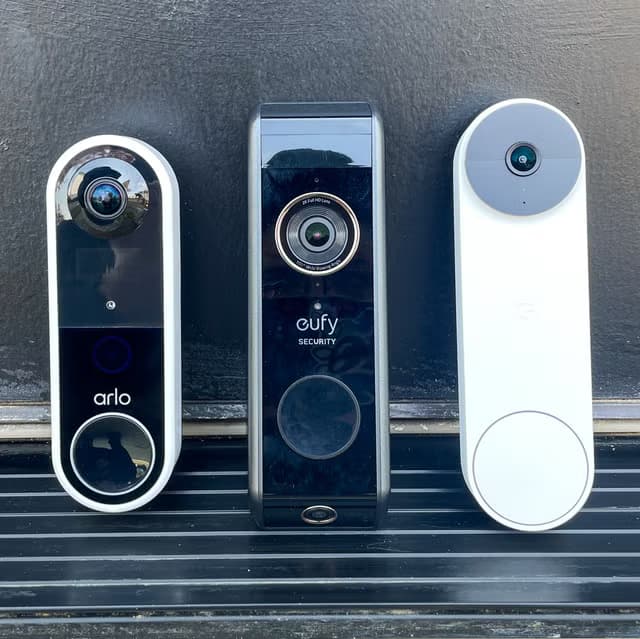
| Video Doorbells | ₹4,000-12,000 | Not locks (doorbells only) | Video recording, motion detection | Battery or hardwired | Live video, 2-way audio, person detection |
| Smart Padlocks | ₹3,000-8,000 | Outdoor/gate locks | Code, fingerprint, app | Battery replaceable | Lightweight, easy installation, outdoor rated |
| Gate/Garage Openers | ₹5,000-15,000 | Automatic gate/garage control | Remote control, app, voice, proximity | Backup battery included | Automatic operation, access logging, safety sensors |
| Security Cameras (Indoor) | ₹2,000-8,000 | Not locks (monitoring only) | Cloud/local recording, night vision | Battery or USB power | Motion detection, person detection, 2-way audio |
| Security Cameras (Outdoor) | ₹4,000-12,000 | Not locks (monitoring only) | Weatherproof, night vision, 4K | Hardwired or battery | Weather-resistant, high resolution, spotlight |
| Smart Safe Locks | ₹15,000-40,000 | Home safes, gun safes | Biometric, code, app | Battery backup | Emergency access, tamper alerts |
Security System Layers
4. Smart Thermostats and Climate Control
Smart thermostats optimize heating/cooling through learning algorithms, weather awareness, and remote temperature control enabling 15-30% energy savings.
| Device | Price (₹) | Learning Capability | Remote Control | Scheduling | Energy Savings | Best For |
|---|---|---|---|---|---|---|
| Nest Learning Thermostat | ₹15,999 | AI learns preferences over time | Full remote + weather-aware | Auto schedule creation | 15-20% savings | Tech-savvy users, complex schedules |
| Ecobee Smart Thermostat | ₹12,999 | AI learning with sensors | Remote + multi-room sensors | Room-specific scheduling | 20-25% savings | Multi-room comfort priority |
| Honeywell Home T9 | ₹9,999 | AI learning, sensor integration | App control, geofencing | Auto learning schedule | 15-18% savings | Budget-conscious, learning preference |
| Xiaomi Mi Thermostat | ₹5,999 | Basic learning, weather-aware | Remote + voice control | Manual scheduling | 10-15% savings | Budget option, basic needs |
| Smart AC Controllers | ₹2,000-4,000 | No learning (manual control only) | Remote + scheduling | Manual scheduling | 5-10% savings | Renters, existing AC units (non-replaceable) |
| Multi-zone Thermostats | ₹20,000-40,000 | Per-room temperature control | Full remote, occupancy-based | Room-specific scheduling | 25-35% savings | Large homes, rooms with different needs |
| Ducted System Controllers | ₹8,000-20,000 | Zone-based control | Remote + scheduling | Zone-specific scheduling | 20-30% savings | Ducted HVAC systems |
Thermostat Selection Guide
5. Smart Plugs and Power Management
Smart plugs convert ordinary appliances into controllable devices, enabling remote on/off, scheduling, and energy monitoring.
| Product Type | Price (₹) | Features | Automation | Load Capacity | Best For |
|---|---|---|---|---|---|
| Basic Smart Plugs | ₹300-800 | On/off control only | Scheduling, voice control | 10-16A (2000-3500W) | Fans, lights, basic appliances |
| Smart Plugs with Metering | ₹600-1,500 | Power monitoring, consumption tracking | Usage-based automation, alerts | 10-16A | Energy monitoring, consumption insights |
| High-Load Smart Plugs | ₹1,000-2,000 | Heavy appliance compatible | Scheduling, voice control | 20A+ (4000-5000W+) | Geysers, ACs, ovens, heavy loads |
| Smart Power Strips | ₹1,500-3,000 | Multiple outlets, USB charging | Individual outlet control, scheduling | 10-16A per outlet | Multi-device control, reduce clutter |
| Mini Smart Plugs | ₹400-1,000 | Compact design (doesn't block adjacent outlets) | Voice control, scheduling | 10A (2000W) | Crowded outlets, compact spaces |
| Smart Surge Protectors | ₹2,000-4,000 | Surge protection + smart control | Outlet-level scheduling, protection | 10-16A per outlet | Equipment protection + smart control |
Smart Plug Use Cases
6. Smart Appliances: Connected Kitchen and Laundry
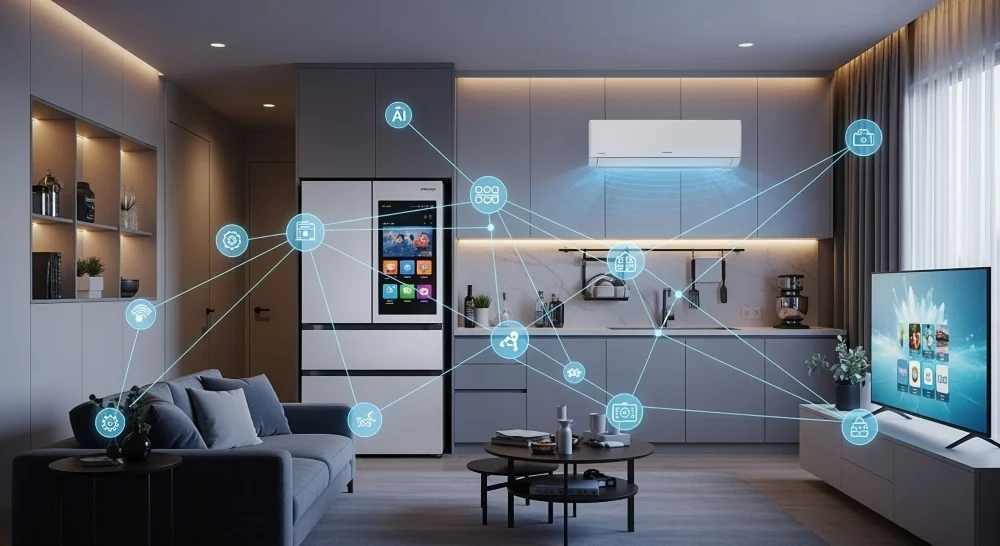
Smart appliances integrate Internet connectivity enabling remote control, predictive maintenance, and optimization.
| Appliance Type | Price Range (₹) | Smart Features | Remote Control | Automation Benefits | Best For |
|---|---|---|---|---|---|
| Smart Refrigerators | ₹80,000-180,000 | Internal cameras, temperature monitoring, inventory tracking | Remote temperature adjustment, food expiry alerts | Automated shopping lists, energy optimization | Tech-forward families, frequent shoppers |
| Smart Washing Machines | ₹35,000-80,000 | Multiple wash programs, leak detection, energy monitoring | Start/stop remotely, cycle notification | Optimized water/detergent usage, predictive maintenance | Families wanting convenience and efficiency |
| Smart Dishwashers | ₹30,000-70,000 | Sensor-based washing, multiple cycles, consumption tracking | Remote start, cycle status notifications | Water/energy optimization, sensor-based cleaning | Households with frequent dishwashing |
| Smart Ovens | ₹40,000-120,000 | Temperature precision, multiple cooking modes, internal monitoring | Remote temperature control, progress notifications | Precise cooking, energy efficiency, recipe optimization | Cooking enthusiasts, precise baking |
| Smart Coffee Makers | ₹8,000-20,000 | Programmable brewing, temperature maintenance, app scheduling | Remote brew start, strength customization | Timed brewing before waking, consistency | Coffee enthusiasts, busy professionals |
| Smart Water Heaters | ₹15,000-40,000 | Temperature control, consumption tracking, leak detection | Remote on/off, temperature adjustment | Energy optimization, predictive maintenance, water conservation | Families wanting efficiency and convenience |
Smart Appliance Considerations
7. Environmental Sensors and Air Quality Monitoring
Environmental sensors monitor temperature, humidity, air quality, and other conditions enabling data-driven home automation.
| Sensor Type | Price (₹) | Measurements | Accuracy | Data Logging | Integration |
|---|---|---|---|---|---|
| Temperature/Humidity Sensors | ₹1,000-2,500 | Temperature, humidity, barometric pressure | ±0.5°C, ±3% RH typical | Cloud storage available | All ecosystems |
| Air Quality Monitors | ₹3,000-8,000 | PM2.5, PM10, VOC, CO2, AQI | ±10-15% typical | Hourly historical data | HVAC integration |
| CO2 Monitors | ₹5,000-12,000 | CO2 ppm, temperature, humidity | ±50ppm typical | Detailed logging | Ventilation automation |
| Water Leak Sensors | ₹800-1,500 | Water presence detection | Instant detection | Event logging | Alert automation |
| Smoke/CO Detectors | ₹2,000-5,000 | Smoke, carbon monoxide detection | Fire safety certified | Alert logging | Integration with alarms |
| Smart Thermometer | ₹1,000-3,000 | Room temperature monitoring | ±0.3°C typical | Historical data | Thermostat integration |
| Motion Sensors | ₹500-1,500 | Motion detection, occupancy | Reliable detection | Movement logging | Lighting/climate automation |

Sensor Automation Scenarios
8. Smart Entertainment Systems
Smart entertainment devices enable centralized control of audio, video, and gaming across home environments.
| Device Type | Price (₹) | Features | Room Integration | Voice Control | Best For |
|---|---|---|---|---|---|
| Smart TVs | ₹20,000-80,000 | Built-in streaming, voice control, home automation | Central entertainment hub | Native voice integration | Unified entertainment center |
| Smart Speakers | ₹4,500-12,999 | Audio + home control, voice assistant | Whole-home audio with multiroom | Primary control method | Audio and voice control hub |
| Smart Soundbars | ₹8,000-25,000 | Immersive audio, HDMI ARC integration | Entertainment room audio | Voice control capability | Movie/gaming audio enhancement |
| Multiroom Audio Systems | ₹15,000-50,000 | Synchronized audio across rooms, streaming | Whole-home music distribution | Voice control and app | Music enthusiasts, whole-home audio |
| Projector Systems | ₹25,000-80,000 | Smart projection, voice control integration | Home theater setup | Voice control available | Movie/gaming enthusiasts |
| Smart Game Consoles | ₹30,000-60,000 | Gaming + streaming + home control | Entertainment room focus | Voice control available | Gamers, entertainment integration |
Entertainment System Integration
9. Smart Home Ecosystems: Choosing Integration Platforms
Smart home success depends on ecosystem integration. Understanding platform strengths enables optimal device selection.
| Ecosystem | Hub/Control | Device Compatibility | Voice Assistant | Automation Power | Best For |
|---|---|---|---|---|---|
| Amazon Alexa | Echo devices (Zigbee hub) | 20,000+ Alexa-compatible devices | Alexa voice control | Excellent (Routines, Blueprints) | Device variety, budget-conscious |
| Google Home | Nest Hub devices | 5,000+ Google Home compatible | Google Assistant | Very good (Automations, templates) | Google ecosystem users |
| Apple HomeKit | HomePod Mini, Apple TV | 2,500+ HomeKit certified devices | Siri voice control | Excellent (Automations, Scenes) | Apple ecosystem users |
| Samsung SmartThings | SmartThings Hub | Multi-protocol (Zigbee, Z-Wave, Thread) | Bixby/Google Assistant | Excellent (Complex automations) | Device diversity, bridges incompatible brands |
| Matter Protocol | Any Matter-compatible hub | Expanding (100+ manufacturers) | Any compatible voice assistant | Growing rapidly | Future-proofing, cross-ecosystem |
Ecosystem Comparison
10. Budget-Friendly Smart Home Starter Kit
Building comprehensive smart home doesn't require premium budgets. Strategic device selection creates excellent automation at affordable costs.
Budget Smart Home Setup: ₹15,000-25,000
✓ Voice control of lights and appliances
✓ Automated lighting schedules
✓ Remote appliance control
✓ Temperature monitoring
✓ Basic security monitoring
✓ Energy usage optimization
✓ Expansion capability (add devices incrementally)
Premium smart homes integrate comprehensive automation for maximum convenience, energy efficiency, and security.
Premium Smart Home Setup: ₹50,000-100,000+
✓ Voice control throughout home
✓ Occupancy-based climate control
✓ Energy optimization across all systems
✓ Predictive maintenance alerts
✓ Comprehensive security monitoring
✓ Entertainment automation (movie mode, etc.)
✓ Guest access management
✓ Emergency response automation
12. Smart Home Security and Privacy Considerations
Connected devices introduce security and privacy considerations. Understanding risks enables protection through best practices.
Smart Home Security Best Practices:
Network Security
- ✓Separate IoT devices on dedicated Wi-Fi network
- ✓Use strong router password (20+ character complexity)
- ✓Enable WPA3 encryption (if available)
- ✓Disable WPS (Wi-Fi Protected Setup — security vulnerability)
- ✓Update router firmware regularly
Device Security
- ✓Enable two-factor authentication on smart home accounts
- ✓Use unique, strong passwords (20+ characters)
- ✓Update device firmware automatically when available
- ✓Review connected apps/integrations regularly
- ✓Revoke access to unused apps
Privacy Protection
- ✓Review privacy policies of manufacturers
- ✓Disable data collection features if unnecessary
- ✓Understand where data is stored (local vs cloud)
- ✓Apple HomeKit (local processing) vs Amazon Alexa (cloud-based)
- ✓Request data deletion annually
Physical Security
- ✓Ensure smart locks have physical key backup
- ✓Test automatic lock functionality regularly
- ✓Disable smart unlock during extended away periods
- ✓Position security cameras avoiding neighbor privacy
- ✓Disable audio recording if not needed
Monitoring and Maintenance
- ✓Review device activity logs monthly
- ✓Check connected device lists regularly
- ✓Monitor electricity usage for unusual spikes (hacked device indication)
- ✓Test emergency override capabilities (manual lock opening)
- ✓Maintain offline access alternatives
13. Common Smart Home Mistakes to Avoid
Warning
❌ **Single Ecosystem Lock-In:** Committing exclusively to one platform (Amazon, Apple, Google) before understanding limitations. Different platforms excel at different features; multi-ecosystem approach often superior.
Mistakes to Avoid:
Overcomplicating Automation — Creating complex rules leading to unexpected interactions. Start simple, add automation gradually. Test thoroughly before complex rule implementation.
Ignoring Interoperability — Selecting devices without checking hub compatibility. Many devices require specific hubs (Zigbee, Z-Wave, Wi-Fi). Hub selection critical before device purchase.
Premium First Approach — Purchasing high-end devices before understanding needs. Budget approach enables experimentation, discovering actual automation priorities.
Insufficient Testing — Deploying automation without real-world testing. Unexpected automations can create frustration (lights turning off during important moments).
Security Shortcuts — Skipping security setup (weak passwords, no 2FA) to expedite setup. Security investment prevents catastrophic breaches.
Incomplete Maintenance — Not updating firmware regularly. Security vulnerabilities accumulate without updates.
Voice Privacy — Enabling voice recording without understanding privacy implications. Review voice data retention policies before enabling.
Abandoned Automation — Creating automation that no longer matches usage patterns. Regular audit of automation rules prevents unexpected behaviors.
Device Overkill — Purchasing excessive devices before validating utility. Some devices provide minimal value; focus on high-impact automation first.
Conclusion: Smart Homes Are Now Accessible
2026 proves smart homes are no longer luxury or enthusiast-only technology—they're mainstream, accessible, and economically justified. Strategic device selection and ecosystem integration enable comprehensive home automation at ₹15,000-25,000 entry-level cost. Premium smart homes at ₹50,000-100,000+ deliver exceptional convenience and 30-40% energy savings, achieving ROI within 2-4 years. Success requires understanding ecosystem strengths, prioritizing automation aligned with actual needs, and implementing security best practices. The smart home revolution is complete; transformation of your home from connected devices into truly intelligent, automated living space is achievable regardless of budget constraints.
🏠 **Download the Complete Smart Home Setup Guide 2026** — Device recommendations by budget tier, ecosystem comparison, automation templates, and security checklist for building your smart home.
Share This Article
📤 Share This