Introduction: The $10 Billion Blind Spot
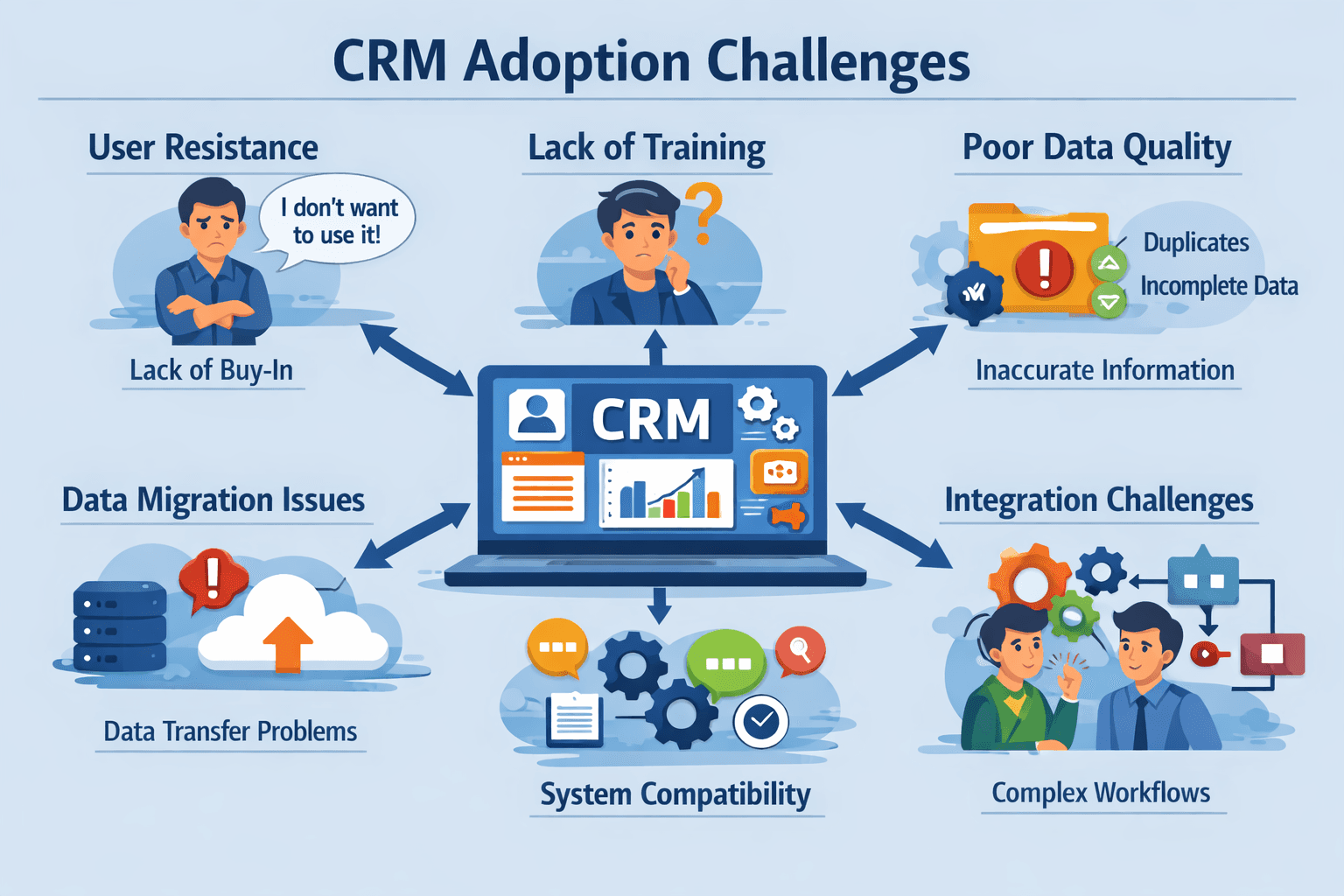
Companies invest heavily in CRM software—yet up to 40% of sales reps consistently fail to adopt it. The result? Fragmented data, inaccurate forecasts, and missed revenue. Adoption isn't a training issue; it's a strategy issue.
Pro Tip
👉 The Cost of Low Adoption: Poor data quality costs US businesses $3.1 trillion annually. When reps don’t use the CRM, your entire revenue engine runs on guesswork.
1. Why Users Reject CRM: The Psychology of Resistance
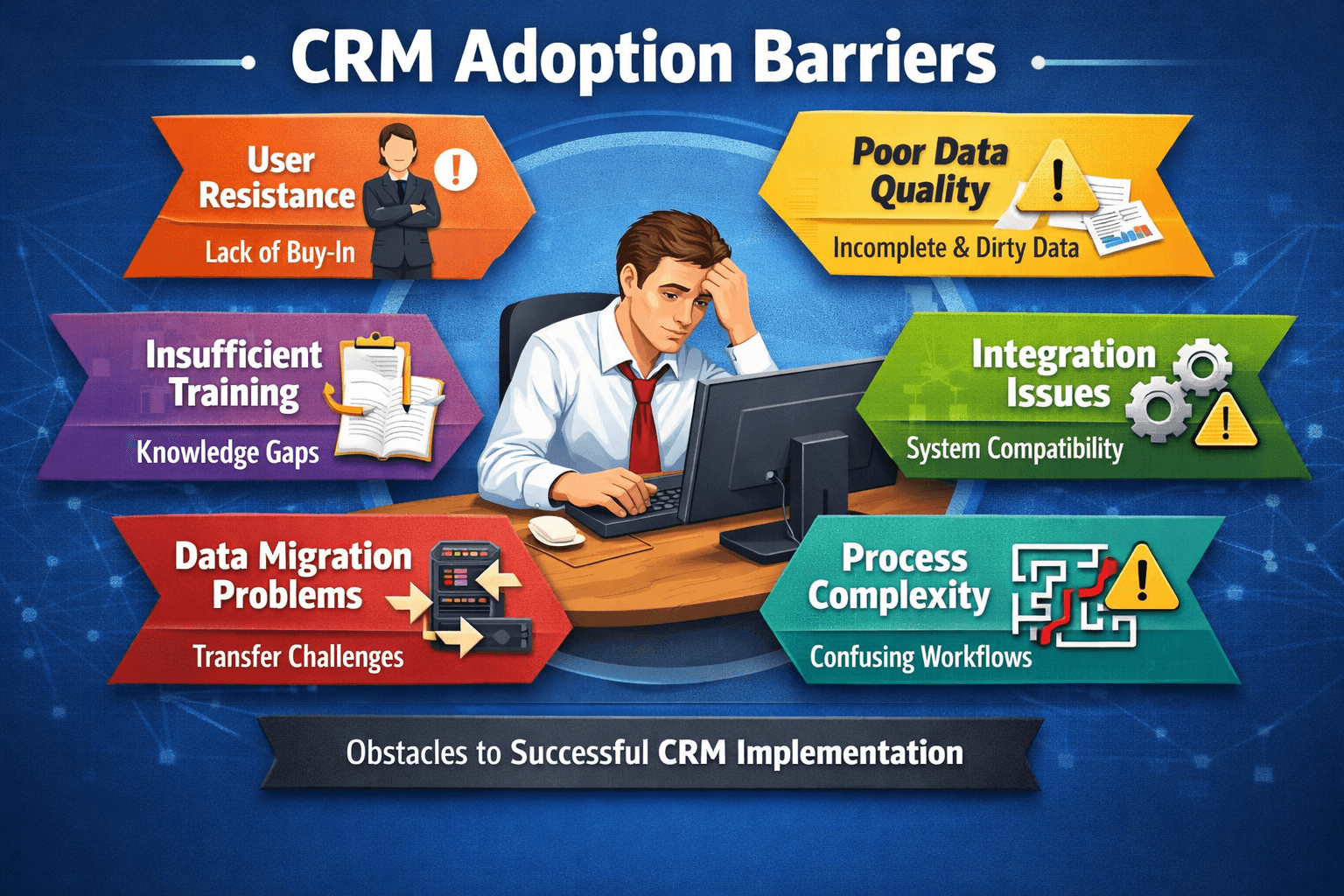
Resistance usually stems from one of three root causes: lack of perceived value, cumbersome workflows, or lack of leadership alignment. Solving adoption requires addressing all three.
| Challenge | Symptom | Root Cause |
|---|---|---|
| Time sink | Reps enter data at end of week | Manual data entry, no automation |
| No personal value | Reps see CRM as 'management spyware' | Lack of coaching/reward integration |
| Data distrust | Reports are ignored or questioned | Dirty data, inconsistent fields |
Pro Tip
Involve end-users in the CRM selection and configuration process. When reps help build the system, they feel ownership—not imposition.
2. The Executive Role: Adoption Starts at the Top
Adoption isn't a grassroots movement—it's a leadership mandate. When executives don't use the CRM themselves or ignore its data, the message is clear: the system isn't essential.
Pro Tip
👉 Leadership Action: Hold weekly pipeline reviews directly in the CRM. When managers navigate the system live, reps see that accurate data equals career growth.
Set clear KPIs: Adoption targets (e.g., 90% daily activity logging) should be part of performance reviews. Reward usage: Gamify data quality—bonuses for clean pipelines. Model behavior: Managers must be power users first.
3. Making the CRM a 'Desire Tool' Not a 'Requirement Tool'
If the CRM only serves management reporting, reps will treat it as an administrative burden. The shift happens when reps see direct value: faster deal visibility, automated task reminders, and mobile access to customer history.
💡 Insight: Integrate your CRM with the tools reps already love—Outlook, Gmail, LinkedIn, Slack. When the CRM becomes a layer on top of their workflow, adoption skyrockets.
Automation as an adoption catalyst
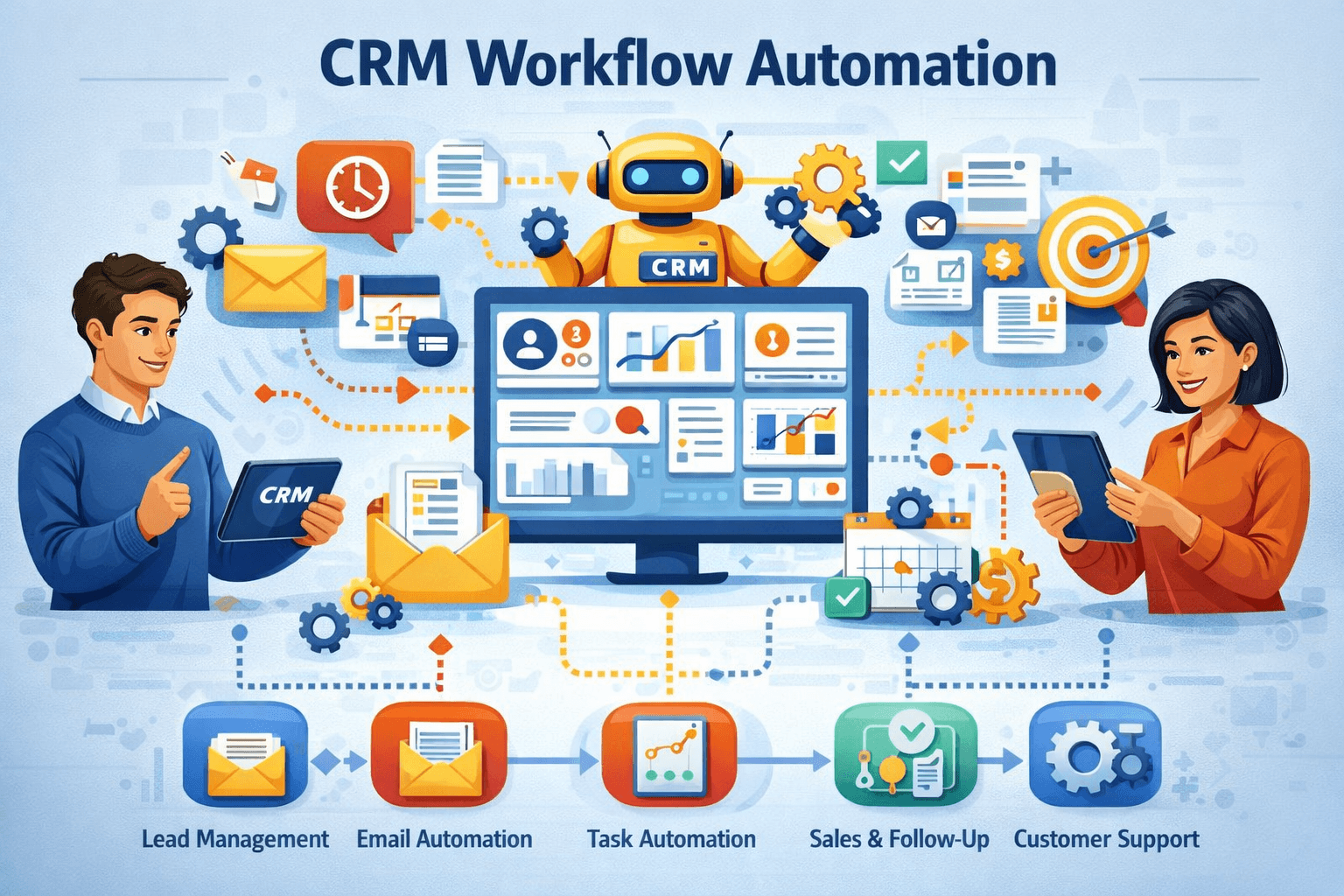
Use workflow automation to capture emails, log calls, and set next-step reminders. Less manual entry = less resistance.
Common Pitfalls That Kill Adoption
Warning
❌ **Over‑customization:** Building too many custom fields turns data entry into a chore. Stick to what’s truly actionable.
One‑time training: Adoption drops 50% within 90 days without reinforcement. No mobile strategy: Remote teams can't use a desktop-only system. Ignoring data quality: Bad data destroys trust—reps stop contributing.
Conclusion: From Resistance to Revenue
CRM adoption is a continuous process of aligning technology, people, and processes. When done right, it transforms your CRM from a cost center into a competitive advantage. Focus on user experience, executive sponsorship, and clear ROI—and watch adoption climb.
💡 Final Insight: High‑adoption companies report 15% higher win rates and 20% shorter sales cycles. The ROI of user adoption is undeniable.
📘 **Get the CRM Adoption Playbook** — 50+ proven tactics, rollout templates, and change management checklists. Download free for a limited time.
Share This Article
📤 Share This