Introduction: The Science of Mind-Body Medicine
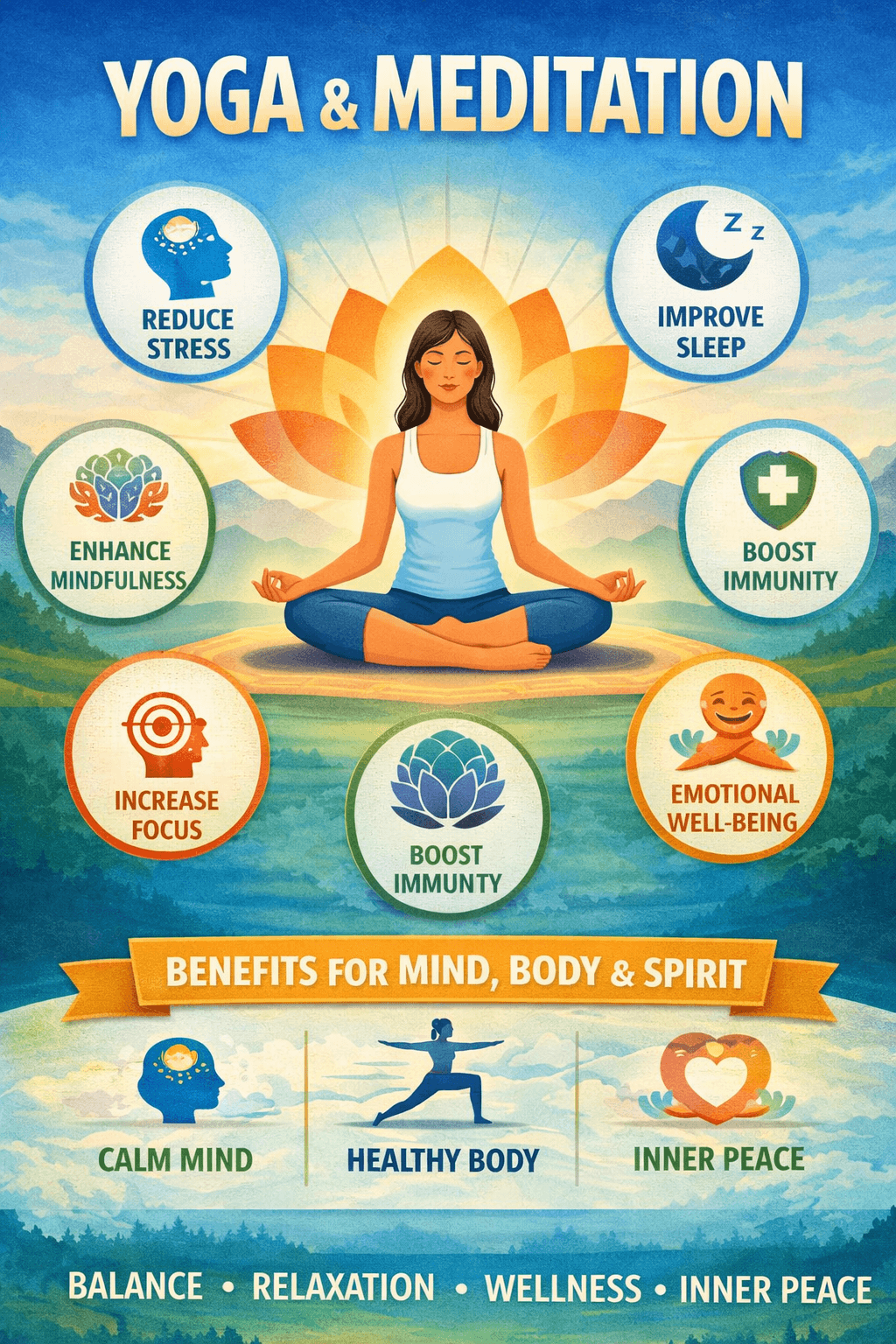
2026 marks a historic convergence of ancient wisdom and modern science, as yoga and meditation transition from complementary practices to evidence-based interventions integrated into mainstream healthcare. With over 500 million global yoga practitioners, the $100 billion+ mind-body wellness market, and more than 10,000 peer-reviewed studies published in the past decade, the scientific validation for these practices has never been stronger. The paradigm has shifted—no longer viewed as merely stress reduction tools, yoga and meditation are now recognized for their profound effects on neuroplasticity (brain structure and function), the autonomic nervous system (parasympathetic activation), the hypothalamic-pituitary-adrenal (HPA) axis (cortisol regulation), inflammatory pathways (reduced cytokines), and even telomere length (cellular aging). From FDA-cleared mindfulness-based interventions for chronic pain and depression to corporate wellness programs demonstrating 80% healthcare cost reduction, the evidence base is robust and growing. Whether you're a clinician seeking to prescribe evidence-based mind-body interventions, a patient managing chronic conditions, a researcher exploring mechanisms, or an individual seeking optimal health, 2026 offers unprecedented understanding of how these practices work and how to integrate them effectively.
Pro Tip
👉 Key Insight: The most significant shift in 2026 is the mainstream clinical adoption of yoga and meditation as first-line or adjunctive treatments for specific conditions—not just wellness practices. FDA-cleared digital therapeutics based on mindfulness (e.g., for chronic pain, depression) now have established reimbursement pathways, positioning mind-body interventions alongside pharmaceuticals in treatment guidelines.
2. Yoga for Chronic Disease Management
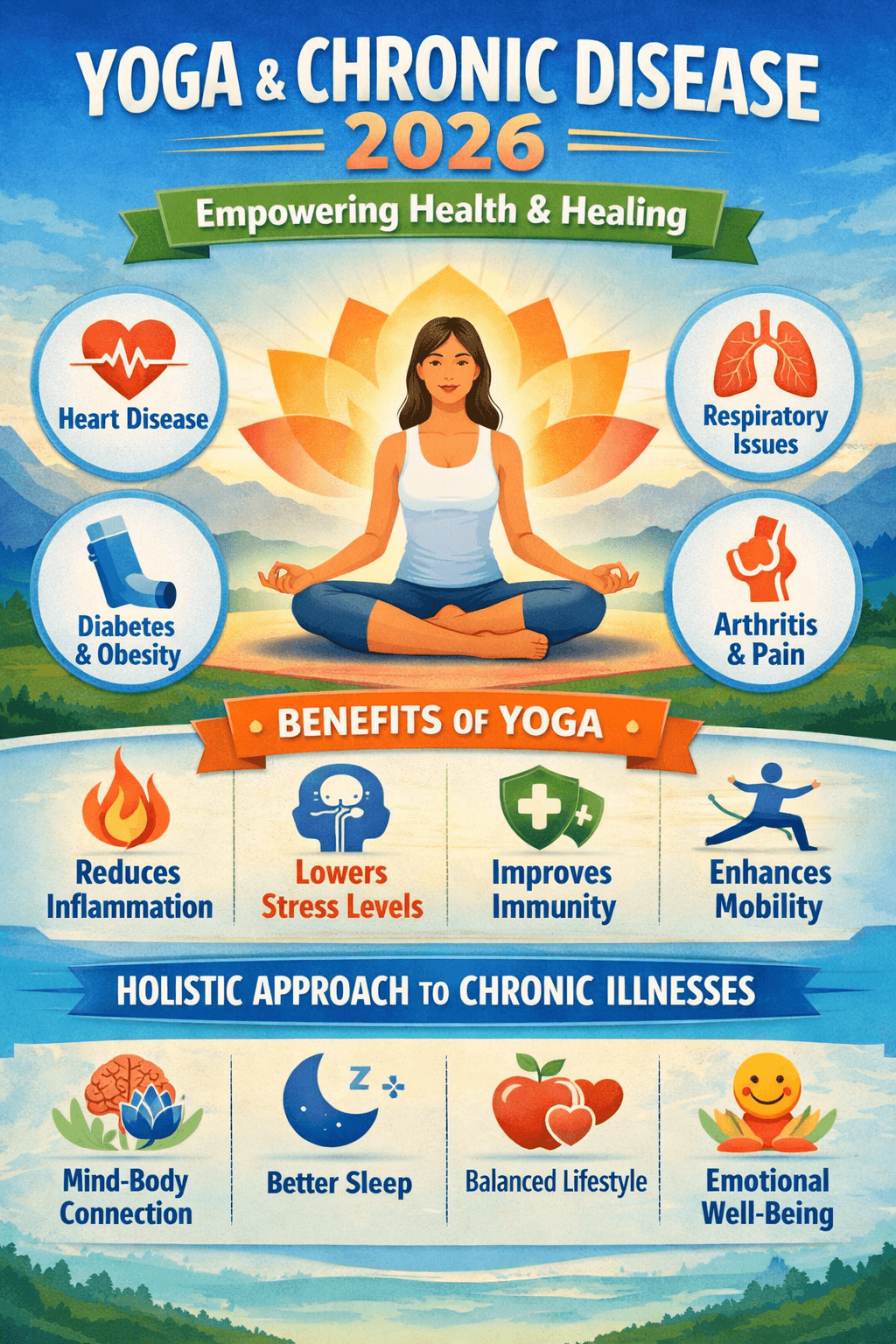
Yoga—encompassing postures (asana), breathwork (pranayama), and meditation (dhyana)—has demonstrated efficacy across a spectrum of chronic conditions, supported by randomized controlled trials, meta-analyses, and inclusion in clinical practice guidelines.
| Condition | Yoga Intervention | Clinical Outcomes | Mechanisms | Evidence Level | Practice Guidelines |
|---|---|---|---|---|---|
| Chronic Low Back Pain | Hatha yoga, Iyengar yoga, gentle yoga | Pain reduction (30-50%), improved function, reduced medication use | Muscle relaxation, core strength, pain neurocircuitry modulation | Strong (AHRQ guideline; 20+ RCTs) | ACP guidelines recommend yoga as first-line non-pharmacologic treatment |
| Anxiety & Depression | Hatha, gentle, restorative yoga; pranayama | Symptom reduction (moderate effect size; 0.5-0.7), comparable to CBT | GABA activity, vagal tone, BDNF, reduced inflammation | Strong (30+ RCTs; multiple meta-analyses) | APA guidelines include yoga as adjunctive treatment |
| Hypertension | Gentle yoga, pranayama (slow breathing) | Systolic BP reduction (5-10 mmHg) | Parasympathetic activation, reduced sympathetic tone, endothelial function | Moderate-strong (20+ RCTs) | AHA includes yoga in lifestyle modification guidelines |
| Type 2 Diabetes | Integrated yoga therapy | HbA1c reduction (0.5-1.0%), improved insulin sensitivity | Stress reduction, improved beta-cell function, weight management | Moderate-strong (15+ RCTs) | ADA recognizes yoga as adjunctive therapy |
| Cardiovascular Disease | Gentle yoga, restorative yoga | Improved HRV, reduced BP, improved lipids, reduced stress | Autonomic regulation, inflammation reduction | Moderate (10+ RCTs) | Secondary prevention programs increasingly include yoga |
| Cancer Survivorship | Gentle yoga, restorative yoga, pranayama | Reduced fatigue (30-50%), improved QOL, reduced anxiety | Inflammation modulation, stress reduction, improved sleep | Strong (30+ RCTs; NCCIH guidelines) | SIO/ASCO guidelines recommend yoga for symptom management |
| Fibromyalgia | Gentle yoga, yin yoga | Pain reduction (20-30%), improved function, reduced fatigue | Central pain processing, autonomic regulation | Moderate (10+ RCTs) | European League Against Rheumatism includes yoga |
| COPD | Pranayama, gentle asana | Dyspnea reduction, improved exercise capacity, QOL | Respiratory muscle strength, reduced air trapping | Moderate (10+ RCTs) | Pulmonary rehabilitation programs increasingly integrate yoga |
| Insomnia | Yoga nidra, restorative yoga, pranayama | Sleep onset latency reduction (15-30 min), improved sleep efficiency | Parasympathetic activation, reduced hyperarousal | Moderate-strong (15+ RCTs) | Sleep medicine guidelines include mind-body therapies |
| PTSD | Trauma-informed yoga (TCTSY) | Symptom reduction (moderate effect), hyperarousal reduction | Interoceptive awareness, autonomic regulation, safety re-establishment | Moderate-strong (10+ RCTs; VA guidelines) | VA/DoD guidelines recommend yoga for PTSD |
Yoga as Medicine: Evidence-Based Applications
Yoga is now a first-line recommendation for chronic low back pain in ACP (American College of Physicians) guidelines. Meta-analyses (20+ RCTs) demonstrate: 30-50% pain reduction; improved function (Oswestry Disability Index); reduced medication use (opioids, NSAIDs); effects comparable to physical therapy. Mechanisms: core strengthening, muscle relaxation, pain neurocircuitry modulation, fear-avoidance reduction. Cost-effectiveness: yoga is less costly than physical therapy or usual care.
Meta-analyses (30+ RCTs) show moderate effect sizes for yoga in anxiety (Hedges' g = 0.5-0.7) and depression, comparable to cognitive-behavioral therapy (CBT). Mechanisms: increased GABA (inversely correlated with anxiety), enhanced vagal tone (heart rate variability), BDNF elevation (neuroplasticity), reduced inflammatory cytokines (IL-6, TNF-α). APA (American Psychiatric Association) guidelines include yoga as adjunctive treatment.
The Society for Integrative Oncology (SIO) and ASCO guidelines recommend yoga for symptom management in cancer survivors. Strongest evidence: fatigue reduction (30-50%), improved quality of life, reduced anxiety and depression, improved sleep. Mechanisms: inflammation modulation (reduced IL-6, CRP), stress reduction, improved physical function. Safe during and after active treatment; modifications for specific limitations.
Yoga improves cardiovascular risk factors: blood pressure (systolic reduction 5-10 mmHg), heart rate variability (parasympathetic increase), lipids (small improvements), weight (modest reduction), and inflammation (hs-CRP reduction). AHA (American Heart Association) includes yoga in lifestyle modification guidelines. Mechanisms: autonomic regulation (sympathetic withdrawal, parasympathetic activation), endothelial function improvement, stress reduction.
Trauma Center Trauma-Sensitive Yoga (TCTSY), developed at the Trauma Center at JRI, is a evidence-based intervention for complex trauma and PTSD. VA/DoD guidelines recommend yoga for PTSD. Mechanisms: interoceptive awareness (reconnecting with body safely), autonomic regulation (reducing hyperarousal), establishing safety and agency. TCTSY is distinct from general yoga—facilitators have specific training.
3. Meditation: Evidence-Based Protocols
Meditation encompasses diverse practices—mindfulness, loving-kindness, transcendental, breath-focused—each with distinct neural mechanisms and clinical applications. Standardized protocols (MBSR, MBCT) now have FDA clearance and reimbursement pathways.
| Meditation Type | Protocol | Clinical Applications | Key Mechanisms | Evidence Level | Reimbursement Status |
|---|---|---|---|---|---|
| Mindfulness-Based Stress Reduction (MBSR) | 8-week group program; 2.5 hours weekly + full-day retreat; 45 min daily home practice | Stress, anxiety, chronic pain, depression, burnout | Attention regulation, body awareness, emotion regulation, decentering | Strong (100+ RCTs; multiple meta-analyses) | Medicare Advantage; commercial plans (select) |
| Mindfulness-Based Cognitive Therapy (MBCT) | 8-week group program; adapted from MBSR + CBT elements | Depression relapse prevention, active depression, anxiety | Decentering, metacognitive awareness, reduced rumination | Strong (40+ RCTs; NICE guidelines) | NHS (UK); US commercial plans (select) |
| Loving-Kindness Meditation (LKM) | Varied protocols (8 weeks common) | Depression, social anxiety, chronic pain, burnout | Positive affect, social connection, reduced self-focus | Moderate (20+ RCTs) | Limited; emerging |
| Transcendental Meditation (TM) | Individual instruction; 20 min twice daily | Hypertension, anxiety, PTSD, cardiovascular risk | Reduced sympathetic tone, HPA axis regulation | Moderate (20+ RCTs; AHA review) | Limited; VA pilot programs |
| Breath-Focused Meditation (Pranayama) | Varied protocols (Sudarshan Kriya, etc.) | Anxiety, depression, stress, PTSD | Parasympathetic activation, respiratory sinus arrhythmia | Moderate (15+ RCTs) | Limited; emerging |
| Mindfulness-Based Relapse Prevention (MBRP) | 8-week program | Substance use disorders, relapse prevention | Craving management, emotion regulation | Moderate (10+ RCTs) | SAMHSA recognized |
| Mindfulness-Based Eating Awareness Training (MB-EAT) | 10-week program | Binge eating disorder, emotional eating | Interoceptive awareness, reduced impulsive eating | Moderate (10+ RCTs) | Limited; emerging |
Meditation Protocols: Clinical Implementation
Mindfulness-Based Stress Reduction (MBSR), developed by Jon Kabat-Zinn at UMass Medical Center (1979), is the most extensively studied meditation protocol. Format: 8 weeks; 2.5 hour weekly group sessions; full-day retreat; 45 minutes daily home practice. Curriculum: body scan, mindful movement, sitting meditation, walking meditation, informal practices. Clinical evidence: 100+ RCTs; moderate effect sizes for anxiety (0.5-0.7), depression, chronic pain, stress; comparable to CBT for some indications. Reimbursement: Medicare Advantage, some commercial plans (Cigna, Aetna) cover MBSR; CPT codes emerging.
Mindfulness-Based Cognitive Therapy (MBCT), developed by Zindel Segal, Mark Williams, and John Teasdale, integrates MBSR with cognitive therapy elements. Format: 8-week group program. Target: Prevention of depression relapse in patients with 3+ prior episodes. Evidence: NICE (UK) guidelines recommend MBCT for recurrent depression; 40+ RCTs show 40-50% relapse reduction, comparable to maintenance antidepressants. Indications expanding to active depression, anxiety.
LKM involves silently repeating phrases wishing well-being for self and others ("May I be happy. May I be safe. May I be healthy. May I live with ease."). Neural mechanisms: activates brain regions associated with empathy, social connection (insula, anterior cingulate). Clinical evidence: moderate effect sizes for depression, social anxiety, chronic pain, burnout. Unique mechanism: increases positive affect (not just reducing negative affect).
TM involves silent repetition of a mantra (sound) for 20 minutes twice daily. Distinct from mindfulness (not focused attention; allows thoughts to arise). Evidence: AHA scientific statement notes TM may be considered for blood pressure reduction (modest evidence); 20+ RCTs show 4-5 mmHg systolic reduction. VA pilot programs for PTSD. Controversy: some studies criticized for methodological issues; founder organization commercially controlled.
4. Breathwork (Pranayama): Physiology and Applications
Pranayama—conscious breath regulation—is the most accessible and physiologically potent component of yoga. Specific techniques have distinct effects on autonomic nervous system, cardiovascular function, and stress physiology.
| Technique | Breath Pattern | Physiological Mechanism | Clinical Applications | Evidence Level | Contraindications |
|---|---|---|---|---|---|
| Slow Deep Breathing (SDB) | 4-6 breaths/min; 5-6 sec inhale, 5-6 sec exhale | Parasympathetic activation (vagal tone), baroreflex sensitivity | Anxiety, hypertension, stress, sleep | Strong (50+ studies) | None significant |
| Resonant Frequency Breathing | 5-6 breaths/min (individualized) | Heart rate variability (HRV) maximization, autonomic balance | Hypertension, anxiety, PTSD, performance | Moderate-strong (20+ studies) | None; guided biofeedback often used |
| 4-7-8 Breathing | Inhale 4 sec; hold 7; exhale 8 | Parasympathetic activation, GABA increase | Sleep onset, acute anxiety, stress | Moderate (10+ studies) | None |
| Box Breathing (Square Breathing) | Inhale 4; hold 4; exhale 4; hold 4 | Autonomic balance, cognitive clarity | Performance anxiety, focus, stress | Moderate (10+ studies) | None |
| Alternate Nostril Breathing (Nadi Shodhana) | Alternate nostril occlusion; equal inhale/exhale | Autonomic balance (sympathetic-parasympathetic), EEG synchronization | Anxiety, hypertension, cognitive function | Moderate (15+ studies) | Nasal obstruction |
| Kapalabhati (Skull Shining) | Rapid, forceful exhalations; passive inhalation | Sympathetic activation, alertness | Morning energy, respiratory clearance, mild depression | Limited (5+ studies) | Hypertension, pregnancy, hernia, glaucoma |
| Bhastrika (Bellows Breath) | Rapid, forceful inhalation and exhalation | Sympathetic activation, metabolic boost | Energy, respiratory conditions | Limited (5+ studies) | Hypertension, heart disease, pregnancy, anxiety |
| Sudarshan Kriya (SKY) | Rhythmic, cyclical breathing pattern (Art of Living) | Cortisol reduction, antioxidant effects | Depression, anxiety, PTSD, stress | Moderate (10+ RCTs) | Epilepsy (caution); bipolar disorder (caution) |
| Breath Hold (Kumbhaka) | Retention after inhale or exhale | Enhanced CO2 tolerance, sympathetic modulation | Advanced practice; not for beginners | Limited | Hypertension, heart disease, pregnancy, epilepsy |
Breathwork Science and Clinical Applications
Breath is the only autonomic function under voluntary control, providing a direct gateway to parasympathetic activation. Slow breathing (4-6 breaths/min) increases heart rate variability (HRV)—a biomarker of vagal tone and resilience. Low HRV predicts cardiovascular mortality, depression, and PTSD; slow breathing improves HRV within weeks.
Most studied technique. Mechanism: enhances baroreflex sensitivity, increases vagal efferent activity, reduces sympathetic outflow. Clinical applications: anxiety (acute and chronic), hypertension (4-5 mmHg systolic reduction in 8 weeks), insomnia (reduced sleep onset latency), stress. Dose: 10-20 minutes daily; benefits accumulate.
Individualized breathing rate (typically 4.5-6.5 breaths/min) that maximizes heart rate variability (HRV) oscillations—the "resonant frequency." Biofeedback devices (HeartMath, etc.) provide real-time HRV feedback. Applications: hypertension, anxiety, PTSD, athletic performance, cognitive function. Evidence: moderate-strong; 20+ studies.
Inhale 4 seconds, hold 7 seconds, exhale 8 seconds (ratio 1:1.75:2). Mechanism: extended exhale activates parasympathetic (vagal) system; breath hold increases CO2, which has sedative effects. Applications: sleep onset (fall asleep in 1-3 minutes for some individuals), acute anxiety, stress reduction. Simple, accessible, no equipment needed.
Rhythmic, cyclical breathing pattern (slow, medium, fast cycles) developed by Art of Living Foundation. Mechanism: cortisol reduction, antioxidant effects (increased SOD, glutathione), immune modulation. Clinical evidence: 10+ RCTs showing efficacy in depression, anxiety, PTSD, and stress. Format: 20-30 minutes daily; group programs available. Contraindications: epilepsy, bipolar disorder (caution).
5. Digital Mindfulness: Apps and Virtual Delivery
The digital delivery of yoga and meditation has exploded, with apps now serving 100M+ users globally. Evidence for app-based interventions is growing, with some apps achieving FDA clearance and reimbursement pathways.
| App/Platform | Users (Millions) | Valuation ($) | Core Offerings | Clinical Evidence | Reimbursement | Key Differentiator |
|---|---|---|---|---|---|---|
| Headspace | 70M+ | $3B+ | Meditation, mindfulness, sleep, focus | 30+ published studies; RCTs for stress, anxiety, burnout | Employer-sponsored; some health plan coverage | Most studied consumer mindfulness app |
| Calm | 100M+ | $2B+ | Meditation, sleep stories, music, movement | 20+ published studies; stress, sleep, anxiety | Employer-sponsored; some health plan coverage | Largest user base; sleep content leader |
| Ten Percent Happier | 5M+ | $100M+ | Meditation for skeptics; mindfulness | 10+ studies; stress, burnout, anxiety | Employer-sponsored | Skeptical/evidence-based positioning |
| Insight Timer | 20M+ | $100M+ | Free meditation library (100k+ talks) | Limited formal RCTs; user engagement data | Direct-to-consumer (freemium) | Largest free content library |
| Simple Habit | 5M+ | $50M+ | 5-minute meditations for busy people | Limited RCTs; user studies | Direct-to-consumer | Short-form content |
| HeartMath | 1M+ | $50M+ | HRV biofeedback, resonant frequency breathing | 20+ studies; HRV, anxiety, hypertension | Some health plan coverage; VA | Biofeedback focus; hardware + software |
| Mindfulness-Based Stress Reduction (MBSR) Digital | Varied | Academic/commercial | 8-week digital MBSR programs | Moderate evidence (digital MBSR comparable to in-person) | Medicare Advantage (select) | Clinical protocol fidelity |
| Virtual Yoga (Peloton, Alo Moves, etc.) | 10M+ | Integrated | Live and on-demand yoga classes | Limited formal RCTs; engagement data | Direct-to-consumer | Fitness-focused integration |
Digital Mindfulness: Evidence and Effectiveness
Headspace has 30+ published studies, including RCTs demonstrating: 30% reduction in stress (10-day program); 14% reduction in burnout (8-week program); improved focus (14% reduction in mind-wandering); reduced anxiety (moderate effect). Employer-sponsored access reaches millions; health plan coverage expanding. Dose: 10-20 minutes daily is optimal. Mechanism: guided meditations, animations explaining concepts, structured programs.
Calm's 100M+ users make it the largest mindfulness app. Evidence: 20+ studies showing improved sleep (reduced sleep onset latency), reduced anxiety, lower stress. Differentiator: sleep stories (narrated content for sleep) with 100M+ listens. Sleep is the primary entry point, with meditation secondary. Employer-sponsored programs (Calm for Business).
Digital MBSR programs (8-week structured curriculum) show comparable outcomes to in-person MBSR in some studies, with lower attrition. Medicare Advantage plans (e.g., Cigna) cover digital MBSR for chronic pain. Critical element: instructor-led live sessions (not purely self-guided) yield better outcomes. Fully self-guided apps have lower engagement and smaller effect sizes.
HeartMath combines HRV biofeedback hardware (ear sensor) with software guiding resonant frequency breathing. Evidence: 20+ studies in hypertension, anxiety, PTSD, performance. Mechanism: real-time HRV feedback reinforces optimal breathing patterns. Used in VA programs, some health plans. Unique among apps for physiological feedback.
Virtual yoga platforms provide live and on-demand classes (10-90 minutes). Evidence: Limited formal RCTs; engagement data show high retention. Benefits: accessibility (anytime, anywhere), variety (styles, instructors), lower cost than studio classes. Drawbacks: lack of individual modifications, no hands-on adjustments, potential for injury without proper alignment feedback.
6. Corporate and Workplace Wellness Integration
Workplace stress costs U.S. employers $300B+ annually in absenteeism, turnover, and healthcare costs. Corporate yoga and meditation programs have demonstrated ROI (return on investment) of 3:1 to 10:1 through reduced healthcare costs and improved productivity.
| Program Type | Delivery | Key Outcomes | ROI Evidence | Leading Providers | Employer Adoption |
|---|---|---|---|---|---|
| On-site Yoga | Group classes (1-2x weekly) | Reduced stress, musculoskeletal complaints, absenteeism | 3:1 to 5:1 ROI | Local studios, national providers (YogaWorks, etc.) | 30% of Fortune 500 companies |
| On-site Meditation | Group sessions, drop-in programs | Reduced stress, improved focus, reduced burnout | 4:1 to 6:1 ROI | Ten Percent Happier, Headspace, Calm, local teachers | 40% of Fortune 500 companies |
| Digital Mindfulness (App-based) | Employee subscription to apps | Reduced stress, improved sleep, engagement | 3:1 to 8:1 ROI (reduced healthcare costs) | Headspace for Work, Calm for Business | 50%+ of large employers |
| Mindfulness-Based Stress Reduction (MBSR) | 8-week in-person or virtual program | Burnout reduction, stress reduction, improved resilience | 5:1 to 10:1 ROI | Academic medical centers, certified MBSR teachers | Growing (20% of large employers) |
| Resilience Training | Workshops, multi-week programs | Improved coping, reduced presenteeism | 4:1 to 7:1 ROI | Specialized corporate wellness vendors | 30% of large employers |
| HeartMath/HRV Biofeedback | Workshops + app access | Stress reduction, focus, emotional regulation | 3:1 to 5:1 ROI | HeartMath, certified providers | 15% of large employers |
Corporate Mind-Body Programs: Economics and Implementation
Workplace stress costs U.S. employers $300B+ annually through absenteeism ($150B), presenteeism (reduced productivity, $150B), and healthcare costs ($50B). Employee burnout affects 50%+ of workers. Yoga and meditation programs demonstrate ROI (return on investment) of 3:1 to 10:1 through reduced healthcare utilization, improved productivity, and reduced turnover.
Aetna (now CVS Health) implemented yoga and meditation programs for employees, with landmark outcomes: 28% reduction in stress levels; 20% improvement in sleep quality; $2,000 per employee annual healthcare cost reduction; 7:1 ROI. Programs included on-site yoga, meditation, and digital mindfulness (Headspace). Results published in peer-reviewed journals; widely cited as ROI evidence.
Google's internal mindfulness program (Search Inside Yourself) developed by Chade-Meng Tan, combines mindfulness, emotional intelligence, and leadership training. Outcomes: improved focus, emotional regulation, collaboration. Program has trained 50,000+ employees globally and spawned external training organization (SIY Leadership Institute).
7. Yoga and Meditation for Healthy Aging
The aging population (65+ projected to reach 70M by 2030) represents a growing opportunity for yoga and meditation to promote cognitive function, physical mobility, and quality of life.
| Domain | Yoga/Meditation Intervention | Outcomes | Mechanisms | Evidence Level | Implementation Considerations |
|---|---|---|---|---|---|
| Cognitive Function | Meditation (MBSR), Kirtan Kriya (yogic chanting) | Improved attention, executive function, processing speed | Neuroplasticity, reduced inflammation, BDNF | Moderate (10+ RCTs) | Short daily practice (12 min Kirtan Kriya) shows cognitive benefits |
| Mild Cognitive Impairment (MCI) | Kirtan Kriya, yoga, meditation | Slowed cognitive decline, improved memory | Cerebral blood flow, reduced stress | Emerging (5+ RCTs) | Promising for MCI; ongoing trials for dementia prevention |
| Physical Function | Gentle yoga, chair yoga | Improved balance (30-40% fall reduction), mobility, strength | Proprioception, muscle strength, flexibility | Strong (15+ RCTs) | Fall prevention programs increasingly include yoga |
| Balance & Falls Prevention | Iyengar yoga, Tai Chi (integration) | Fall reduction (30-50%) | Proprioception, vestibular function, fear reduction | Strong (20+ RCTs) | CDC recommends Tai Chi; yoga emerging |
| Chronic Pain (Older Adults) | Gentle yoga, chair yoga | Pain reduction (20-40%), improved function | Pain neurocircuitry, muscle relaxation | Moderate (10+ RCTs) | Modified poses essential; avoid extremes |
| Sleep Quality | Yoga nidra, restorative yoga, meditation | Improved sleep efficiency, reduced sleep onset latency | Parasympathetic activation, reduced hyperarousal | Moderate (10+ RCTs) | Yoga nidra (yogic sleep) shows specific sleep benefits |
| Loneliness & Social Connection | Group yoga, meditation groups | Reduced loneliness (30-50%), improved QOL | Social connection, shared experience | Moderate (5+ RCTs) | Group format essential for social benefits |
| Cellular Aging (Telomeres) | Meditation, yoga | Increased telomerase activity, potential telomere length maintenance | Stress reduction, inflammation reduction | Emerging (5+ RCTs) | Preliminary; longer-term studies needed |
Yoga and Meditation for Healthy Aging
Kirtan Kriya (yogic chanting) from Kundalini yoga tradition involves 12 minutes daily of singing, chanting, finger movements, and visualization. Studies (UCLA, Alzheimer's Research and Prevention Foundation) show: improved cognitive function in older adults; increased cerebral blood flow; reduced stress and inflammation; slowed progression in mild cognitive impairment (MCI). Mechanism: combination of chanting (vibration), finger movements (somatosensory), and visualization engages multiple brain networks.
Falls affect 25% of adults 65+ annually, with 3M emergency visits and $50B+ costs. Yoga improves balance through: proprioception (body position awareness); core strength; vestibular function; fear reduction (fear of falling increases fall risk). Iyengar yoga (emphasis on alignment, props) and chair yoga are most studied. Outcomes: 30-40% fall reduction in controlled studies. CDC guidelines recommend Tai Chi; yoga emerging as comparable option.
Yoga nidra ("yogic sleep") is a guided meditation inducing deep relaxation while maintaining consciousness. Benefits for older adults: improved sleep quality (reduced sleep onset latency, improved efficiency); reduced anxiety; pain reduction; improved well-being. Format: 20-40 minutes guided practice lying down. Accessible for those with limited mobility. Evidence: moderate; 10+ RCTs in general populations; emerging in older adults.
Chair yoga adapts traditional yoga for those with limited mobility, balance concerns, or frailty. Poses performed seated or using chair for support. Benefits: improved strength, flexibility, balance; reduced pain; improved mood; social connection. Widely used in senior centers, assisted living, home care. Evidence: moderate; 10+ RCTs showing functional improvements.
Telomeres (chromosome caps) shorten with age, stress, inflammation. Telomerase enzyme rebuilds telomeres. Preliminary studies show: meditation (MBSR) increased telomerase activity (cancer survivors, caregivers); yoga practitioners have longer telomeres (cross-sectional); effects mediated by stress reduction, inflammation reduction. Evidence emerging; longer-term studies needed. Cellular aging marker may provide biological validation of mind-body effects.
8. Challenges and Considerations
Despite strong evidence, challenges remain for widespread integration of yoga and meditation into healthcare—from standardization and reimbursement to accessibility and safety.
Persistent Challenges in 2026:
Standardization and Quality Assurance:
- ✓Variability: Yoga styles (Hatha, Iyengar, Kundalini, etc.) vary significantly; protocols not standardized
- ✓Instructor qualification: No universal credentialing; Yoga Alliance (RYT) most common but not required; yoga therapy (C-IAYT) requires 1,000+ hours training
- ✓Dose-response: Optimal frequency, duration, and intensity not established for most conditions
- ✓Fidelity: Adherence to evidence-based protocols (MBSR) varies; "mindfulness-washing" dilutes efficacy
Reimbursement and Payment:
- ✓Medicare: No direct reimbursement for yoga or meditation (except MDPP, select Medicare Advantage programs)
- ✓Commercial insurance: Variable coverage; MBSR covered by some plans; yoga therapy rarely covered
- ✓CPT codes: No specific codes for yoga/meditation; billed under health behavior assessment (96160, 96161) or chronic care management
- ✓Value-based contracts: Emerging but not widespread; ACOs may fund programs from shared savings
Accessibility and Equity:
- ✓Cost: Yoga classes $15-30 per session; studios inaccessible to low-income populations
- ✓Location: Rural areas lack yoga studios, qualified instructors
- ✓Cultural barriers: Yoga perceived as white, affluent, female; diverse outreach lacking
- ✓Disability: Many studios inaccessible; adaptive yoga under-resourced
- ✓Digital divide: App-based programs require smartphones, data, digital literacy
Safety and Adverse Events:
- ✓Musculoskeletal injury: 1-2% of practitioners experience injury (sprains, strains); higher with vigorous styles, inexperienced teachers, pre-existing conditions
- ✓Meditation-related adverse events: 5-10% report transient anxiety, depersonalization, trauma re-experiencing
- ✓Contraindications: Inversions (glaucoma), spinal flexion (osteoporosis), breath holding (hypertension) require modification
- ✓Instructor training: Many teachers lack training in medical conditions, trauma-informed approaches
Research Gaps:
- ✓Mechanisms: Neurobiological mechanisms not fully elucidated
- ✓Long-term outcomes: Few studies beyond 6-12 months
- ✓Comparative effectiveness: Few head-to-head trials vs CBT, physical therapy, medications
- ✓Subgroup effects: Which patients respond best to which interventions?
- ✓Dose-response: Optimal practice parameters unknown
Integration into Healthcare:
- ✓Clinician knowledge: Most physicians not trained in mind-body therapies; don't prescribe or refer
- ✓EHR integration: No standardized documentation; outcomes not tracked
- ✓Care coordination: Fragmented between community yoga studios and healthcare systems
- ✓Evidence translation: Research not translated into clinical guidelines for many conditions
Cultural and Religious Considerations:
- ✓Secular framing: Some prefer evidence-based, non-spiritual framing; others value traditional roots
- ✓Religious objections: Some religious groups object to Eastern practices; secular alternatives needed
- ✓Cultural appropriation: Balancing traditional yoga's origins with modern, evidence-based adaptation
- ✓Inclusivity: Ensuring representation of diverse teachers, practitioners
Future Directions:
- ✓Yoga therapy credentialing: C-IAYT (Certified Yoga Therapist) establishing professional standards
- ✓Reimbursement advocacy: Ongoing efforts for Medicare coverage
- ✓Telehealth delivery: Virtual programs improving accessibility
- ✓Digital therapeutics: FDA-cleared mindfulness apps with reimbursement
- ✓Community-based programs: Sliding scale, community center offerings
- ✓Research funding: NIH NCCIH funding mind-body research ($150M+ annually)
9. Future Outlook: 2027-2030
The next five years will see continued integration of yoga and meditation into mainstream healthcare, driven by evidence, reimbursement, and consumer demand.
The Future of Mind-Body Medicine
Conclusion: Mind-Body Medicine Comes of Age
2026 marks the coming of age for yoga and meditation as evidence-based, clinically-integrated interventions. The neuroscience is clear: 8 weeks of mindfulness increases prefrontal gray matter and reduces amygdala volume; yoga reduces chronic low back pain by 30-50%, comparable to physical therapy; meditation prevents depression relapse as effectively as maintenance antidepressants; slow breathing reduces blood pressure 4-5 mmHg. The economics follow: Aetna achieved 7:1 ROI through healthcare cost reduction; workplace programs demonstrate 3:1 to 10:1 returns. The market has responded: 500M+ global practitioners, $100B+ market, digital apps serving 170M+ users. Yet challenges remain: standardization, reimbursement, accessibility, safety, and implementation gaps. The future (2027-2030) promises FDA-cleared digital therapeutics, Medicare coverage, personalized protocols, and integration into value-based care. For individuals, the evidence supports daily practice—20 minutes of meditation, weekly yoga, 10 minutes of breathwork—as foundational to health. For clinicians, mind-body interventions are now recommended in practice guidelines for chronic pain, anxiety, depression, and cardiovascular risk reduction. For healthcare systems, yoga and meditation represent cost-effective, scalable interventions for the chronic disease epidemic. The convergence of ancient wisdom and modern science has arrived—mind-body medicine is no longer complementary; it is essential.
📘 **Download the Complete Mind-Body Medicine Guide 2026** — Detailed protocols, clinical applications, reimbursement strategies, and investment analysis for the $100B+ yoga and meditation market.
Share This Article
📤 Share This