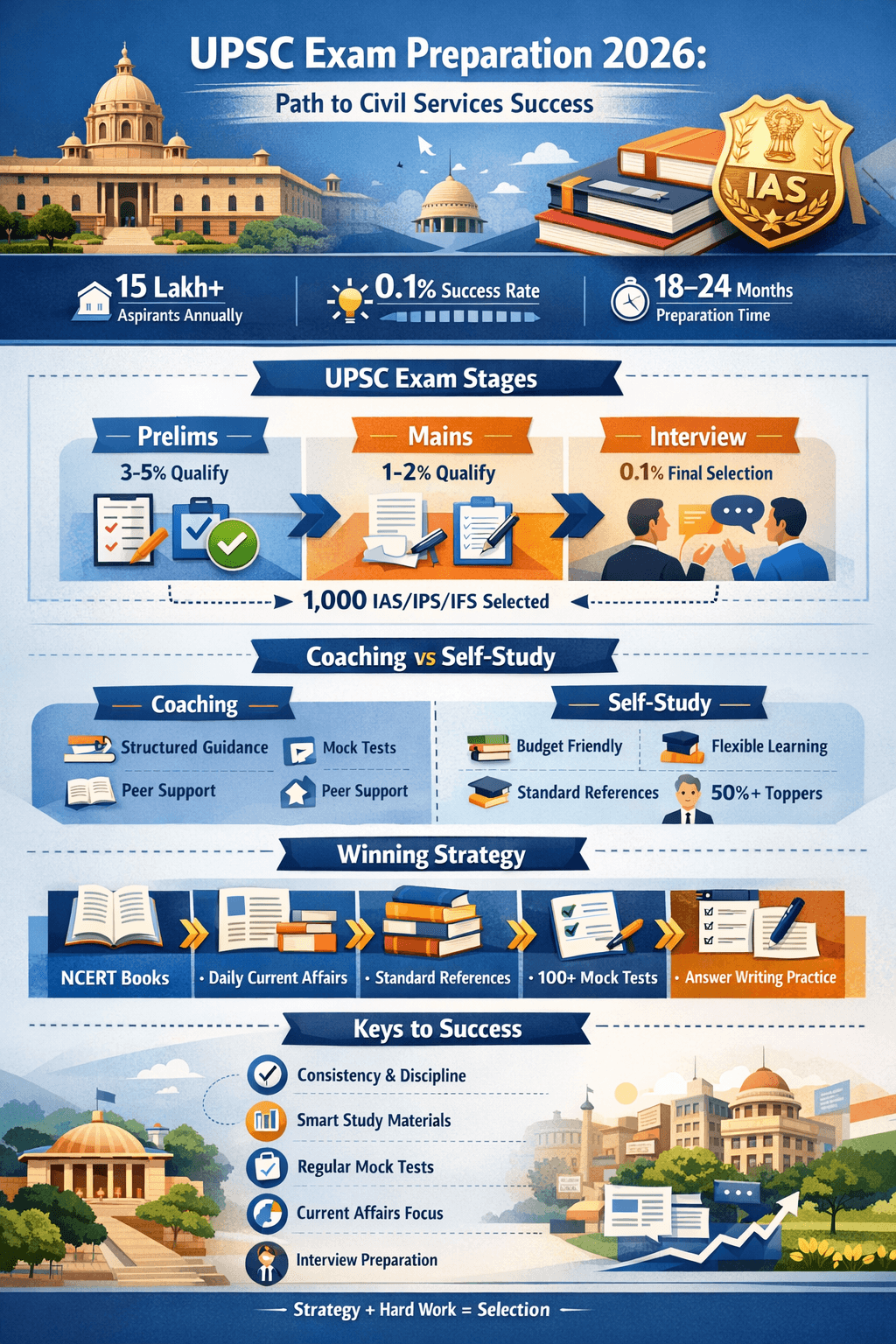
Introduction: UPSC Remains India's Most Competitive Exam
2026 establishes UPSC Civil Services examination as India's most competitive government exam with 1.5 million+ annual aspirants, 0.1% success rate (1 in 1,000 clearance), and life-changing career outcome (IAS/IPS officers earning ₹56,100-₹2,50,800 monthly salary plus perquisites, commanding respect and influence). UPSC exam structure: Preliminary (objective MCQs), Mains (subjective essays/descriptive), Interview (personality assessment)—comprehensive evaluation spanning 18-24 months preparation. March 2026 preparation landscape showcases mature ecosystem: established coaching centers (Delhi-based Shankar IAS, Drishti IAS, Vision IAS commanding ₹3,00,000-5,00,000 fees), online alternatives (Khan Academy UPSC, Unacademy, StudIQ reducing geographic barriers), and free NCERT-based self-study paths enabling merit-based competition (financial barriers reduced). Successful candidates typically: 18-24 months dedicated preparation (50-70 hours weekly), strategic material selection (NCERTs, standard references, current affairs), comprehensive answer writing practice (200+ mock essays), and interview coaching (developing personality and communication skills). Whether preparing from metropolitan area (access to coaching) or remote region (relying on self-study and online resources), 2026's preparation ecosystem offers multiple pathways enabling success based on commitment, strategy, and execution rather than privilege or access alone.
Pro Tip
👉 Key Insight: UPSC success not dependent on coaching center quality but rather student discipline and consistent effort. Self-study candidates achieving 50%+ of successful results (vs. coached candidates), proving that systematic preparation, comprehensive coverage, and rigorous practice trump coaching prestige. Coaching advantage: structure, mentoring, peer cohort, and answer evaluation—not superior knowledge. Budget-conscious aspirants achieving success through free resources (NCERT, Drishti videos free version, Hindu/Indian Express news) combined with strategic paid resources (test series ₹5,000-15,000).
1. UPSC Exam Structure and Syllabus Overview
Comprehensive understanding of UPSC exam pattern, syllabus coverage, and evaluation criteria essential for strategic preparation planning.
| Exam Stage | Format | Number of Questions/Papers | Duration | Marks | Passing Threshold (%) | Success Rate (%) |
|---|---|---|---|---|---|---|
| Preliminary | Objective MCQs (multiple choice) | 2 papers (GS-1, CSAT) | 2 hours each paper | 400 total (GS: 200, CSAT: 200) | 32-35% (competitive) | 3-5% (15,000-30,000 qualify) |
| Mains | Subjective essays + descriptive answers | 9 papers (GS-1-4, essay, optional subject) | 3 hours per paper | 1,750 total (GS: 1,000, Essay: 250, Optional: 500) | 40-50% (competitive) | 1-2% (5,000-10,000 qualify) |
| Interview | Personality assessment + knowledge | 1 interview session (45-60 minutes) | 45-60 minutes | 275 marks | 50-55% (cutoff varies) | 0.1% (~1,500 final selections) |
| Final | Aggregate preliminary + mains + interview | Aggregate marks basis | N/A | 2,425 total marks | Varies (merit-based ranking) | 0.1% final selection (1,000-1,500 IAS/IPS/IFS/etc.) |
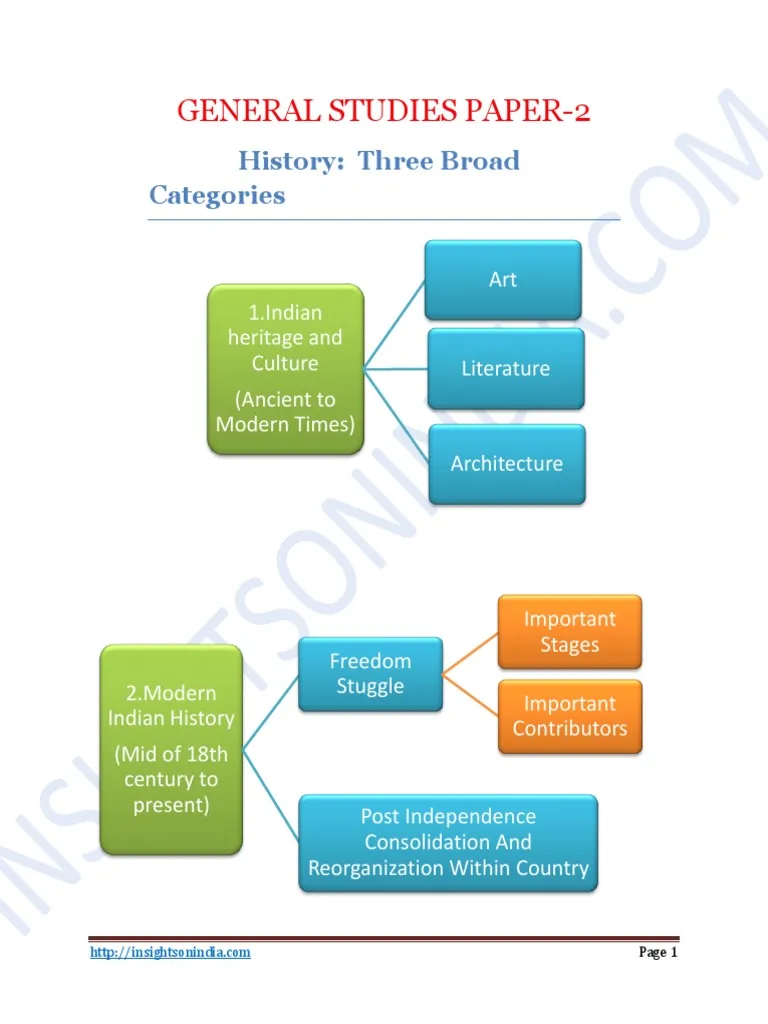
UPSC Syllabus Breakdown
2. Top UPSC Coaching Centers and Online Alternatives
Comprehensive comparison of coaching centers, online platforms, and alternative resources enabling accessible preparation across budget and geographic constraints.
| Coaching Center/Platform | Type | Cost (₹) | Location | Online Available | Success Rate* | Specialty | Verdict |
|---|---|---|---|---|---|---|---|
| Shankar IAS Academy | Offline coaching (Delhi-based) | ₹4,00,000-5,50,000 | Delhi, Bangalore, Mumbai | Limited online | 8-12% (claimed) | History, culture, answer writing | Prestigious, expensive, Delhi-centric |
| Drishti IAS | Offline + online hybrid | ₹3,00,000-5,00,000 (offline), ₹15,000-30,000/month (online) | Multiple cities + fully online | Yes (comprehensive) | 6-10% (claimed) | Current affairs integration, test series | Balanced offline-online, accessible |
| Vision IAS | Offline coaching (Delhi-based) | ₹3,50,000-5,00,000 | Delhi (primarily) | Online available | 5-8% (claimed) | Comprehensive GS, test papers | Quality instruction, Delhi-dependent |
| Indian Institute of Public Administration (IIPA) | Premium coaching | ₹5,00,000-8,00,000 | Delhi (premium location) | No (offline only) | 10-15% (claimed) | Comprehensive, elite network | Most expensive, prestige factor |
| Unacademy | Online live classes + recorded | ₹10,000-50,000/month (subscription model) | Fully online | Yes | Varies (5-15% claimed) | Flexibility, subject-expert instructors, current affairs | Affordable, flexible, quality teachers |
| Khan Academy UPSC | Free online resource | Free | Fully online | Yes (free) | Unknown (varies by student) | Free comprehensive coverage, no coaching | Budget option, self-motivated learners |
| StudIQ | Online classes + live doubt sessions | ₹12,000-25,000/month | Fully online | Yes | Varies (5-10% estimated) | Current affairs focus, interactive sessions | Affordable, interactive, community-driven |
| Bansal Classes/Chahal Academy | Online platform | ₹15,000-30,000/month | Fully online | Yes | 5-8% (estimated) | Test series, answer writing, mock interviews | Competitive, structured, proven success |
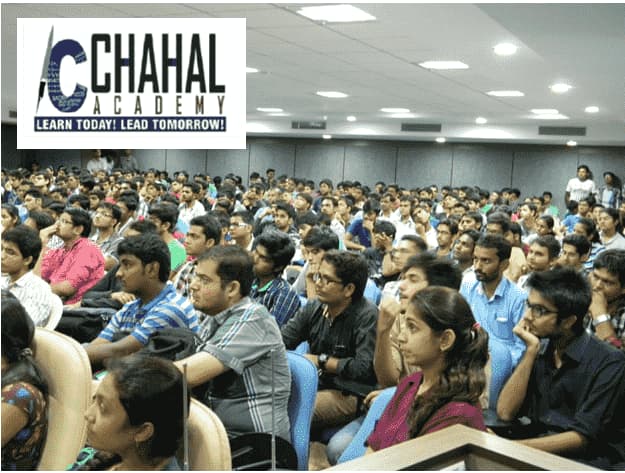
Coaching Center Analysis
1. Budget-conscious, disciplined learner: Khan Academy free + StudIQ/Unacademy online (₹2-3L total)
2. Geographic flexibility, time abundance: Drishti/Vision offline (₹3-5L, Delhi relocation 6-12 months)
3. Time-constrained, quality-focused: Unacademy/StudIQ online (₹2-3L, flexibility advantage)
4. Prestige/network focus: IIPA/Shankar (₹4-8L, elite brand value)
5. Balanced approach: Drishti hybrid (₹3L offline + online combination)
3. Essential Study Materials and Resource Selection
Strategic selection of study materials, reference books, and current affairs sources optimizing knowledge coverage without information overload.
| Resource Type | Recommended Sources | Cost (₹) | Utility | Priority Level | Alternatives |
|---|---|---|---|---|---|
| NCERT Textbooks (Foundation) | NCERT Classes 6-12 (History, Geography, Civics, Economics) | ₹2,000-3,000 (full set) | 99% essential (foundation knowledge) | Critical | Wikipedia, Khan Academy free videos |
| Current Affairs | The Hindu, Indian Express (premium or free website) | ₹300-500/month | 15-20% mains questions from current affairs | Critical | Hindustan Times, BBC India, YouTube news |
| UPSC-Specific Current Affairs | Drishti Current Affairs, Shankar IAS Monthly Magazine | ₹200-400/month or ₹2-3K/year | Filtered, relevant current affairs, saves time | Important | Self-curated from news sources (free) |
| General Studies Guides | Laxmikanth (Polity), Ramesh Singh (Economy), Spectrum (History) | ₹800-1,500 each | Comprehensive GS coverage beyond NCERTs | Important | Drishti/Unacademy course materials |
| Previous Year Question Papers | UPSC official website (free), Arihant/Disha publications | Free (official), ₹500-1,000 (books) | Understanding question pattern, difficulty level | Critical | Coaching materials usually include |
| Test Series | All India Test Series (AITS) by Vision/Drishti, Vajiram AITS | ₹10,000-15,000 (50-100 tests) | Mock exam practice, performance assessment | Critical | Free test series on YouTube (limited quality) |
| Essay Guidance | Shankar IAS essay guide, Drishti essay materials | ₹1,000-2,000 | Essay structure, vocabulary, argument building | Important | Coaching classes focus on essays |
| Optional Subject Books | Subject-specific standard references (varies by subject) | ₹2,000-5,000 per subject | Deep knowledge for optional paper | Important | Coaching materials + online lectures |
| Ethics and Integrity | Lexicon for Ethics (Shankar IAS), Drishti ethics materials | ₹500-1,500 | GS Paper 4 specific, ethics case studies | Important | Some coaching integrates in main materials |
| Interview Preparation | Books (rare), coaching interview batches (₹50,000-1,00,000) | ₹50,000-1,00,000 (coaching) | Interview strategy, personality development | Important for final stage | Self-preparation with mentors, mock interviews |
Strategic Material Selection Framework
1. NCERT Textbooks Classes 6-12 (History, Geography, Civics, Economics, Science)
2. Previous Year Papers (Last 10 years minimum)
3. Current Affairs Integration (Daily ongoing)
1. Laxmikanth (Polity) — Constitutional Government and Governance textbook
2. Ramesh Singh (Economy) — Economy textbook
3. Spectrum History or Nitin Singhania (Cultural Heritage)
4. Environment and Ecology — Shankar IAS or NIOS materials
Total budget ₹15,000-25,000 (without coaching):
1. Over-purchasing books: 50+ books purchased (wasteful)
2. Ignoring NCERTs: Trying to skip foundation material
3. No test series: Preparing without performance feedback
4. Random current affairs: Not structured compilation
5. Outdated materials: Using old editions, missing updates
4. UPSC Preparation Strategy and Timeline Planning
Comprehensive 18-24 month preparation strategy with phase-wise breakdown, weekly schedules, and milestone tracking.
18-Month Systematic Preparation Timeline
1. Burnout Risk: Continuous 70+ hour weeks → Implement weekly rest day, monthly breaks, peer support
2. Content Overload: Trying to read everything → Stick to core materials, skip peripheral sources
3. Test Score Plateau: Scores stagnating 70-75% → Identify specific weak areas, change study approach
4. Exam Stress: Anxiety increasing near exam → Practice stress management, maintain confidence, get mentoring
5. Procrastination: Falling behind on schedule → Weekly accountability checks, study groups, mentors
5. Answer Writing and Interview Preparation
Practical strategies for developing high-quality essay writing and interview performance critical for mains and interview success.
Mains Answer Writing Mastery
1. Introduction (5-7 minutes, 5-10% marks):
2. Body (40-50 minutes, 70-80% marks):
3. Conclusion (5-10 minutes, 10-15% marks):
1. Personal Domain (30% interview focus):
2. Current Affairs and General Knowledge (30%):
3. Situational Judgment (20%):
4. Communication Skills (15%):
5. Values and Integrity (5%):
1. Authenticity: Be genuine, not following scripted answers
2. Depth: Demonstrate deep thinking, not superficial knowledge
3. Values Alignment: Show commitment to public service and constitutional values
4. Problem-Solving: Approach challenges pragmatically with nuance
5. Communication: Express clearly, listen carefully, respond thoughtfully
6. Success Factors and Common Pitfalls to Avoid
Research-backed success factors and mistakes preventing aspiring civil servants from achieving UPSC success.
Research-Backed Success Factors:
1. Discipline and Consistency (Most Critical):
- ✓Successful candidates: 60-70 hours/week for 18-24 months (without breaks)
- ✓Failed candidates: Irregular study (30-40 hours/week, inconsistent)
- ✓Key: Daily commitment (studying 7 days/week vs. 5 days/week)
- ✓Mindset: Treating preparation like job (9-10 hours daily), not hobby
2. Strategic Material Selection:
- ✓Focused study: Core materials (NCERTs, standard references) vs. 50+ books
- ✓Successful candidates: 10-15 core books thoroughly read
- ✓Failed candidates: Random book purchases, incomplete reading
- ✓Key: Depth over breadth, quality over quantity
3. Test Series and Regular Evaluation:
- ✓Successful candidates: 100+ mock tests, detailed analysis of weaknesses
- ✓Failed candidates: <30 tests or tests without analysis
- ✓Key: Learning from mistakes, continuous improvement
- ✓Metric: Tracking score trends, identifying weak areas
4. Answer Writing Practice:
- ✓Successful candidates: 300+ essays written and evaluated
- ✓Failed candidates: <100 essays, minimal feedback
- ✓Key: Feedback loop (write → evaluate → improve)
- ✓Quality: Professional evaluation (mentor feedback critical)
5. Current Affairs Integration:
- ✓Successful candidates: Daily reading + weekly thematic compilation
- ✓Failed candidates: Sporadic reading or random note-making
- ✓Key: Structured approach (Hindu editorial analysis, current affairs compilation)
- ✓Relevance: Connecting current affairs to GS concepts
6. Mentoring and Peer Support:
- ✓Successful candidates: Regular mentoring (coaching or mentor), study group
- ✓Failed candidates: Isolated study, no accountability
- ✓Key: Accountability mechanism, experience-based guidance
- ✓Impact: Mentor preventing wrong approaches, saving months of wasted effort
7. Weak Area Identification and Remediation:
- ✓Successful candidates: Regular weak area analysis, targeted remediation
- ✓Failed candidates: Overall study without weak area focus
- ✓Key: Mock test analysis showing specific gaps
- ✓Action: Addressing gaps systematically before exam
8. Physical and Mental Wellness:
- ✓Successful candidates: Exercise, sleep (7-8 hours), balanced diet, meditation
- ✓Failed candidates: Burnout, health issues, anxiety affecting performance
- ✓Key: Sustainability of 18-24 month effort
- ✓Metric: Maintaining energy and motivation over long period
9. Realistic Expectations and Adaptability:
- ✓Successful candidates: Flexible approach, willing to change strategy based on results
- ✓Failed candidates: Rigid approach (same strategy despite poor results)
- ✓Key: Mid-course corrections (if test scores plateau, changing study method)
- ✓Metrics: Monitoring progress, adjusting timeline if needed
10. Positive Mindset and Resilience:
- ✓Successful candidates: Believing in possibility, resilient to setbacks
- ✓Failed candidates: Doubt and defeatism, giving up after poor performance
- ✓Key: Learning from failures (mock test poor scores = learning opportunities)
- ✓Impact: Confidence affecting interview performance and overall approach
Common Mistakes and Impact on Results:
1. Over-Reliance on Coaching (Mistake Priority: Medium)
- ✓Believing coaching guarantees success (false)
- ✓Not studying independently after coaching class
- ✓Impact: Passive learning, poor retention
- ✓Solution: Coaching as supplement, self-study as foundation
2. Buying Excessive Books (Mistake Priority: High)
- ✓Purchasing 40-50 books with intentions of reading all
- ✓Book shopping replacing actual study
- ✓Impact: Incomplete reading, confusion from multiple sources
- ✓Solution: Stick to 10-15 core books, deep reading
3. Skipping NCERT Revision (Mistake Priority: Critical)
- ✓Believing NCERTs are too basic, jumping to advanced references
- ✓Impact: Knowledge gaps, struggling with basic concepts
- ✓Solution: NCERT foundation essential (repeated revision)
4. No Test Series Practice (Mistake Priority: Critical)
- ✓Relying on only mock papers in coaching center
- ✓No independent test assessment
- ✓Impact: Unable to gauge performance level, surprised at exam
- ✓Solution: Comprehensive test series (50-100 tests minimum)
5. Poor Answer Writing Quality (Mistake Priority: Critical)
- ✓Writing lengthy answers without structure
- ✓Essays lacking originality and depth
- ✓Impact: Low marks despite knowledge
- ✓Solution: Systematic writing improvement, professional evaluation
6. Neglecting Current Affairs (Mistake Priority: High)
- ✓Ignoring current affairs integration
- ✓Believing GS can be studied from only books
- ✓Impact: 10-15% questions from current affairs = lost marks
- ✓Solution: Daily news reading + thematic compilation
7. Wrong Optional Subject Choice (Mistake Priority: High)
- ✓Choosing optional based on popularity (not interest/aptitude)
- ✓Realizing wrong choice after 6 months
- ✓Impact: Poor scores in optional, regret
- ✓Solution: Research subjects, take sample tests before deciding
8. Insufficient CSAT Preparation (Mistake Priority: High)
- ✓Assuming CSAT is simple, neglecting preparation
- ✓Failing to clear 33% cutoff
- ✓Impact: Eliminated at preliminary stage despite good GS
- ✓Solution: Systematic logical reasoning practice (3-4 months)
9. Isolating from Peer Group (Mistake Priority: Medium)
- ✓Studying alone without discussion or doubt clarification
- ✓Missing peer learning and motivation benefits
- ✓Impact: Slower learning, burnout risk
- ✓Solution: Join study group, find accountability partners
10. Procrastination and Irregular Study (Mistake Priority: Critical)
- ✓Studying 2-3 hours some days, 0 hours others
- ✓Saying "I'll start seriously next month"
- ✓Impact: 18 months passes with incomplete coverage
- ✓Solution: Daily commitment, non-negotiable study hours
11. Comparing Yourself to Others (Mistake Priority: Medium)
- ✓Constantly comparing progress with peers
- ✓Getting discouraged by others' mock scores
- ✓Impact: Loss of confidence, anxiety
- ✓Solution: Focus on personal improvement, ignore external comparison
12. Not Addressing Health Issues (Mistake Priority: Medium)
- ✓Ignoring sleep, exercise, diet during preparation
- ✓Burnout and health problems affecting performance
- ✓Impact: Unable to study due to fatigue/illness
- ✓Solution: Prioritize health (exercise, sleep, nutrition)
13. Over-Specializing Early (Mistake Priority: Medium)
- ✓Focusing too much on optional subject (neglecting GS)
- ✓Impact: Excellent optional scores but poor GS (overall low rank)
- ✓Solution: Balanced approach (70% GS, 30% optional)
14. Panic Before Exam (Mistake Priority: Low)
- ✓Last-minute cramming and anxiety
- ✓Changing study strategy days before exam
- ✓Impact: Reduced performance due to stress
- ✓Solution: Confidence in preparation, steady last-week review
Recovery Strategies:
If Mock Test Scores Stagnate (e.g., stuck at 70-75%):
- ✓Deep analysis: Identify specific weak topics (50% of errors)
- ✓Change study approach: From reading to problem-solving focus
- ✓Seek mentoring: Get external perspective on issues
- ✓Increase test frequency: Move from 1 test/week to 2-3/week
- ✓Essay refinement: If mains scores low, focus on answer quality
If Running Behind Schedule (e.g., 12 months in, only 60% coverage):
- ✓Ruthless prioritization: Focus on 80% syllabus, skip 20% peripheral topics
- ✓Time audit: Identify time wastage (social media, unproductive activities)
- ✓Accelerate reading: Increase reading hours (aim 70+ hours/week)
- ✓Adjust timeline: Accept exam next year, don't compromise quality
If Suffering Burnout (exhaustion, loss of motivation):
- ✓Immediate rest: Take 1-week break (guilt-free)
- ✓Health first: Exercise, sleep, healthy diet priority
- ✓Reduce hours: Better 40 focused hours than 70 distracted hours
- ✓Seek support: Talk to mentor, peer, counselor
- ✓Reconnect with goal: Remember why starting UPSC journey
Conclusion: UPSC Success Through Strategic Preparation
2026 establishes UPSC Civil Services examination as India's most competitive government exam with 1.5 million+ annual aspirants, 0.1% success rate, and life-transforming career outcomes. Success dependent on: strategic preparation (not luck), systematic timeline adherence (18-24 months), disciplined study (60-70 hours weekly), quality material selection (NCERTs + standard references), comprehensive practice (100+ mock tests), and effective communication (essay writing and interview skills). Coaching not mandatory (self-study candidates achieving 50%+ success), but structure and mentoring accelerate learning. Online alternatives (Unacademy, StudIQ) enabling accessible, affordable preparation vs. expensive offline coaching (₹3-5L), democratizing opportunity. Answer writing quality more important than knowledge breadth—competitive candidates achieving 180-220 marks/essay vs. failures getting 120-150 marks with same conceptual knowledge. Interview success dependent on authenticity, clear communication, and values alignment—not just GS knowledge. Common failures: inconsistent study (part-time commitment insufficient), wrong materials (50+ books vs. 10-15 core), no test series feedback, skipping current affairs integration, health neglect leading to burnout. Success factors: clear motivation, daily discipline, systematic material progression, regular feedback, weak area remediation, peer support, and resilience through setbacks. Career progression post-selection: IAS officers earning ₹56,100-₹2,50,800 monthly salary plus perquisites, commanding respect and policy influence—ROI on 18-24 month preparation substantial. Overall UPSC preparation transformation evident—quality coaching becoming optional (with discipline), online resources enabling rural/small-town access, and success increasingly merit-based (not privilege-dependent). Best opportunity for motivated individuals willing to invest consistent effort over 18-24 months following strategic preparation framework. Ultimate success formula: Clear goal + strategic plan + consistent execution + regular feedback + resilient mindset = UPSC success within reach.
🎯 **Download the Complete UPSC Preparation Guide 2026** — Detailed study materials list, 18-month timeline with weekly schedules, essay writing framework, interview preparation guide, and success factor analysis.
Share This Article
📤 Share This