
Introduction: The New Era of Mental Health Care
2026 represents a watershed moment in mental health care—a convergence of neuroscience, novel therapeutics, digital innovation, and integrative approaches that is fundamentally transforming how we understand and treat anxiety and depression. With 970 million people globally living with mental disorders, and the $500 billion+ mental health market expanding rapidly, the need for effective, accessible, and personalized interventions has never been greater. The paradigm has shifted: mental health conditions are no longer viewed as simple chemical imbalances corrected by serotonin reuptake inhibition, but as complex, multifactorial disorders involving neural circuitry dysfunction, inflammation, gut microbiome disruption, psychosocial stressors, and genetic vulnerability. This deeper understanding has spawned a new generation of treatments—from psychedelic-assisted therapy (psilocybin, MDMA) achieving FDA breakthrough designation, to digital therapeutics delivering evidence-based CBT at scale, to precision psychiatry leveraging biomarkers (inflammatory markers, neuroimaging, genetics) to guide treatment selection, to integrative approaches addressing lifestyle factors (sleep, nutrition, exercise) as foundational interventions. Whether you're a clinician seeking to incorporate novel therapeutics, an individual navigating treatment options, a researcher exploring mechanisms, or a healthcare system designing mental health services, 2026 offers unprecedented tools and understanding for managing anxiety and depression.
Pro Tip
👉 Key Insight: The most significant shift in 2026 is the recognition that mental health treatment must be multimodal and personalized. No single intervention works for everyone. Combining pharmacotherapy, psychotherapy, lifestyle optimization (sleep, nutrition, exercise), and novel therapeutics (psychedelics, digital interventions) based on individual phenotype yields the best outcomes—a move toward precision psychiatry.
2. The Neuroscience of Anxiety and Depression: Beyond Serotonin
Modern neuroscience has moved beyond the monoamine hypothesis (serotonin, norepinephrine, dopamine) to a more sophisticated understanding of anxiety and depression as disorders of neural circuitry, neuroplasticity, inflammation, and stress response systems.
| Neurobiological Domain | Key Findings | Clinical Implications | Biomarkers | Therapeutic Targets | Evidence Level |
|---|---|---|---|---|---|
| Neural Circuitry | Prefrontal cortex (PFC) hypoactivity; amygdala hyperactivity; default mode network (DMN) hyperconnectivity; altered salience network | Depression: impaired top-down cognitive control; anxiety: threat detection hyperactivation | fMRI (resting state, task-based); EEG (alpha asymmetry) | TMS (PFC stimulation); DBS; psychedelics (DMN disruption); CBT (PFC engagement) | Strong (1000+ neuroimaging studies) |
| Neuroplasticity | Reduced BDNF (brain-derived neurotrophic factor); reduced hippocampal volume (chronic stress, depression); impaired synaptogenesis | Stress-induced hippocampal atrophy; antidepressant effects mediated by BDNF increase, neurogenesis | Serum BDNF; hippocampal volume (MRI); neurogenesis markers | Exercise (BDNF increase); ketamine (rapid synaptogenesis); SSRIs (BDNF increase); psychedelics (neuroplasticity) | Strong (500+ studies) |
| HPA Axis Dysregulation | Hypercortisolemia (depression, anxiety); blunted cortisol awakening response (burnout, PTSD); impaired negative feedback | Chronic stress → cortisol elevation → hippocampal damage → further HPA dysregulation | Cortisol (saliva, serum, urine); dexamethasone suppression test; CRH stimulation | Stress reduction; sleep optimization; SSRIs (normalize HPA); ketamine | Strong (1000+ studies) |
| Inflammation | Elevated pro-inflammatory cytokines (IL-6, TNF-α, CRP) in 30-50% of depressed patients; inflammation induces depressive symptoms | Inflammatory subtype of depression (treatment-resistant, anhedonic, fatigue-predominant) | CRP (hs-CRP); IL-6; TNF-α; inflammatory gene expression | Anti-inflammatory agents (celecoxib, infliximab); lifestyle (diet, exercise, sleep); antidepressants | Strong (500+ studies; meta-analyses) |
| Gut-Brain Axis | Altered gut microbiome composition (dysbiosis) in depression, anxiety; microbiome modulates stress response, inflammation, neurotransmitter production | Psychobiotics (probiotics for mental health); dietary interventions (fiber, fermented foods) affect mood | Microbiome sequencing (16S, metagenomics); SCFA measurement | Probiotics (specific strains); prebiotics; dietary fiber; fermented foods; FMT (emerging) | Moderate-strong (300+ studies) |
| Neurotransmitter Systems | Beyond serotonin: glutamate (excitotoxicity, ketamine mechanism); GABA (anxiety, benzodiazepine targets); dopamine (anhedonia, reward dysfunction) | Ketamine (glutamate modulator) rapid antidepressant; GABAergic agents for anxiety; dopamine targets for anhedonia | MRS (glutamate, GABA); PET (receptor binding) | Ketamine, esketamine; GABAergic agents; dopaminergic agents (bupropion, pramipexole) | Strong (established) |
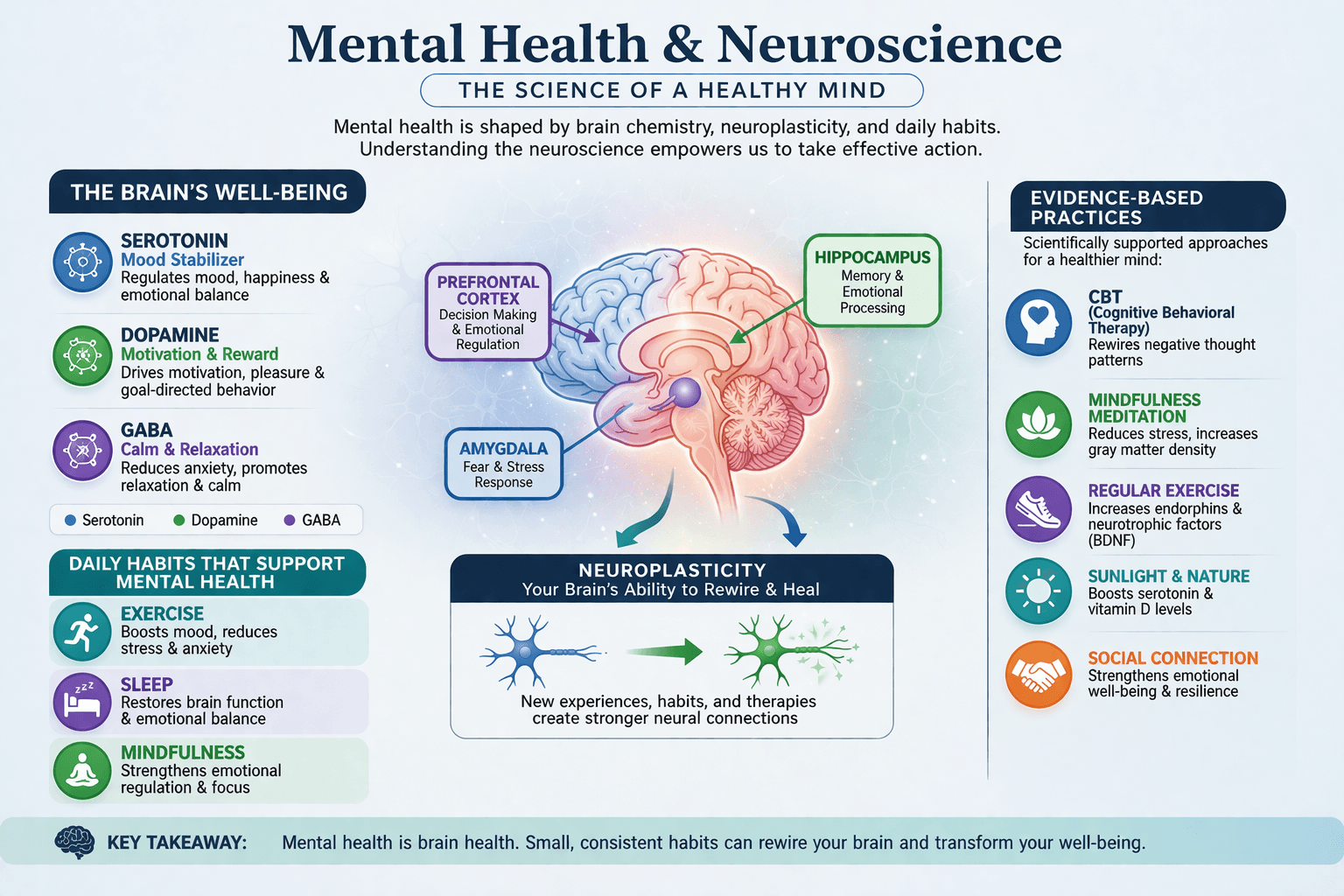
The Inflammation-Depression Connection
A paradigm shift in understanding depression is the recognition that 30-50% of depressed patients have elevated inflammatory markers (CRP, IL-6, TNF-α). Inflammation can induce depressive symptoms through multiple mechanisms: reduced monoamine availability (IDO pathway, tryptophan depletion), glutamate excitotoxicity, microglial activation, and altered neuroplasticity.
The gut microbiome communicates with the brain via neural (vagus nerve), endocrine (hormonal), immune (cytokines), and metabolic (SCFAs, neurotransmitters) pathways. Dysbiosis (altered microbiome composition) is consistently observed in depression and anxiety.
Specific probiotic strains show antidepressant/anxiolytic effects in clinical trials:
3. Evidence-Based Psychotherapies: The Foundation
Psychotherapy remains the cornerstone of anxiety and depression treatment, with decades of evidence supporting specific modalities. 2026 brings expanded access through digital delivery, stepped care models, and integration with pharmacotherapy and novel therapeutics.
| Therapy Modality | Core Components | Clinical Applications | Effect Size (vs. control) | Treatment Duration | Digital Delivery | Evidence Level |
|---|---|---|---|---|---|---|
| Cognitive Behavioral Therapy (CBT) | Cognitive restructuring, behavioral activation, exposure, skills training | Depression, anxiety disorders, OCD, PTSD | d = 0.6-1.0 (depression); d = 0.7-1.2 (anxiety) | 8-20 sessions (individual or group) | Digital CBT (iCBT) non-inferior for mild-moderate | Strong (500+ RCTs; meta-analyses) |
| Behavioral Activation (BA) | Focus on behavior change, activity scheduling, reducing avoidance | Depression (particularly anhedonia, low motivation) | d = 0.8-1.0 (depression); non-inferior to CBT | 8-16 sessions | Digital BA programs emerging | Strong (COBRA trial; 50+ RCTs) |
| Acceptance and Commitment Therapy (ACT) | Mindfulness, values clarification, cognitive defusion, acceptance | Depression, anxiety, chronic pain, OCD | d = 0.5-0.8 (depression, anxiety) | 8-16 sessions | Digital ACT programs (e.g., ACT Companion) | Moderate-strong (100+ RCTs) |
| Mindfulness-Based Cognitive Therapy (MBCT) | 8-week group program; mindfulness meditation + CBT elements | Depression relapse prevention (3+ episodes) | Relapse reduction 40-50%; comparable to antidepressants | 8 weeks (group) | Digital MBCT emerging; MBSR apps | Strong (NICE guidelines; 40+ RCTs) |
| Interpersonal Therapy (IPT) | Focus on interpersonal relationships, role transitions, grief | Depression, eating disorders | d = 0.6-0.9 (depression) | 12-16 sessions | Limited digital delivery | Strong (50+ RCTs) |
| Prolonged Exposure (PE) | Imaginal and in vivo exposure to trauma reminders | PTSD | d = 1.0-1.5 (PTSD) | 8-15 sessions | Digital PE programs (e.g., PE Coach) | Strong (VA/DoD guidelines) |
| Eye Movement Desensitization and Reprocessing (EMDR) | Bilateral stimulation while processing traumatic memories | PTSD | d = 1.0-1.5 (PTSD) | 6-12 sessions | Limited digital delivery | Strong (VA/DoD guidelines) |
| Dialectical Behavior Therapy (DBT) | Mindfulness, distress tolerance, emotion regulation, interpersonal effectiveness | Borderline personality disorder, suicidal behavior, complex trauma | Reduced self-harm (50% reduction); improved emotion regulation | 6-12 months (group + individual) | Digital DBT skills training | Strong (30+ RCTs) |
Cognitive Behavioral Therapy (CBT): Clinical Implementation
CBT is the most extensively studied psychotherapy for anxiety and depression, with effect sizes comparable to antidepressants (d = 0.6-1.0) and combined treatment superior to either alone.
1. Cognitive restructuring: Identify and challenge negative automatic thoughts (e.g., "I'm worthless," "everything goes wrong") and cognitive distortions (catastrophizing, black-and-white thinking, overgeneralization).
2. Behavioral activation: Schedule pleasurable and mastery activities to counteract withdrawal, anhedonia; activity monitoring; graded task assignment.
3. Exposure (anxiety disorders): Systematic, gradual exposure to feared stimuli (interoceptive, situational) with response prevention.
4. Skills training: Problem-solving, assertiveness, relaxation, emotion regulation.
4. Pharmacotherapy: New Mechanisms and Personalization
While SSRIs remain first-line for anxiety and depression, 2026 has brought significant advances: novel mechanisms (NMDA antagonists, GABAergic agents), pharmacogenomic testing to guide selection, and new formulations improving adherence and onset.
| Medication Class | Mechanism | Indications | Onset/Efficacy | Common Adverse Effects | Key Considerations | Evidence Level |
|---|---|---|---|---|---|---|
| SSRIs (escitalopram, sertraline, fluoxetine, etc.) | Selective serotonin reuptake inhibition | Depression, GAD, panic, social anxiety, OCD, PTSD | 2-6 weeks onset; 50-70% response | GI upset, sexual dysfunction (30-60%), weight gain, insomnia/sedation | First-line; low risk in overdose; discontinuation syndrome | Strong (100+ RCTs) |
| SNRIs (venlafaxine, duloxetine, desvenlafaxine) | Serotonin + norepinephrine reuptake inhibition | Depression, GAD, chronic pain, fibromyalgia | 2-6 weeks onset; 50-70% response | Similar to SSRIs + hypertension (dose-dependent), sweating | May be more effective than SSRIs for some (pain, severe depression) | Strong (50+ RCTs) |
| Ketamine / Esketamine | NMDA antagonist; glutamate modulation; rapid synaptogenesis | Treatment-resistant depression (TRD), suicidal ideation | Hours to days (rapid); 50-70% response in TRD | Dissociation, dizziness, increased BP, nausea | Intranasal (esketamine) or IV (ketamine); requires REMS program | Strong (10+ RCTs; FDA-approved) |
| Atypical Antipsychotics (aripiprazole, brexpiprazole, quetiapine) | Dopamine partial agonist/serotonin antagonist | Augmentation for treatment-resistant depression | 2-4 weeks (augmentation) | Weight gain, metabolic effects, sedation, akathisia | Second-line augmentation; significant metabolic side effects | Strong (10+ RCTs) |
| Buspirone | 5-HT1A partial agonist | Generalized anxiety disorder (GAD) | 2-4 weeks | Dizziness, nausea, headache; no sexual dysfunction | Well-tolerated; no dependence; limited efficacy for other anxiety disorders | Moderate (10+ RCTs) |
| Benzodiazepines (alprazolam, clonazepam, lorazepam) | GABA-A positive allosteric modulator | Anxiety disorders (short-term), panic disorder | Minutes to hours (acute) | Sedation, ataxia, cognitive impairment, tolerance, dependence | Limited to short-term use (2-4 weeks); significant abuse potential; falls in elderly | Moderate (short-term); strong avoidance for chronic use |
| Bupropion | Norepinephrine + dopamine reuptake inhibition | Depression, seasonal affective disorder, smoking cessation | 2-4 weeks | Agitation, insomnia, anxiety; no sexual dysfunction; seizure risk (dose-dependent) | Good for anhedonia, low energy; contraindicated in eating disorders, seizure disorders | Moderate (30+ RCTs) |
| Mirtazapine | Alpha-2 antagonist; 5-HT2/3 antagonism | Depression (particularly with insomnia, weight loss) | 2-4 weeks | Sedation (H1 blockade), weight gain (significant) | Good for insomnia, poor appetite; weight gain may be problematic | Moderate (20+ RCTs) |
| Vortioxetine | Serotonin modulator (SERT inhibition + 5-HT1A agonist, 5-HT3 antagonism) | Depression (cognitive symptoms) | 2-4 weeks | Nausea, GI upset; minimal sexual dysfunction | May benefit cognitive symptoms; better sexual side effect profile | Moderate (10+ RCTs) |
| Pregabalin / Gabapentin | Calcium channel alpha-2-delta ligand | Generalized anxiety disorder (off-label for other anxiety) | 1-2 weeks | Dizziness, sedation, weight gain; dependence risk | Second-line; abuse potential; tapering required | Moderate (10+ RCTs) |
Pharmacogenomics: Personalized Prescribing
Pharmacogenomic testing (e.g., GeneSight, Genomind) analyzes genetic variants affecting drug metabolism (CYP450 enzymes), transporter function, and receptor sensitivity, guiding medication selection and dosing.
Ketamine (IV) and esketamine (intranasal) represent the first truly rapid-acting antidepressants, with effects within hours to days (vs. weeks for SSRIs).
5. Psychedelic-Assisted Therapy: The Third Wave
Psychedelic-assisted therapy—combining psilocybin, MDMA, or other psychedelics with psychotherapeutic support—has emerged as a breakthrough treatment for depression, PTSD, and anxiety, with FDA breakthrough designations and Phase 3 trials showing unprecedented efficacy.
| Compound | Mechanism | Indications | Protocol | Efficacy (Phase 2/3) | Regulatory Status (2026) | Safety Considerations |
|---|---|---|---|---|---|---|
| Psilocybin | 5-HT2A agonist; default mode network disruption; neuroplasticity | Treatment-resistant depression (TRD); major depression; cancer-related anxiety/depression | 1-3 sessions (25-30mg) + preparation and integration therapy (CBT-based) | TRD: 70-80% response; 50-60% remission at 3 months; sustained effects | FDA Breakthrough Therapy; Phase 3 complete; NDA submitted | Transient anxiety; BP elevation; integration support essential; not for psychosis, bipolar I |
| MDMA (Ecstasy) | Serotonin, oxytocin, norepinephrine release; fear extinction; prosocial effects | PTSD (moderate-severe) | 3 sessions (80-120mg) + 3 preparation/integration sessions; 12-week protocol | PTSD: 70-80% remission (vs. 30-40% for placebo + therapy); sustained at 12 months | FDA Breakthrough Therapy; Phase 3 complete; NDA submitted (expected 2026-2027) | Serotonin syndrome risk; cardiovascular effects; transient anxiety; integration essential |
| LSD | 5-HT2A agonist; similar to psilocybin | Anxiety; depression; cluster headache | 1-2 sessions (100-200µg) + therapy | Preliminary positive results (cluster headache); depression/anxiety studies ongoing | Phase 2 (ongoing) | Similar to psilocybin; longer duration (8-12 hours); integration essential |
| Ketamine (psychedelic-assisted) | NMDA antagonist (Section 4) | Depression (TRD, suicidal ideation) | Multiple sessions (IV or sublingual) + integration | Established efficacy (Section 4) | Esketamine FDA-approved; ketamine off-label | Dissociation; BP; abuse potential; monitored administration |
| Ayahuasca (DMT) | 5-HT2A agonist; MAOI (harmala alkaloids) | Depression; PTSD | Ceremonial or clinical sessions + integration | Small trials show promise; ongoing RCTs | No FDA approval; research ongoing | MAOI interactions (diet, medications); physical purging; cultural considerations |
| 5-MeO-DMT | 5-HT2A agonist; short duration | Depression; anxiety | Single session (vaporized) | Preliminary positive results; ongoing trials | Phase 1-2; no FDA approval | Intense experience; BP elevation; respiratory risk (vaporized); integration essential |
Psychedelic-Assisted Therapy: Clinical Implementation
Landmark Phase 2 trials (COMPASS Pathways, Imperial College, Johns Hopkins, NYU, UCB) have demonstrated unprecedented efficacy in treatment-resistant depression.
Phase 3 trials (MAPS) demonstrated MDMA-assisted therapy for moderate-severe PTSD.
1. Preparation (2-3 sessions): Establish therapeutic alliance; set intentions; prepare for experience; discuss safety
2. Dosing session (1-3 sessions): 8-hour session; psilocybin 25mg (or 10mg, 1mg); therapist support; eyeshades, music
3. Integration (3+ sessions): Process experience; connect insights to daily life; consolidate behavioral change
1. Preparation (3 sessions): Therapeutic alliance; establish safety; psychoeducation; set intentions
2. MDMA sessions (3): 8-hour sessions; MDMA 80-120mg + supplemental dose; therapist support; inner focus
3. Integration (3 sessions after each MDMA session): Process traumatic memories; integrate insights; consolidate gains
6. Digital Mental Health: Scaling Evidence-Based Care
Digital mental health—apps, platforms, and virtual care—has exploded, with 10,000+ mental health apps and $10B+ investment. 2026 brings maturation: FDA-cleared digital therapeutics, evidence-based platforms, and integration into mainstream care.
| Platform/App | Users/Scale | Core Intervention | Clinical Evidence | Regulatory Status | Reimbursement | Key Differentiator |
|---|---|---|---|---|---|---|
| Woebot | 5M+ users | CBT-based conversational AI (text-based) | 10+ studies; moderate effect sizes (depression, anxiety, substance use) | FDA Breakthrough Device (postpartum depression) | Emerging; employer-sponsored | AI chatbot; high engagement |
| Headspace/Calm | 170M+ users | Mindfulness meditation, CBT elements | 30+ studies; stress, anxiety, burnout reduction (10-30%) | Wellness apps (not FDA-cleared) | Employer-sponsored; limited insurance | Largest user base; consumer wellness |
| SilverCloud | 500+ health systems | iCBT (structured programs for depression, anxiety, PTSD, etc.) | 20+ studies; non-inferior to face-to-face for mild-moderate | Not FDA-cleared; used in healthcare systems | NHS; health systems; some insurance | Clinical platform; health system integration |
| Mindstrong | 100K+ users | Digital phenotyping (keyboard, touchscreen) + coaching | Studies show correlation with mood; predictive analytics | FDA Breakthrough Device | Health plans; research settings | Passive monitoring; early relapse detection |
| Talkspace / BetterHelp | 5M+ users | Teletherapy (text, video, audio) with licensed therapists | Observational studies show improvement; limited RCTs | Therapy platform (not digital therapeutic) | Limited insurance; employer-sponsored | Access to licensed therapists; convenience |
| Pear Therapeutics (reSET, reSET-O) | 50K+ patients | CBT-based digital therapeutic for substance use disorders | RCTs show improved abstinence, retention | FDA-cleared (prescription digital therapeutic) | Medicare, commercial insurance | First FDA-cleared PDT; reimbursement established |
| Limbix (SparkRx) | 20K+ patients | CBT-based digital therapeutic for adolescent depression | RCTs show improvement vs. waitlist | FDA-cleared | Emerging reimbursement | Adolescent-focused; prescription digital therapeutic |
| Happify Health | 10M+ users | CBT, positive psychology, mindfulness (structured tracks) | 10+ studies; stress, anxiety, depression improvement | Wellness app; prescription digital therapeutic (Happify for MBC) | Employer-sponsored; limited insurance | Structured tracks; gamification |
| Unmind | 1000+ employers | Workplace mental health platform (CBT, sleep, etc.) | Observational studies; workplace outcomes | Wellness platform | Employer-sponsored | Workplace focus; B2B model |
Digital Mental Health: Clinical Integration
Prescription digital therapeutics (PDTs) require a prescription, are evaluated in clinical trials, and have established reimbursement pathways—representing the maturation of digital mental health.
7. Lifestyle Psychiatry: Food, Exercise, Sleep as Medicine
Lifestyle factors—nutrition, physical activity, sleep, stress, social connection—are foundational to mental health. 2026 recognizes lifestyle psychiatry as an evidence-based first-line intervention, not merely complementary.
| Lifestyle Domain | Evidence-Based Intervention | Mental Health Outcomes | Mechanisms | Effect Size (vs. control) | Implementation | Evidence Level |
|---|---|---|---|---|---|---|
| Nutrition | Mediterranean diet; omega-3s (EPA 1-2g/day); reduced ultra-processed foods | Depression risk reduction 30-50% (Mediterranean); antidepressant augmentation (omega-3s) | Reduced inflammation; gut microbiome modulation; BDNF increase; neurotransmitter precursors | d = 0.4-0.6 (dietary intervention) | Referral to dietitian; SMILES trial protocol (7 individual sessions) | Strong (SMILES; PREDIMED; meta-analyses) |
| Exercise | Aerobic exercise (30-60 min, 3-5x/week); resistance training; yoga | Antidepressant effect equivalent to SSRIs (moderate-severe depression); anxiety reduction | BDNF increase; endorphins; reduced inflammation; HPA regulation; self-efficacy | d = 0.6-0.9 (depression); comparable to antidepressants | Prescription exercise; supervised groups; activity trackers | Strong (TREAD; 100+ RCTs; meta-analyses) |
| Sleep | CBT-I (Section 3); sleep hygiene; treat sleep apnea | Depression improvement (20-40%); anxiety reduction; mood stabilization | Emotional regulation; hippocampal function; inflammation reduction; glymphatic clearance | d = 0.5-0.8 (CBT-I for comorbid insomnia) | Sleep screening; CBT-I referral; sleep optimization (7-9h, consistent schedule) | Strong (40+ RCTs; comorbid insomnia-depression) |
| Stress Reduction | Mindfulness-Based Stress Reduction (MBSR); yoga; breathwork | Anxiety reduction (d=0.5-0.7); depression reduction (d=0.4-0.6); burnout reduction | HPA regulation; parasympathetic activation; reduced rumination; neuroplasticity | d = 0.5-0.8 (MBSR vs. waitlist) | 8-week MBSR; apps (Headspace, Calm); community programs | Strong (100+ RCTs; MBSR) |
| Social Connection | Social prescribing; group activities; peer support; reduce loneliness | Depression risk reduction 20-50%; reduced suicide risk; improved recovery | Oxytocin; reduced stress; social support; purpose; behavioral activation | d = 0.4-0.6 (social interventions) | Community programs; peer support groups; volunteer activities | Moderate-strong (observational; RCTs emerging) |
| Sunlight/Vitamin D | Vitamin D supplementation (if deficient); sunlight exposure (10-30 min/day) | Modest antidepressant effect (vitamin D supplementation if deficient) | Vitamin D receptors in brain; circadian regulation; serotonin synthesis | d = 0.3-0.5 (vitamin D supplementation if deficient) | Screening (25-OH vitamin D); supplementation (1000-4000 IU/day if deficient) | Moderate (mixed results; benefits primarily if deficient) |
Lifestyle Psychiatry: Clinical Implementation
The SMILES (Supporting the Modification of Lifestyle in Lowered Emotional States) trial was the first RCT of dietary intervention for major depression.
Meta-analyses (100+ RCTs) show exercise is effective for depression, with effect sizes (d = 0.6-0.9) comparable to antidepressants.
Comorbid insomnia and depression is the rule, not exception (80% of depressed patients have insomnia; 40% of insomniacs develop depression).
1. Brief advice: 1-2 minutes, motivational interviewing
2. Behavioral counseling: Referral to health coach, dietitian, exercise physiologist
3. Structured programs: MBSR, CBT-I, exercise programs, cooking classes
4. Community resources: Social prescribing, walking groups, peer support
8. Suicide Prevention and Crisis Care
Suicide is a leading cause of death globally (700,000+ deaths annually). 2026 brings advances in prediction, prevention, and intervention—from machine learning risk algorithms to rapid-acting interventions (ketamine) to digital safety planning.
| Prevention Domain | Evidence-Based Interventions | Outcomes | Implementation | Evidence Level | Key Developments 2026 |
|---|---|---|---|---|---|
| Risk Prediction | Machine learning algorithms (EHR data, social media, wearables); ecological momentary assessment (EMA) | Moderate prediction accuracy (AUC 0.70-0.85); earlier identification of high-risk individuals | EHR integration; crisis alert systems; wearable alerts (HRV, sleep, activity changes) | Moderate (emerging; implementation challenges) | AI models combining EHR, social determinants, real-time data; improving specificity |
| 988 Crisis Line (US) | 3-digit crisis hotline (988); trained counselors; mobile crisis teams | Reduced ED visits, hospitalization; increased connection to care | National rollout (2022+); 24/7; texting; Spanish language | Moderate (early outcome data) | Expanded capacity; integration with 911; mobile crisis units |
| Safety Planning | Brief intervention: personalized plan for managing suicidal thoughts (means restriction, coping strategies, social support) | Reduced suicide attempts (OR 0.5-0.7); reduced hospitalizations | EHR-integrated safety plan; apps (Safety Plan, My3); VA SAFE VET | Strong (40+ studies; VA standard of care) | Digital safety planning apps; integration with crisis services |
| Means Restriction | Reducing access to lethal means (firearms, medications, toxins) | Reduced suicide mortality (population-level); bridge barriers, safe storage | Physician counseling (lethal means safety); safe storage programs; firearm safety laws | Strong (population-level evidence) | Extreme risk protection orders (ERPOs); safe storage initiatives; physician counseling training |
| Ketamine for Suicidal Ideation | IV ketamine or intranasal esketamine for acute suicidal ideation | Rapid reduction in suicidal ideation (24-48 hours); reduced suicide attempts | Emergency department, inpatient, outpatient settings; monitored administration | Strong (10+ RCTs; FDA-approved for suicidal ideation?) | Esketamine FDA-approved for depression with suicidality (2025?); ED protocols |
| CBT for Suicide Prevention | CBT-SP (cognitive therapy for suicide prevention); DBT; CAMS | Reduced suicide attempts (50-70% reduction) | Outpatient, partial hospitalization, inpatient; brief interventions | Strong (20+ RCTs; VA, DOD guidelines) | Brief CBT-SP (4-8 sessions); scalable implementation |
| Post-Discharge Care | Post-discharge contact (phone calls, texts, letters); assertive community outreach; care transitions | Reduced suicide risk (50% reduction) in high-risk period (first 30 days post-discharge) | Crisis line outreach; case management; bridge appointments | Strong (10+ studies) | Automated text/phone outreach; warm handoffs; transition coordinators |
Suicide Prevention: Clinical Update 2026
Launched in 2022, 988 is the 3-digit crisis hotline for mental health emergencies (analogous to 911 for medical emergencies).
The Safety Plan (Stanley & Brown, 2008) is a brief intervention for individuals at risk of suicide.
1. Warning signs: Recognize triggers, thoughts, behaviors
2. Internal coping strategies: Activities to distract, reduce distress (without others)
3. Social contacts: People, settings that provide support
4. Family/friends: Support persons to contact
5. Professional contacts: Therapist, psychiatrist, crisis line (988)
6. Means restriction: Remove/reduce access to lethal means
Restricting access to lethal means is one of the most effective suicide prevention strategies (population-level).
Ketamine (IV) and esketamine (intranasal) reduce suicidal ideation within 24-48 hours—a paradigm shift for acute crisis.
The first 30 days post-discharge from psychiatric hospitalization is the highest-risk period for suicide (100x general population risk).
9. Challenges and Considerations
Despite significant advances, challenges remain for mental health care in 2026—from access and equity to integration and implementation.
Persistent Challenges in 2026:
Access and Workforce Shortages:
- ✓Mental health workforce: 40% of US counties have no psychiatrist; 60% have no psychologist
- ✓Wait times: 2-6 months for psychiatry; 1-3 months for therapy
- ✓Insurance barriers: Limited network providers; prior authorizations; high out-of-pocket costs
- ✓Rural mental health: Severe shortages; telehealth expansion helpful but not sufficient
- ✓Global disparities: Low-income countries have <1 mental health provider per 100,000 population
Treatment Resistance:
- ✓Depression: 30-50% do not respond to first-line antidepressant; 20-30% remain treatment-resistant after multiple trials
- ✓Anxiety: 30-40% do not achieve remission with first-line treatment
- ✓Predictors: Comorbidity, chronicity, trauma, inflammatory subtype, early adversity
- ✓Precision psychiatry: Still nascent; biomarkers not yet integrated into routine care
Integration and Fragmentation:
- ✓Mental health-primary care integration: Despite evidence, integration remains limited; behavioral health often separate
- ✓Care coordination: Poor transitions (inpatient to outpatient, child to adult) increase risk
- ✓EHR limitations: Behavioral health data often siloed; interoperability gaps
- ✓Measurement-based care: 10-20% of clinicians use standardized outcomes measures regularly
Health Disparities:
- ✓Racial/ethnic disparities: Black, Hispanic, Indigenous populations have lower access, lower quality care, worse outcomes
- ✓LGBTQ+: Higher rates of mental health conditions, barriers to affirming care
- ✓Socioeconomic: Lower SES associated with higher prevalence, lower access, poorer outcomes
- ✓Criminal justice: 50% of incarcerated individuals have mental health conditions; limited treatment
Psychedelic-Assisted Therapy Implementation:
- ✓Regulatory: Schedule I status; DEA scheduling post-FDA approval uncertain
- ✓Access: Specialized clinics; limited sites initially; equity concerns
- ✓Cost: $5,000-15,000 per course; insurance coverage uncertain
- ✓Training: Therapist training infrastructure nascent; potential for unqualified providers
Digital Mental Health Challenges:
- ✓Regulation: 10,000+ apps; few FDA-cleared; unsubstantiated claims widespread
- ✓Privacy: Data security, sharing with third parties, re-identification risks
- ✓Digital divide: Access, digital literacy disparities
- ✓Evidence: Many apps lack RCT evidence; low engagement
Workforce Well-Being:
- ✓Burnout: 50% of physicians, 60% of nurses report burnout; mental health workforce also affected
- ✓Moral injury: High caseloads, administrative burden, resource limitations
- ✓Suicide: Physicians have 2x suicide risk of general population
- ✓Workplace mental health: Increasingly recognized but implementation limited
Stigma:
- ✓Public stigma: 50% of individuals with mental health conditions report stigma; delays treatment seeking
- ✓Self-stigma: Internalization of negative stereotypes; reduces self-efficacy, treatment engagement
- ✓Structural stigma: Insurance disparities, employment discrimination, criminalization
Research Gaps:
- ✓Comparative effectiveness: Few head-to-head trials of novel vs. established treatments
- ✓Long-term outcomes: Limited data beyond 6-12 months for novel interventions
- ✓Personalized medicine: Biomarkers not yet validated for treatment selection
- ✓Implementation science: Evidence-based practices not consistently implemented
10. Future Outlook: 2027-2030
The next five years will see continued transformation of mental health care—from reactive treatment to proactive prevention, from one-size-fits-all to precision psychiatry, and from specialty silos to integrated care.
The Future of Mental Health
Conclusion: A New Era for Mental Health
2026 marks a turning point in mental health care—from an era of limited options and fragmented care to one of unprecedented innovation and integration. The science has matured: we now understand depression and anxiety as complex disorders involving neural circuitry dysfunction, inflammation, gut-brain dysregulation, and psychosocial stressors—not simple chemical imbalances. The therapeutic armamentarium has expanded: from novel rapid-acting antidepressants (ketamine, psilocybin) to evidence-based digital therapeutics (iCBT, PDTs) to lifestyle interventions (Mediterranean diet, exercise, sleep optimization) that rival pharmacotherapy in efficacy. The delivery models are evolving: from specialty silos to integrated care, from reactive treatment to proactive prevention, from in-person only to hybrid digital-in-person models. Yet challenges persist: access remains limited, disparities widen, and implementation lags behind evidence. The future (2027-2030) promises precision psychiatry (biomarker-guided treatment), expanded access through digital therapeutics and task-sharing, FDA-approved psychedelic therapies, and population-level prevention. For individuals, the message is one of hope: effective treatments exist, multimodal approaches (combining medication, therapy, lifestyle, and social support) yield the best outcomes, and recovery is possible. For clinicians, the mandate is to embrace the full spectrum of evidence-based interventions—from lifestyle and psychotherapy to pharmacotherapy and novel therapeutics—and to practice measurement-based, personalized care. For healthcare systems, the opportunity is to integrate mental health into primary care, leverage digital tools to scale access, and address social determinants as mental health interventions. For society, the imperative is to destigmatize mental illness, invest in prevention and early intervention, and build a system where high-quality mental health care is a right, not a privilege. Mental health is not separate from physical health—it is health. In 2026, we finally have the science, tools, and recognition to make that a reality.
📘 **Download the Complete Mental Health & Psychiatry Guide 2026** — Detailed protocols, novel therapeutics, digital health tools, lifestyle interventions, and investment analysis for the $500B+ mental health market.
Share This Article
📤 Share This