Introduction: What Is Insurance?
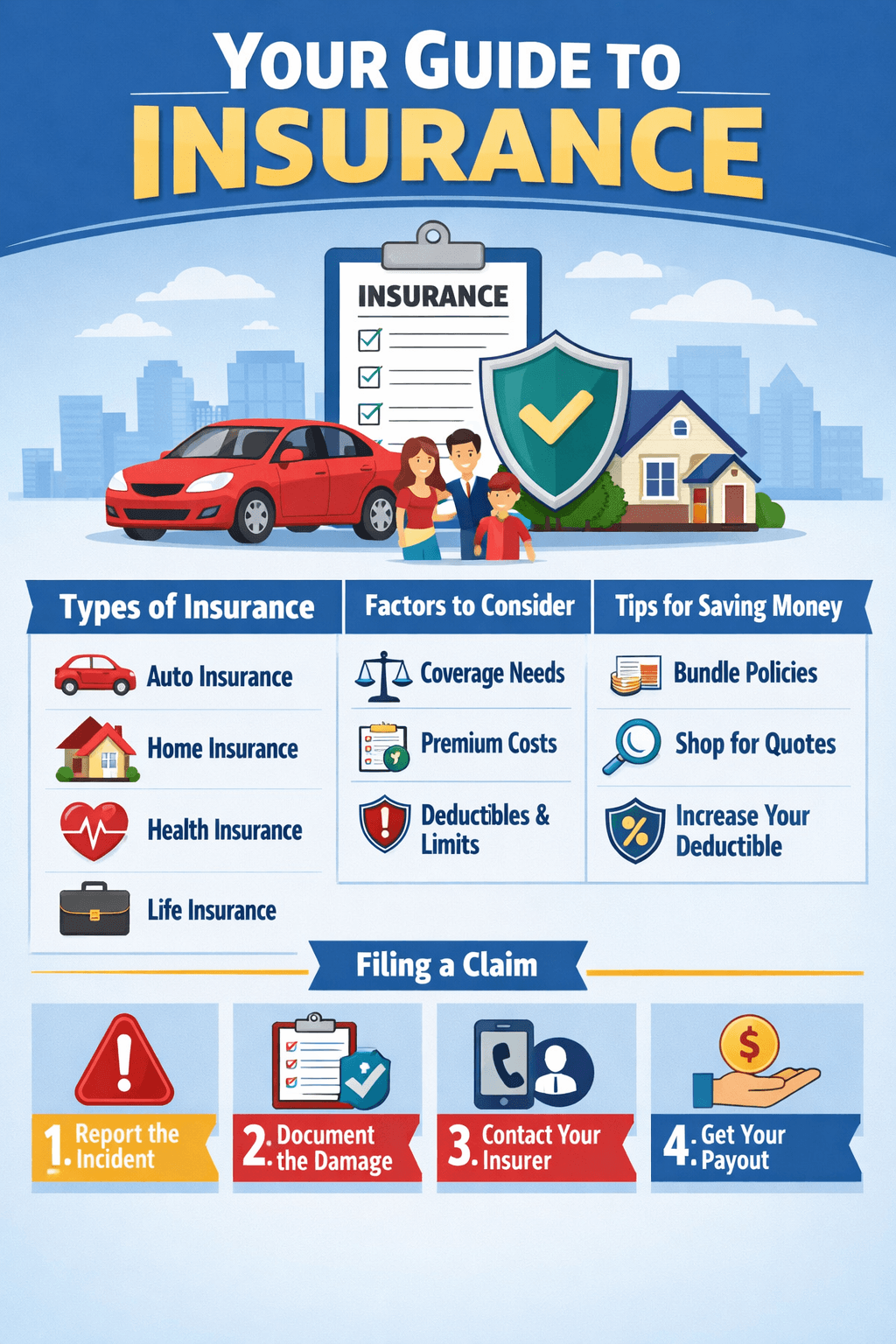
Insurance is a financial arrangement that protects individuals and businesses against potential future losses or risks. In exchange for regular payments (premiums), an insurer promises to pay a specified sum upon the occurrence of a covered event—such as death, illness, accident, or theft. At its core, insurance pools risk across many policyholders, making unexpected financial burdens manageable.
Pro Tip
👉 Key Concept: Insurance works on the principle of risk pooling. Many people pay premiums; only a few face losses, so the collected funds cover those losses plus operational costs.
1. Types of Insurance
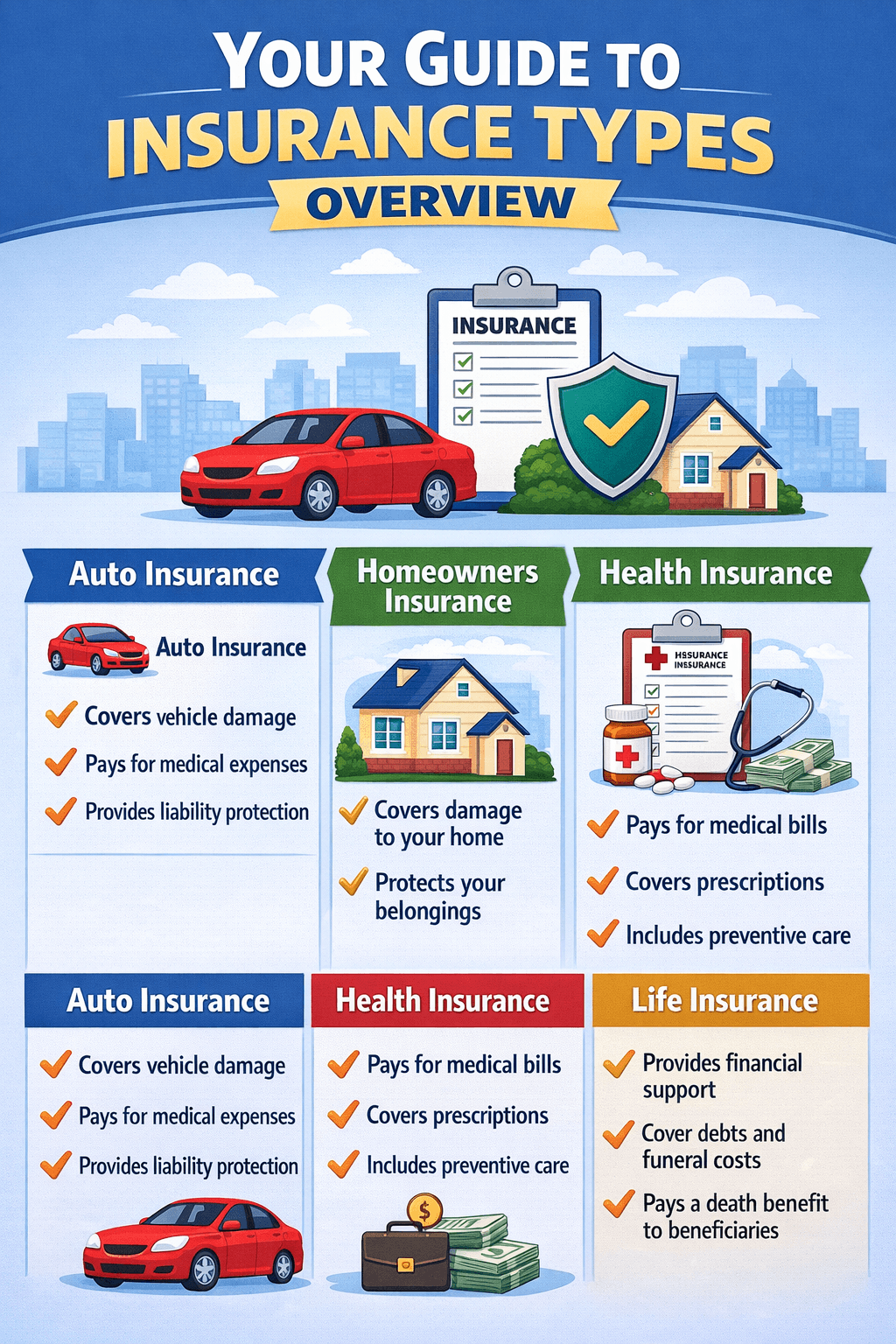
Insurance products are broadly categorized by what they protect. Below are the most common types individuals and families purchase.
| Type | What It Covers | Common Use Cases |
|---|---|---|
| Life Insurance | Death benefit paid to beneficiaries | Income replacement, mortgage protection, estate planning |
| Health Insurance | Medical expenses (hospitalization, surgeries, prescriptions) | Routine care, emergency treatment, chronic disease management |
| Motor Insurance | Vehicle damage, theft, third‑party liability | Car, bike, commercial vehicle protection |
| Travel Insurance | Trip cancellation, medical emergencies abroad, lost baggage | International trips, adventure travel, business travel |
Other notable types:
- ✓Property Insurance – covers home, renters, commercial property.
- ✓Liability Insurance – protects against legal claims (e.g., professional indemnity).
- ✓Disability Insurance – replaces income if you cannot work due to illness or injury.
2. How Insurance Works
Insurance operates on a simple yet robust model: premiums in, claims out. Here’s the step‑by‑step flow:
1. Policy purchase – You select a plan, pay a premium (monthly or annually), and receive a contract detailing coverage, exclusions, and limits. 2. Risk period – The policy is active; you continue paying premiums to keep coverage. 3. Claim event – A covered incident occurs (e.g., car accident, hospitalization). 4. Claim filing – You notify the insurer, provide documentation (police report, medical bills, etc.). 5. Assessment – The insurer verifies the claim against policy terms and investigates if needed. 6. Payout or denial – If approved, the insurer pays the claim amount; if denied, you receive a reason (e.g., exclusion, fraud).
Pro Tip
Always read the policy wording—especially exclusions and waiting periods. Many disputes arise from misunderstandings about what is and isn't covered.
3. The Insurance Policy Lifecycle
A policy moves through several stages, from purchase to potential closure. Understanding these helps you manage coverage effectively.
| Stage | Description | Key Actions |
|---|---|---|
| Application & Underwriting | Insurer assesses risk and decides terms | Provide accurate info; medical exams may be required |
| Issuance | Policy is issued with premium and coverage details | Review documents; set up payment method |
| In‑force | Policy is active; premiums due regularly | Update info as life changes; pay on time |
| Renewal | Policy continues, often with adjusted premium | Compare rates; consider switching if better value |
| Claim or Maturity | Event triggers claim or policy matures (e.g., endowment) | File claim promptly; keep records |
| Termination | Policy ends due to non‑payment, surrender, or death | Understand surrender charges or conversion options |
💡 Insight: Many policies offer a free‑look period (e.g., 15‑30 days) after issuance. Use it to verify the coverage meets your needs—if not, you can cancel for a full refund.
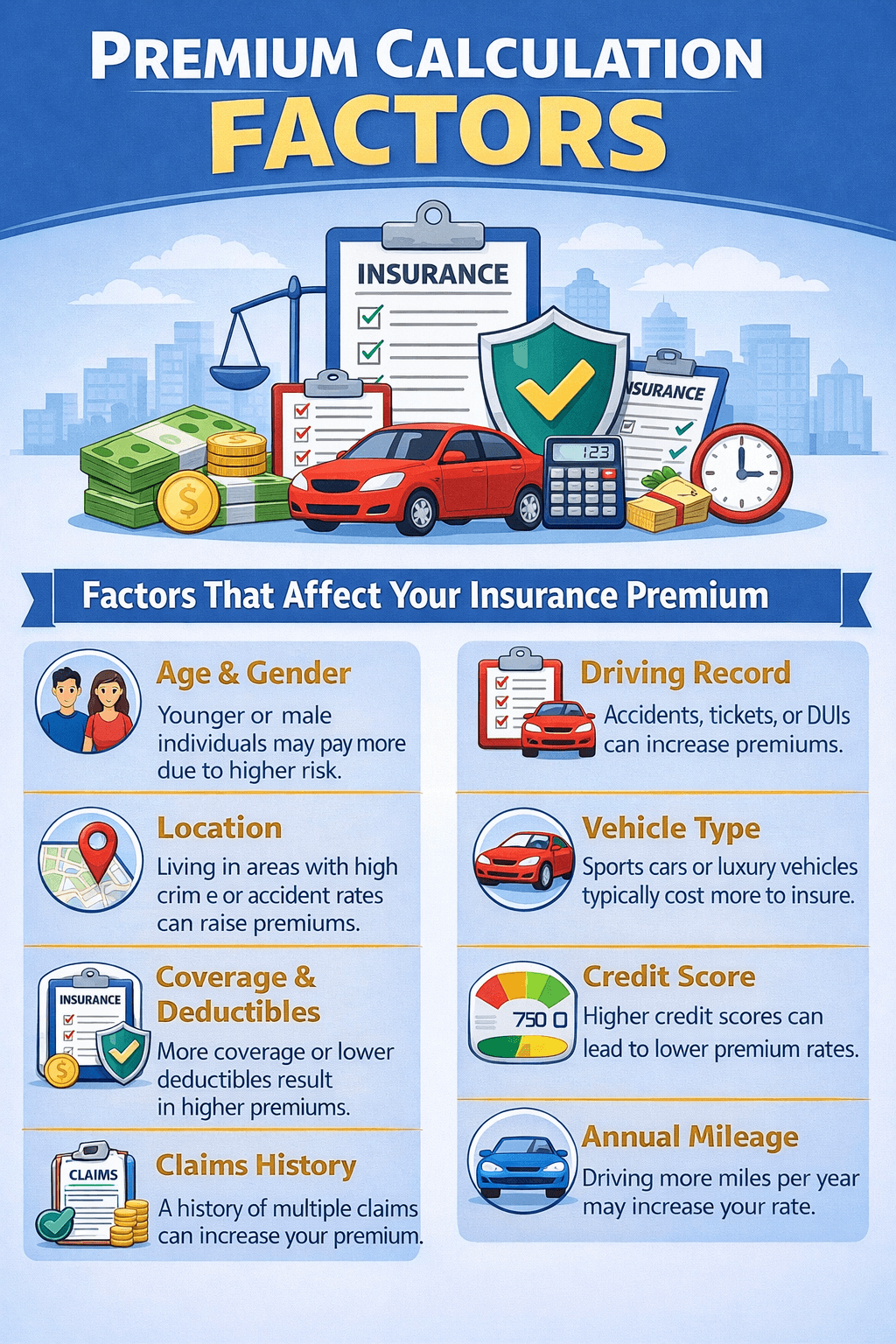
Premiums are not arbitrary; they’re calculated using statistical models that estimate the likelihood and cost of future claims. Key factors include:
Risk factors specific to the insured – Age, health status, occupation, lifestyle (e.g., smoking), driving record, location. Coverage amount – Higher sum assured = higher premium. Policy type and term – Term life costs less than whole life; longer terms may have higher premiums. Deductibles and co‑pays – Choosing a higher deductible lowers the premium. Add‑ons (riders) – Extra benefits (e.g., critical illness rider) increase premium. Insurer’s expense and profit margin – Administrative costs, commissions, and profit load are baked into the premium.
Modern insurers use predictive modeling and telematics (for motor) to personalize premiums based on actual behavior. For example, a safe driver can get lower car insurance rates through usage‑based programs.
5. Underwriting Process
Underwriting is the process insurers use to evaluate risk and decide whether to offer coverage and at what price. It’s the gatekeeper between application and issuance.
Step 1: Application review – You provide personal details, medical history, lifestyle, and intended coverage. Step 2: Data gathering – Insurer may request medical exams, prescription records, motor vehicle reports, credit‑based insurance scores (where allowed). Step 3: Risk assessment – Underwriters classify you into risk tiers (e.g., Preferred Plus, Standard, Substandard). Step 4: Decision – Options: approve as applied, approve with a rating (higher premium), approve with exclusions, or decline. Step 5: Policy issuance – If approved, policy is generated and sent to you.
Automated underwriting
Many insurers now use AI to instantly evaluate low‑risk applications. For example, term life insurance can be approved in minutes without a medical exam if you meet certain health and age criteria.
Warning
❌ **Important:** Misrepresentation or omission during underwriting can lead to claim denial later. Always answer all questions truthfully and completely.
Conclusion: Making Insurance Work for You
Insurance is a cornerstone of financial security. By understanding the types available, how premiums are set, and what happens behind the scenes (underwriting and the policy lifecycle), you can make informed choices that protect you and your family without overpaying. Regularly review your coverage—especially after major life events—to ensure it still aligns with your needs.
💡 Final Insight: The cheapest policy isn’t always the best value. Balance premium cost with coverage quality, claim settlement ratio, and customer service reputation.
📊 **Ready to compare insurance plans?** [Download our free Insurance Comparison Checklist](/resources/insurance-checklist) to evaluate policies side‑by‑side. Or use our interactive premium estimator to see how factors affect your rates.
Share This Article
📤 Share This