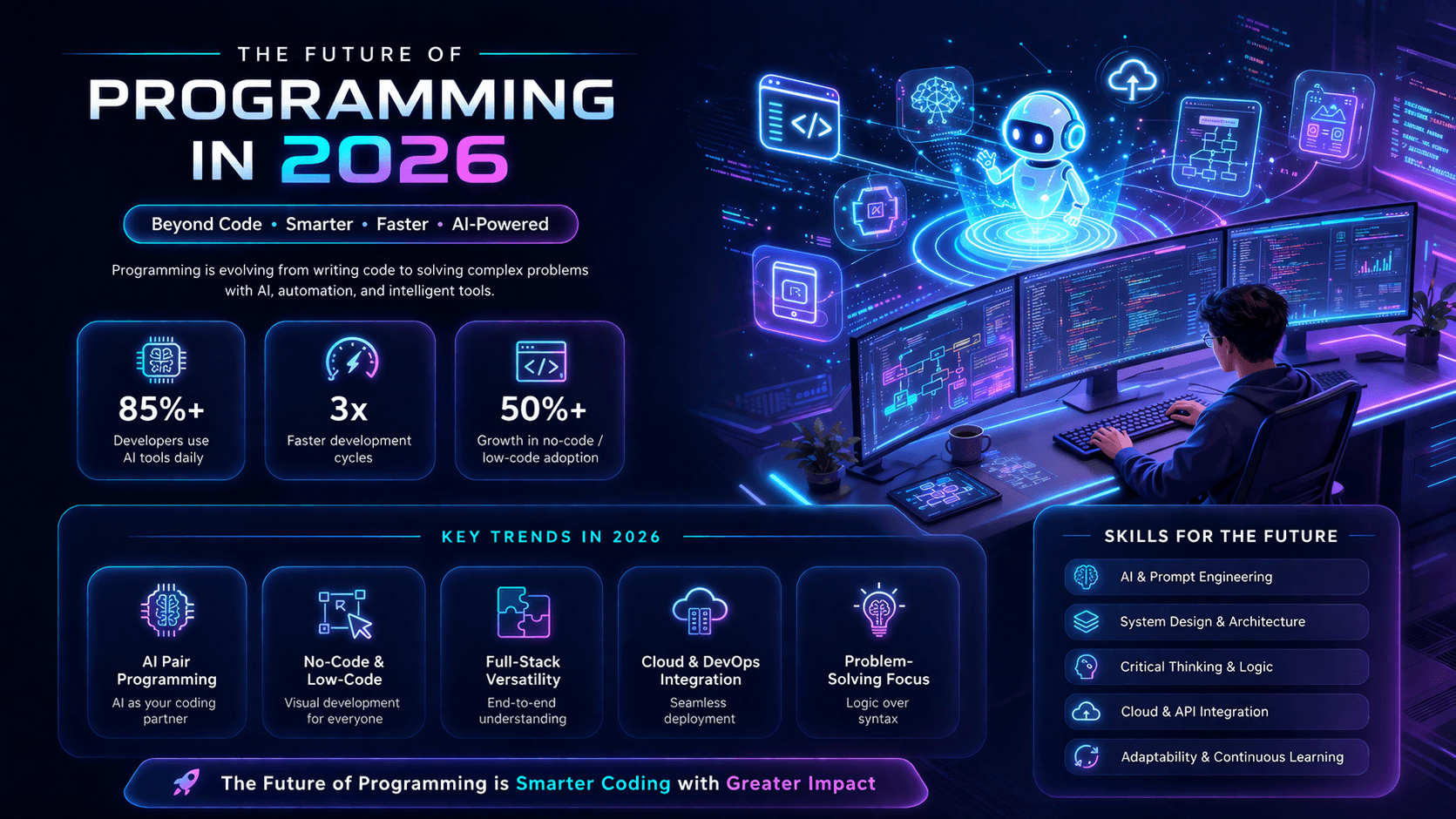
Introduction: Programming is Changing—Fast
Programming in 2026 is no longer just about writing code line by line. With AI, automation, and visual builders, the role of developers is shifting from coders to problem solvers and system designers.
Pro Tip
👉 Key Insight: The future is not about writing more code—it’s about solving bigger problems faster.
1. AI Becomes Your Coding Partner
AI is now deeply integrated into development workflows. From generating code to debugging and testing, developers are increasingly collaborating with AI rather than working alone.
What AI Handles
Developers focus more on logic and architecture.
2. Rise of No-Code and Low-Code Platforms
Tools like visual builders and drag-and-drop platforms are enabling non-developers to build applications. This is changing the demand for traditional coding skills.
Impact on Developers
Developers must adapt to stay relevant.
3. Shift from Coding to Problem Solving
The value of a developer is no longer measured by how much code they write, but by how effectively they solve problems and design systems.
Key Skills for 2026:
- ✓System design thinking
- ✓Architecture planning
- ✓Critical problem-solving
- ✓Understanding business logic
Coding becomes just one part of the job.
4. The Demand for Full-Stack Thinking
Developers are expected to understand the entire ecosystem—from frontend to backend, APIs, cloud, and even user experience.
Modern Developer Expectations
Specialization still exists—but versatility wins.
5. Continuous Learning is Mandatory
Technology is evolving faster than ever. Developers who stop learning quickly become outdated.
6. The Human Advantage
While AI can generate code, it cannot fully replace human creativity, decision-making, and deep understanding.
7. What This Means for Your Career
The future of programming is not about losing jobs—it’s about evolving roles. Developers who adapt will have more opportunities than ever.
How to Stay Ahead
Adaptability is the ultimate skill.
Conclusion: Evolve or Fall Behind
Programming in 2026 is faster, smarter, and more dynamic than ever. The developers who embrace change and continuously evolve will lead the future.
🚀 **Final Thought:** The future of programming isn’t less coding—it’s smarter coding with greater impact.
Share This Article
📤 Share This