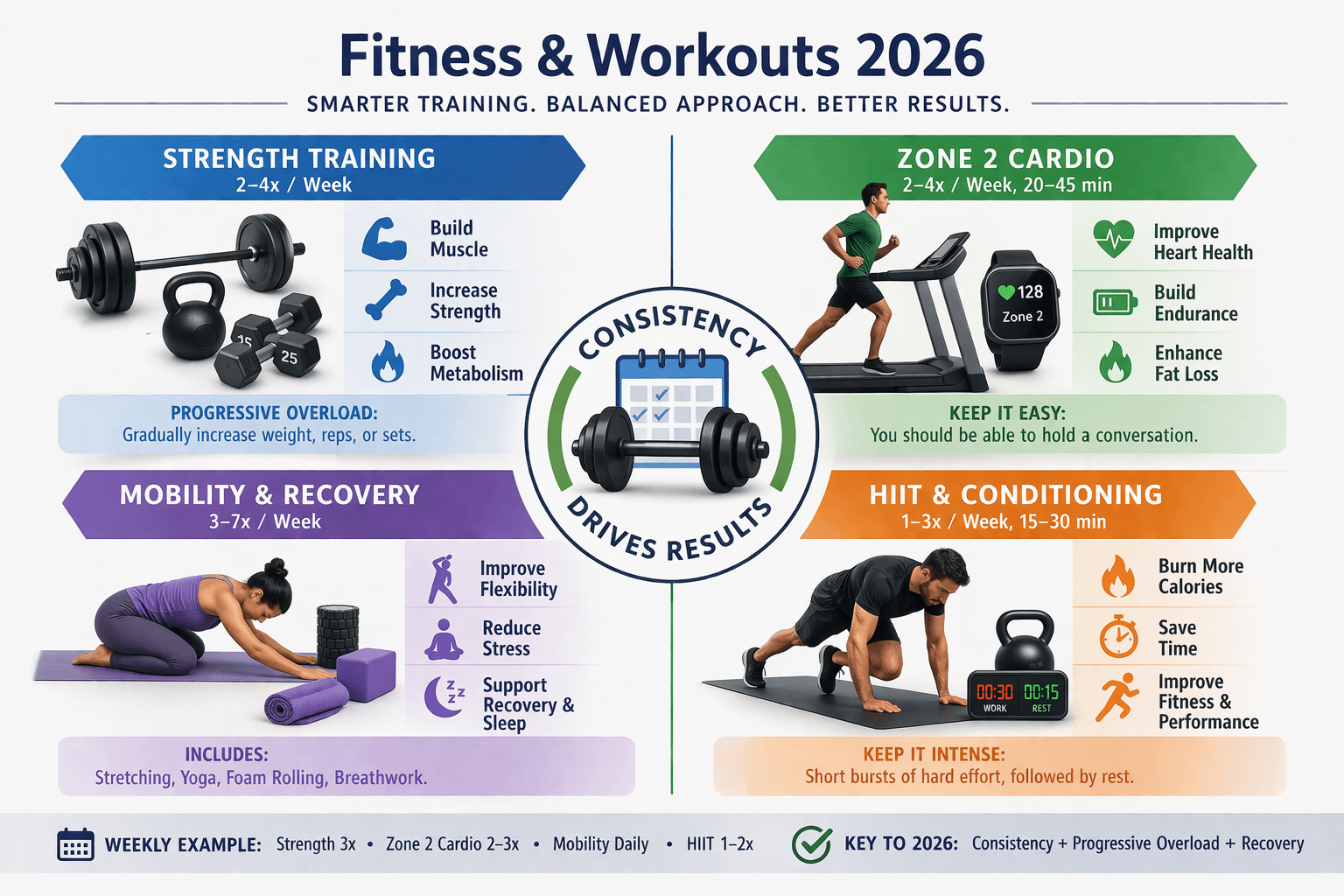
Introduction: The Science of Fitness
2026 marks the maturity of fitness science—moving beyond generic workout advice to evidence-based, personalized training protocols grounded in exercise physiology, recovery science, and longevity research. With the global fitness market exceeding $100 billion and 50% of adults now engaging in regular exercise, the focus has shifted from simply 'working out' to optimizing training for specific outcomes: strength, hypertrophy, endurance, metabolic health, longevity, and athletic performance. The paradigm has evolved: exercise is no longer viewed as merely calorie expenditure but as a potent medicine that modulates gene expression (exercise epigenetics), stimulates mitochondrial biogenesis, enhances neuroplasticity (BDNF), reduces systemic inflammation, and activates longevity pathways (AMPK, sirtuins). From periodized strength training protocols (linear, undulating, block) to high-intensity interval training (HIIT) with evidence-based work-to-rest ratios, from wearable technology (heart rate variability, power meters, continuous glucose monitors) guiding training load to recovery science (sleep, nutrition, stress management) as the foundation of adaptation—2026 offers unprecedented tools for fitness optimization. Whether you're a clinician prescribing exercise as medicine, a personal trainer designing evidence-based programs, an athlete pursuing peak performance, or an individual seeking sustainable fitness, this comprehensive guide provides the evidence-based framework for fitness in 2026.
Pro Tip
👉 Key Insight: The most significant shift in 2026 is the recognition that recovery is not separate from training—it is when adaptation occurs. Optimizing sleep (7-9 hours), nutrition (protein timing, carbohydrate periodization), and stress management (HRV-guided training) is as critical as the workout itself. Wearable technology enables real-time training load adjustment based on individual recovery status.
2. The Physiology of Exercise: Mechanisms and Adaptation
Exercise triggers a cascade of physiological adaptations across multiple systems. Understanding these mechanisms is essential for designing evidence-based training programs and optimizing outcomes.
| Physiological System | Exercise-Induced Adaptation | Key Mechanisms | Training Stimulus | Outcomes | Measurement | Evidence Level |
|---|---|---|---|---|---|---|
| Musculoskeletal | Muscle hypertrophy; increased strength; improved bone density; tendon/ligament adaptation | Mechanotransduction; mTOR activation; satellite cell activation; collagen synthesis | Resistance training (60-85% 1RM); progressive overload; mechanical tension | Strength (1RM, isometric); hypertrophy (muscle cross-sectional area); power (rate of force development) | Strong (1000+ studies) | |
| Cardiovascular | Increased stroke volume; lower resting HR; improved cardiac output; enhanced endothelial function | Myocardial hypertrophy (physiological); increased plasma volume; angiogenesis | Aerobic training (zone 2, 60-70% HRmax); HIIT (85-95% HRmax) | VO2max; cardiac output; blood pressure; endothelial function (flow-mediated dilation) | Strong (1000+ studies) | |
| Metabolic | Improved insulin sensitivity; increased mitochondrial density; enhanced fat oxidation; lower HbA1c | AMPK activation; PGC-1α; GLUT4 translocation; mitochondrial biogenesis | Aerobic training; HIIT; resistance training (metabolic stress) | Insulin sensitivity (HOMA-IR); VO2max; body composition; HbA1c | Strong (1000+ studies) | |
| Neuromuscular | Improved motor unit recruitment; enhanced intermuscular coordination; increased rate of force development | Neural adaptation (early strength gains); myelination; corticospinal excitability | Heavy resistance training; plyometrics; complex training; skill practice | Rate of force development; electromyography (EMG); motor unit firing rate | Strong (500+ studies) | |
| Endocrine | Increased growth hormone, testosterone (acute); reduced cortisol (chronic); improved insulin sensitivity | Exercise-induced hormonal response; adaptation with training; reduced chronic stress | Resistance training (large muscle groups); HIIT; recovery optimization | Hormonal panels; cortisol; testosterone; IGF-1; insulin | Moderate-strong (500+ studies) | |
| Neuroplasticity | Increased BDNF; enhanced neurogenesis; improved cognitive function; reduced dementia risk | BDNF release; cerebral blood flow; synaptic plasticity; hippocampal volume increase | Aerobic exercise (30-60 min, moderate intensity); complex motor skills | BDNF (serum); cognitive testing; hippocampal volume (MRI) | Strong (500+ studies; exercise as nootropic) | |
| Inflammatory | Reduced systemic inflammation; improved immune function; reduced chronic disease risk | IL-6 release (exercise-induced) with anti-inflammatory cascade; reduced TNF-α, CRP | Regular moderate-vigorous exercise; not overtraining | CRP; IL-6; TNF-α; neutrophil/lymphocyte ratio | Strong (500+ studies) | |
| Longevity Pathways | AMPK activation; sirtuin activation; telomere maintenance; reduced epigenetic age | Energy sensing; NAD+ metabolism; telomerase activity; DNA methylation changes | Regular exercise (combination strength + cardio); calorie restriction mimetic | Epigenetic clocks; telomere length; all-cause mortality; healthspan | Moderate-strong (observational; mechanistic) |
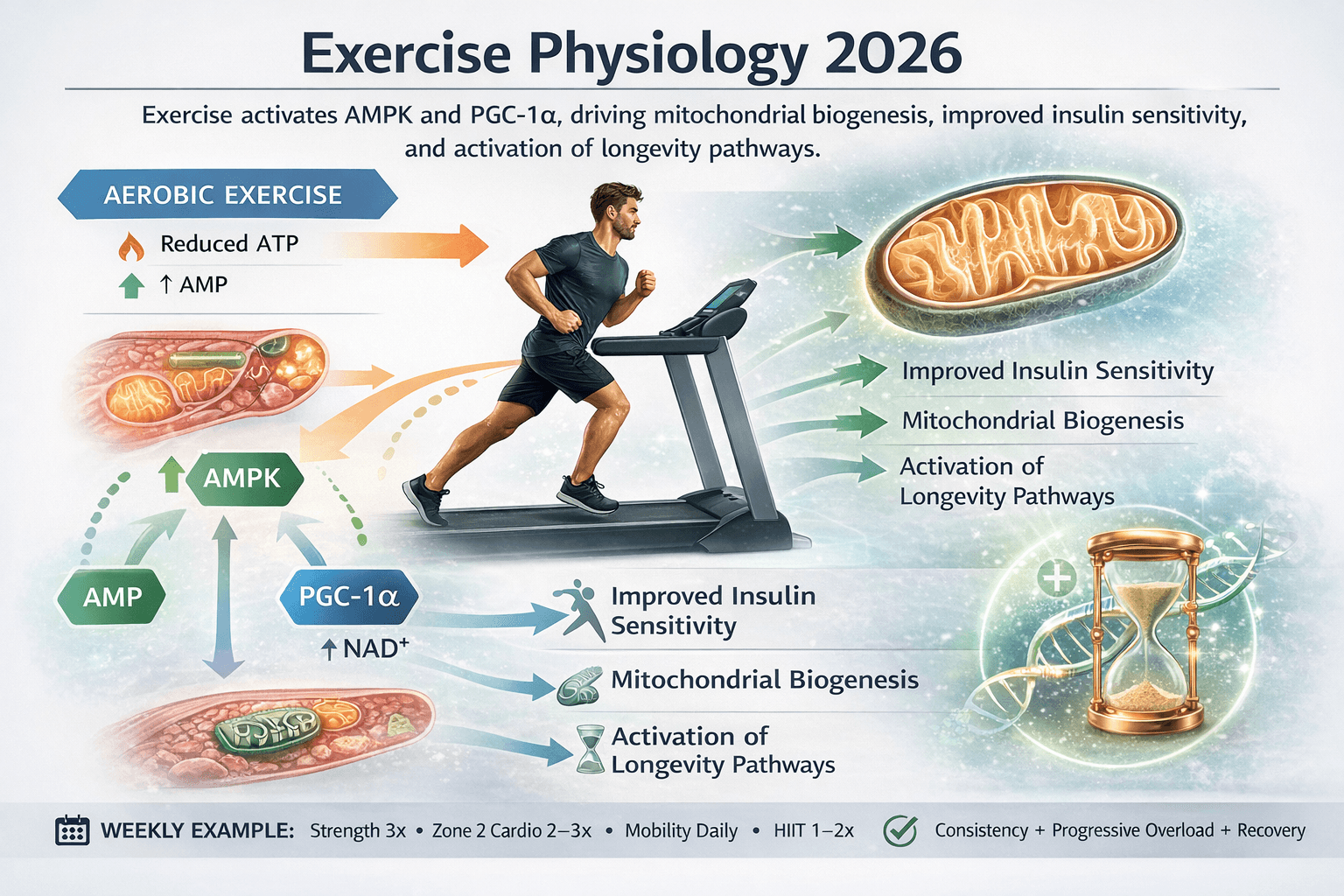
Exercise as Medicine: The Dose-Response Relationship
Exercise is the most potent lifestyle intervention for healthspan and longevity. The dose-response relationship is well-established: more exercise (within limits) yields greater benefits.
3. Strength Training: Science-Based Protocols
Strength training is the foundation of physical function, metabolic health, and longevity. 2026 brings evidence-based protocols for optimizing strength, hypertrophy, and power across populations.
| Training Variable | Strength Focus | Hypertrophy Focus | Power/Explosiveness Focus | Muscular Endurance Focus | Evidence-Based Recommendations |
|---|---|---|---|---|---|
| Intensity (% 1RM) | 80-95% 1RM | 65-85% 1RM | 45-65% 1RM (velocity focus) | ≤65% 1RM | Progressive overload; periodize intensity; 1RM testing every 4-8 weeks |
| Volume (Sets per muscle group/week) | 10-15 sets | 15-25 sets | 5-10 sets | 10-15 sets | Volume threshold for hypertrophy: 10+ sets/week; diminishing returns beyond 20-25 sets |
| Repetitions per set | 1-5 reps | 6-12 reps | 1-5 reps (explosive) | 15-25+ reps | Strength: low reps, high intensity; hypertrophy: moderate reps, moderate intensity |
| Rest between sets | 3-5 minutes | 1-2 minutes | 3-5 minutes | ≤60 seconds | Strength/power: longer rest (ATP-PC recovery); hypertrophy: shorter rest (metabolic stress) |
| Frequency (per muscle group/week) | 2-3x | 2-3x | 2-3x | 2-3x | 2-3x/week optimal for strength/hypertrophy; full-body splits vs. upper/lower vs. push/pull/legs |
| Progressive Overload | Add weight (2-5% when 1-3 reps in reserve) | Add weight, sets, or reps | Focus on velocity (bar speed); add weight when velocity maintained | Add reps; decrease rest | Systematic progression essential; track workouts |
| Eccentric Emphasis | Yes (controlled eccentric; 2-3 sec) | Yes (hypertrophy stimulus) | Minimal (focus on concentric speed) | No | Eccentric phase stimulates hypertrophy, tendon adaptation |
| Time Under Tension (TUT) | 10-30 sec/set | 30-60 sec/set | <10 sec/set | 60-90+ sec/set | TUT influences metabolic stress, hypertrophy stimulus |
Strength Training: Evidence-Based Protocols
1. Progressive Overload: The foundation of adaptation. Progressively increase demand (weight, volume, frequency, intensity) as the body adapts. Without progressive overload, there is no adaptation.
2. Specificity: Training adaptations are specific to the stimulus. Strength training improves strength; hypertrophy training increases muscle size; power training improves rate of force development.
3. Individualization: Programs must account for training status (novice vs. advanced), goals, recovery capacity, and individual response.
4. Periodization: Systematic variation of training variables (intensity, volume, exercise selection) to optimize adaptation, prevent plateaus, and reduce injury risk.
4. Cardiovascular Training: Aerobic and HIIT Protocols
Cardiovascular training encompasses both moderate-intensity continuous training (Zone 2) and high-intensity interval training (HIIT). Each has distinct physiological adaptations and optimal applications.
| Training Modality | Intensity | Duration | Frequency | Key Adaptations | Best For | Evidence |
|---|---|---|---|---|---|---|
| Zone 2 (Moderate-Intensity Continuous Training) | 60-70% HRmax; 'conversational pace'; lactate <2 mmol/L | 30-90 min | 3-5x/week | Mitochondrial biogenesis; fat oxidation; cardiac output; aerobic base | Aerobic base building; metabolic health; longevity | Strong (gold standard for aerobic development) |
| Zone 3-4 (Tempo/Threshold) | 80-85% HRmax; 'comfortably hard'; lactate 2-4 mmol/L | 20-40 min | 1-2x/week | Lactate clearance; sustained power; aerobic capacity | Performance; endurance athletes | Strong |
| HIIT (High-Intensity Interval Training) | 85-95% HRmax; 'hard-very hard'; 4-8 intervals | 4-8 min total work; 10-20 min total session | 1-3x/week | VO2max; insulin sensitivity; mitochondrial density; EPOC | Time-efficient fitness; metabolic health; athletes | Strong (superior to MICT for VO2max in time-matched) |
| Sprint Interval Training (SIT) | ≥95% HRmax; maximal effort; 4-6 intervals (30 sec) | 2-3 min total work; 10-15 min total session | 1-2x/week | Peak power; anaerobic capacity; fast-twitch fiber recruitment | Athletes; advanced fitness; time-limited | Moderate-strong (very high intensity; recovery demands) |
| Fasted Cardio | Zone 2; performed after overnight fast | 30-60 min | 2-3x/week | Fat oxidation (acute); metabolic flexibility | Metabolic health; fat loss (controversial) | Mixed (fat oxidation increased acutely; net fat loss similar) |
| Recovery Cardio | Zone 1-2 (50-60% HRmax); very easy | 20-40 min | As needed | Active recovery; blood flow; reduces soreness | Post-training recovery; active rest days | Moderate |
Cardiovascular Training: Evidence-Based Protocols
Zone 2 training (60-70% HRmax, lactate <2 mmol/L, conversational pace) is the foundation of aerobic development and metabolic health.
High-Intensity Interval Training (HIIT) alternates short bursts of high-intensity exercise with recovery periods, producing rapid improvements in VO2max and insulin sensitivity.
| Outcome | HIIT vs. MICT |
|---------|---------------|
| VO2max | HIIT superior (time-matched; 10-20% greater improvement) |
| Insulin sensitivity | HIIT superior (time-matched) |
| Fat loss | Similar (when energy expenditure matched) |
| Time efficiency | HIIT superior (greater improvement per minute) |
| Adherence | Mixed; HIIT perceived as harder; MICT more sustainable for some |
| Safety | HIIT higher injury risk in deconditioned; gradual progression essential |
5. Recovery Science: Sleep, Nutrition, and Stress Management
Recovery is when adaptation occurs. Without adequate recovery, training leads to maladaptation (overtraining, injury, burnout). 2026 recognizes recovery as the third pillar of fitness (alongside training and nutrition).
| Recovery Domain | Key Interventions | Physiological Mechanisms | Outcomes | Measurement | Evidence Level |
|---|---|---|---|---|---|
| Sleep | 7-9 hours; consistent schedule; sleep hygiene; CBT-I if insomnia | Growth hormone release; muscle repair; glycogen replenishment; CNS recovery; glymphatic clearance | Improved strength gains (20-30%); reduced injury risk (50-60%); improved reaction time; enhanced learning | Sleep duration; sleep quality (sleep efficiency, deep sleep); HRV (morning) | Strong (500+ studies; sleep as performance enhancer) |
| Nutrition | Protein timing (20-40g post-exercise); carbohydrate replenishment; hydration; anti-inflammatory foods | Muscle protein synthesis (MPS); glycogen resynthesis; reduced inflammation; fluid balance | Enhanced recovery (24-48h); improved subsequent performance; reduced soreness | Protein intake (g/kg); hydration status (urine color, weight); inflammatory markers | Strong (500+ studies; nutrient timing) |
| Hydration | Fluid replacement (1.5x weight loss); electrolytes; pre-exercise hydration | Plasma volume maintenance; thermoregulation; cardiovascular function; muscle function | Reduced fatigue; improved performance (2-5% dehydration impairs performance 10-20%) | Body weight (pre/post); urine color; thirst; sweat rate | Strong (dehydration impairs performance) |
| Heart Rate Variability (HRV) | Morning HRV monitoring (Oura, Whoop, etc.); adjust training load based on HRV | Autonomic nervous system balance; parasympathetic recovery; sympathetic load | Reduced overtraining; individualized training load; injury prevention | HRV (RMSSD, LF/HF); morning HR; readiness scores | Moderate-strong (emerging; individual response) |
| Active Recovery | Low-intensity activity (Zone 1-2); mobility work; stretching; light aerobic | Blood flow; metabolic waste clearance; reduced muscle soreness; neuromuscular activation | Reduced DOMS (20-30%); improved subsequent performance | Perceived soreness; range of motion; performance metrics | Moderate (active recovery superior to passive) |
| Massage & Soft Tissue | Massage; foam rolling; percussion therapy (Theragun); compression | Reduced muscle tension; improved blood flow; reduced perceived soreness; parasympathetic activation | Reduced DOMS (20-30%); improved recovery perception; limited performance improvement | Perceived soreness; range of motion; performance | Moderate (perceptual benefits; limited performance) |
| Cold Exposure / Cryotherapy | Cold water immersion (10-15°C; 10-15 min); contrast therapy | Reduced inflammation; vasoconstriction (acute); reduced muscle soreness | Reduced DOMS (20-40%); may attenuate hypertrophy adaptation if used post-strength training | Perceived soreness; inflammatory markers; muscle function | Moderate (timing matters; avoid post-strength training for hypertrophy) |
| Heat Exposure / Sauna | Sauna (80-100°C; 15-20 min); post-exercise or separate | Heat shock proteins; cardiovascular adaptation; growth hormone increase | Improved cardiovascular adaptation; increased plasma volume; endurance performance; reduced mortality (observational) | Core temperature; heart rate; heat shock proteins | Moderate (sauna post-exercise; cardiovascular benefits) |
| Stress Management | Mindfulness; breathwork; stress reduction; work-life balance | Cortisol reduction; parasympathetic activation; improved sleep; reduced inflammation | Improved recovery; reduced overtraining risk; improved mental health | Perceived stress; cortisol; HRV; sleep quality | Moderate (stress impairs recovery) |
Recovery Science: Clinical Implementation
Sleep is the most potent recovery intervention—no supplement or modality can compensate for inadequate sleep.
HRV measures parasympathetic (recovery) vs. sympathetic (stress) balance. Morning HRV predicts readiness for high-intensity training.
6. Sample Evidence-Based Workout Plans
Based on the principles outlined, here are sample workout plans for common fitness goals. Individualize based on training status, recovery capacity, and specific objectives.
| Goal | Training Split | Weekly Schedule | Key Exercises | Progression Strategy | Recovery Focus |
|---|---|---|---|---|---|
| General Health & Longevity | Full-body strength (2-3x/week) + Zone 2 cardio (3x/week) | Mon: Strength; Tue: Zone 2 (30 min); Wed: Strength; Thu: Zone 2 (30 min); Fri: Strength; Sat: Zone 2 (45 min); Sun: Rest | Compound movements: squat, hinge, push, pull, carry; walking, cycling, swimming | Gradual progression (2-5% weight increase when RIR 2 achieved) | Sleep 7-8h; protein 1.2-1.6 g/kg; steps 8-10k/day |
| Strength & Muscle Gain (Hypertrophy) | Upper/Lower split (4x/week) or Push/Pull/Legs (6x/week advanced) | Mon: Upper; Tue: Lower; Wed: Rest; Thu: Upper; Fri: Lower; Sat: Rest; Sun: Rest | Compound: bench, row, overhead press, squat, deadlift; isolation: bicep, tricep, lateral raise, leg curl | Progressive overload (weight, reps, sets); undulating periodization; RPE 8-9 | Sleep 8-9h; protein 1.6-2.2 g/kg; caloric surplus (if weight gain goal) |
| Fat Loss & Metabolic Health | Full-body strength (3x/week) + HIIT (2x/week) + Zone 2 (2x/week) | Mon: Strength; Tue: HIIT; Wed: Zone 2; Thu: Strength; Fri: HIIT; Sat: Zone 2; Sun: Rest | Strength: compound; HIIT: 4x4 protocol (run, bike); Zone 2: incline walk, cycling | Strength: progressive overload; HIIT: increase work duration/intensity; Zone 2: increase duration | Sleep 7-8h; protein 1.6-2.2 g/kg; moderate deficit; hydration |
| Endurance Performance | Polarized training: 80% Zone 2, 20% threshold/HIIT; 5-6x/week | Mon: Zone 2 (60 min); Tue: Strength (lower); Wed: Zone 2 (90 min); Thu: Threshold (40 min); Fri: Rest; Sat: Long Zone 2 (120+ min); Sun: Recovery Zone 2 (30 min) | Sport-specific running, cycling, swimming; strength: squat, deadlift, plyometrics | Increase weekly volume 10% rule; periodized intensity | Sleep 8-10h; carbohydrate periodization; protein 1.4-1.8 g/kg; hydration |
| Strength & Power (Athletes) | Block periodization: Hypertrophy (4 weeks) → Strength (4 weeks) → Power (4 weeks) | Hypertrophy: 4x/week (upper/lower); Strength: 4x/week (heavy compound); Power: 3x/week (oly lifts, plyometrics) | Hypertrophy: bodybuilding; Strength: squat, bench, deadlift; Power: clean, jerk, snatch, plyometrics | Block progression; deload weeks; velocity tracking for power | Sleep 9-10h; protein 1.8-2.2 g/kg; carbohydrate periodization |
| Older Adults (65+) | Full-body functional strength (2-3x/week) + balance (3x/week) + Zone 2 (2-3x/week) | Mon: Strength; Tue: Balance + Zone 2; Wed: Strength; Thu: Balance + Zone 2; Fri: Strength; Sat: Balance; Sun: Rest | Strength: squat (chair), hinge (hip thrust), push (wall push-up), pull (band row), carry (farmer's); Balance: single-leg stance, tandem walk, Tai Chi | Progressive overload (reps, resistance bands, bodyweight); prioritize safety | Sleep 7-8h; protein 1.2-1.5 g/kg; hydration; falls prevention |
Sample Weekly Plan: General Health & Longevity
7. Fitness Technology: Wearables and Data-Driven Training
2026 brings sophisticated fitness technology—wearables, sensors, and AI-driven coaching—that enables real-time training optimization, recovery monitoring, and personalized programming.
| Technology | Metrics Tracked | Accuracy | Clinical Applications | Key Products | Evidence |
|---|---|---|---|---|---|
| Heart Rate Monitors | Heart rate; HRV; training zones; caloric expenditure | Strong (chest strap gold standard; wrist optical variable) | Zone 2 training; HIIT intensity; recovery monitoring; cardiovascular assessment | Polar (chest); Garmin (chest/wrist); Apple Watch; Wahoo | Strong (validated for HR; wrist variable at high intensity) |
| Heart Rate Variability (HRV) | Morning HRV; readiness scores; autonomic balance | Moderate-strong (chest > wrist; consistency matters) | Training load adjustment; overtraining detection; recovery optimization | Oura Ring; Whoop; Apple Watch (HRV); HRV4Training | Moderate (individualized; emerging clinical utility) |
| GPS & Performance Trackers | Distance; pace; speed; elevation; route mapping; power (cycling) | Strong (GPS for distance/pace; power meters for cycling) | Endurance training; pacing; performance analysis; progress tracking | Garmin; Wahoo; Strava; Apple Watch | Strong (gold standard for endurance sports) |
| Power Meters | Power output (watts); normalized power; training stress score (TSS) | Strong (cycling; emerging for running) | Precise training load measurement; pacing; performance optimization | Quarq; Stages; Garmin (running power); Stryd | Strong (cycling; emerging running) |
| Sleep Trackers | Sleep duration; sleep stages; HRV; temperature; respiratory rate | Moderate (duration accurate; stages 60-70% accuracy) | Sleep optimization; recovery monitoring; circadian alignment | Oura Ring; Apple Watch; Whoop; Fitbit | Moderate (trends useful; not diagnostic) |
| Continuous Glucose Monitors (CGM) | Interstitial glucose; glycemic variability; postprandial responses | Strong (validated for glucose; FDA-cleared) | Nutrition timing; metabolic health; performance fueling | Abbott Libre; Dexcom; Levels; Nutrisense | Strong (diabetes; emerging for performance) |
| Smart Scales & Body Composition | Weight; body fat %; muscle mass; water %; metabolic age | Moderate (weight accurate; body fat variable) | Body composition tracking; weight management; progress monitoring | Withings; Fitbit; Garmin; Tanita | Moderate (trends useful; absolute values variable) |
| AI Coaching Apps | Personalized programming; adaptive training; real-time feedback | Emerging (algorithm-dependent; limited validation) | Individualized training; adherence support; scalable coaching | Future (AI-driven); Freeletics; Fitbod; Volt | Limited (emerging; consumer products) |
Fitness Technology: Clinical Implementation
HRV is the most valuable wearable metric for recovery monitoring and training load adjustment.
1. Baseline: Measure morning HRV daily for 7-14 days; calculate baseline (7-day rolling average)
2. Interpretation:
3. Action: Adjust training day-of based on HRV; trend over weeks guides periodization
Power meters (cycling, running) provide the most precise measurement of external training load.
CGM provides real-time feedback on glycemic responses to meals, exercise, and recovery.
8. Exercise for Longevity and Healthy Aging
Exercise is the most potent intervention for healthspan extension—preserving physical function, cognitive health, and independence into advanced age.
| Domain | Key Exercises | Frequency | Outcomes | Mechanisms | Evidence |
|---|---|---|---|---|---|
| Strength (Sarcopenia Prevention) | Squat, hinge, push, pull, carry; progressive overload (bodyweight → bands → weights) | 2-3x/week; 2-3 sets; 8-12 reps | Maintain/increase muscle mass; strength preservation; functional capacity | mTOR activation; satellite cell recruitment; neuromuscular adaptation | Strong (sarcopenia prevention; falls reduction) |
| Balance (Falls Prevention) | Single-leg stance; tandem walk; Tai Chi; yoga; dynamic balance drills | 3-5x/week; 10-20 min | Falls reduction 30-50%; improved mobility; confidence | Proprioception; vestibular function; reaction time; fear reduction | Strong (falls leading cause of injury in older adults) |
| Bone Density (Osteoporosis Prevention) | Weight-bearing exercise; resistance training (moderate-heavy); impact activities (jumping) | 3-5x/week; 30-60 min | Maintain/increase BMD; fracture risk reduction | Mechanical loading; osteoblast activation; Wnt signaling | Moderate-strong (critical for osteoporosis prevention) |
| Aerobic Capacity (VO2max) | Zone 2 (moderate); HIIT (higher intensity) | 3-5x/week; 30-60 min | Maintain VO2max; cardiovascular health; cognitive function | Mitochondrial biogenesis; cardiac output; endothelial function | Strong (VO2max strongest predictor of longevity) |
| Mobility & Flexibility | Dynamic stretching; static stretching; mobility drills; yoga | Daily (5-10 min) | Range of motion; injury prevention; functional movement | Tissue elasticity; joint health; neuromuscular control | Moderate (essential for function) |
| Cognitive Health | Aerobic exercise (BDNF); complex motor skills (dance, sports); coordination | Aerobic 3-5x/week; complex skills 2-3x/week | Cognitive decline reduction 30-40%; dementia prevention | BDNF; cerebral blood flow; neurogenesis; synaptic plasticity | Strong (exercise as nootropic; dementia prevention) |
Exercise for Longevity: Evidence-Based Framework
Sarcopenia (age-related muscle loss) begins at 30, accelerates after 60, and predicts disability, falls, and mortality.
Falls are the leading cause of injury and injury-related death in older adults (1 in 4 adults 65+ fall annually).
VO2max is the strongest predictor of all-cause mortality—a 3.5 mL/kg/min increase (1 MET) reduces mortality 10-20%.
Loss of range of motion impairs function, increases injury risk, and reduces quality of life.
Exercise is the most potent lifestyle intervention for cognitive preservation.
9. Challenges and Considerations
Despite strong evidence, challenges remain for fitness adoption and optimization—from access and adherence to injury prevention and individualization.
Persistent Challenges in 2026:
Adherence and Motivation:
- ✓Attrition: 50% of individuals drop out of exercise programs within 6 months
- ✓Barriers: Time, motivation, cost, access, competing priorities
- ✓Strategies: Goal-setting, social support, enjoyment-focused, habit formation, behavioral economics
Injury Prevention:
- ✓Injury rates: 20-50% of runners; 10-30% of strength trainees; higher with rapid progression
- ✓Risk factors: Rapid volume/intensity increases; poor technique; inadequate recovery; previous injury
- ✓Prevention: Gradual progression; technique focus; adequate rest; cross-training
Access and Equity:
- ✓Socioeconomic: Gym membership, equipment costs; safe outdoor spaces
- ✓Geographic: Rural areas lack facilities; limited programming
- ✓Disability: Adaptive fitness programs under-resourced
- ✓Race/ethnicity: Disparities in access, participation, outcomes
Overtraining:
- ✓Prevalence: 10-30% of athletes; increasing with training volume
- ✓Symptoms: Persistent fatigue, performance decrement, mood changes, sleep disturbance, elevated resting HR, reduced HRV
- ✓Prevention: Periodization; HRV monitoring; adequate sleep, nutrition; deload weeks
Special Populations:
- ✓Medical clearance: For individuals with cardiovascular disease, diabetes complications, significant symptoms
- ✓Pregnancy: Exercise safe; modifications; pelvic floor considerations
- ✓Older adults: Balance, falls risk, medical comorbidities
- ✓Children/adolescents: Age-appropriate programming; injury risk; psychological considerations
Information Overload:
- ✓Conflicting advice: Social media influencers, fitness trends, contradictory evidence
- ✓Misinformation: Unproven supplements, dangerous protocols, unrealistic expectations
- ✓Evidence-based practice: Distinguish evidence from anecdote; individualization
Technology Dependence:
- ✓Data fixation: Anxiety about metrics; reduced intrinsic motivation
- ✓Accuracy: Consumer devices variable; not validated for clinical decisions
- ✓Privacy: Data sharing, security concerns
Sustainability:
- ✓Environmental impact: Gym energy use; equipment manufacturing; travel
- ✓Home fitness: Equipment sustainability; space
- ✓Long-term adherence: Short-term extremes vs. sustainable habits
10. Future Outlook: 2027-2030
The next five years will bring continued innovation in fitness—from AI-driven personalization and wearable integration to exercise as medicine and longevity-focused programming.
The Future of Fitness
Conclusion: Fitness as a Lifelong Practice
2026 represents a maturation of fitness science—moving from simplistic, one-size-fits-all approaches to evidence-based, personalized, sustainable training. The science is unequivocal: regular exercise reduces all-cause mortality by 50%, prevents chronic disease, preserves cognitive function, and extends healthspan. Strength training (2-3x/week) maintains muscle mass, bone density, and functional capacity. Aerobic exercise (150+ min/week Zone 2, plus HIIT) improves cardiovascular health, mitochondrial function, and VO2max—the strongest predictor of longevity. Recovery—sleep, nutrition, stress management, HRV-guided training—is when adaptation occurs; without it, training leads to maladaptation. The future (2027-2030) promises AI-driven personalization, wearable integration, exercise as medicine, and longevity-focused programming. For individuals, the prescription is clear: combine strength (2-3x/week) with aerobic (150+ min/week), prioritize recovery (sleep 7-9h, protein 1.2-1.6 g/kg), and make fitness a lifelong practice. For clinicians, exercise is the most potent medication—prescribe it, refer to qualified professionals, and integrate fitness into chronic disease management. For healthcare systems, exercise programs reduce healthcare costs, improve outcomes, and prevent disease. For society, building environments that enable physical activity—safe streets, parks, accessible facilities—is essential. Fitness is not about short-term extremes; it is about sustainable habits that build health, function, and quality of life across the lifespan. In 2026, we have the science, tools, and evidence to make fitness accessible, effective, and sustainable for all.
📘 **Download the Complete Fitness Optimization Guide 2026** — Detailed protocols, periodization models, recovery science, wearable integration, and investment analysis for the $100B+ fitness market.
Share This Article
📤 Share This