Introduction: The Illusion of Connection
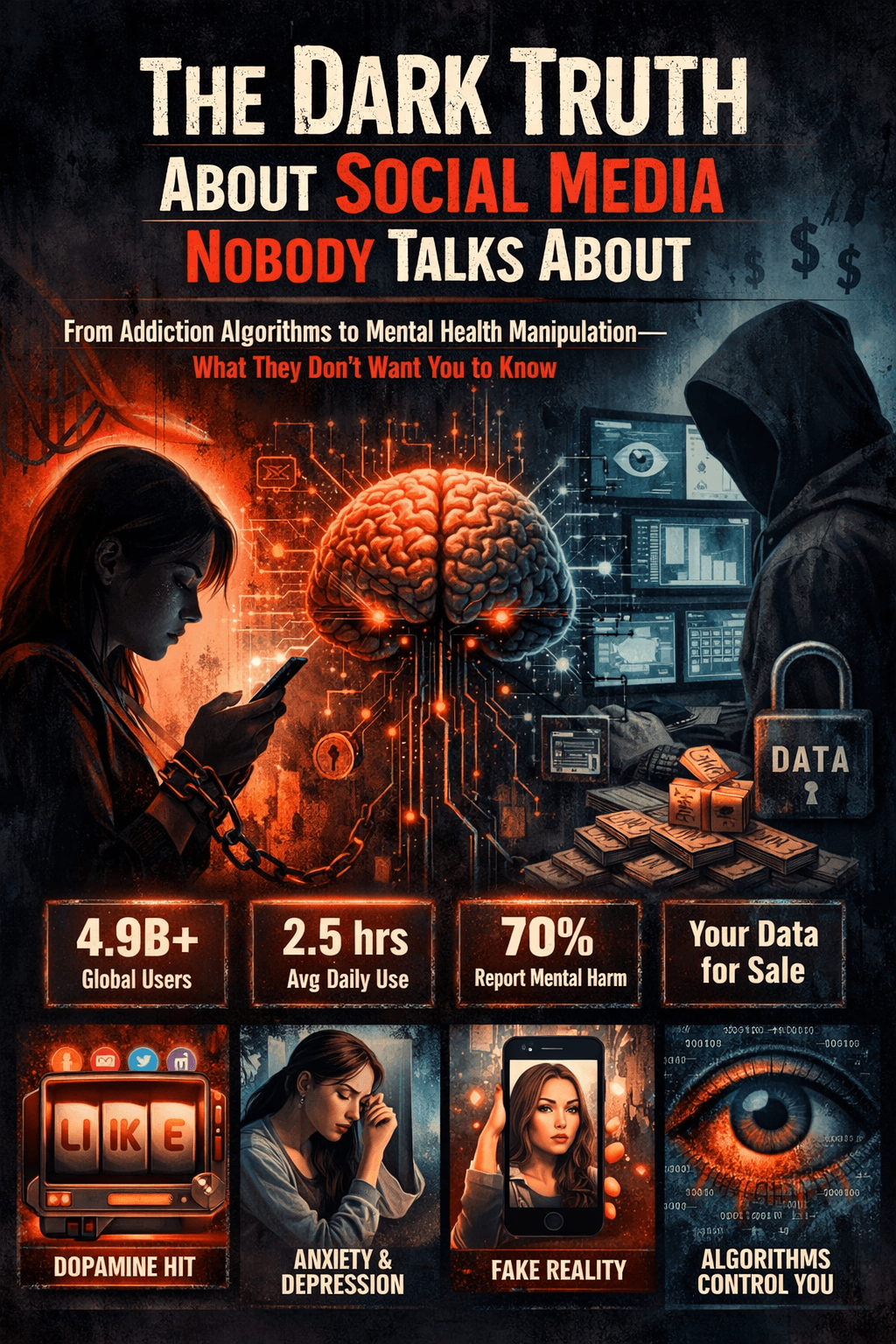
Social media was built to connect people—but today, it operates as a powerful attention economy. Behind every scroll lies a system optimized not for well-being, but for engagement, retention, and profit.
Pro Tip
👉 Reality Check: If you're not paying for the product, you are the product.
1. Addiction by Design
Modern platforms use behavioral psychology principles similar to casinos. According to research in behavioral neuroscience, variable reward systems (likes, comments, notifications) trigger dopamine release—creating habit loops that are hard to break.
How Platforms Hook You
This is deliberate behavioral engineering.
2. Algorithms Control What You See
Your feed is not a reflection of reality—it is a curated algorithmic output. Platforms prioritize content that increases engagement, often amplifying extreme, emotional, or misleading information.
What Algorithms Prioritize:
- ✓Emotionally charged content (anger, fear)
- ✓Controversy and polarization
- ✓Clickbait and sensationalism
- ✓High-retention misinformation
Truth is often secondary to engagement metrics.
3. Mental Health Impact Nobody Talks About
According to organizations like WHO and APA, excessive social media usage is increasingly linked to anxiety, depression, and low self-esteem—especially among teens and young adults.
Hidden Psychological Effects
Over time, this reshapes identity and emotional stability.
4. Your Data Is the Real Product
Social media companies operate on surveillance-based business models. Every action—clicks, pauses, likes—is tracked to build predictive behavioral profiles.
What Platforms Know About You
This data fuels multi-billion-dollar ad ecosystems.
5. Fake Reality & Influencer Illusion
Social media often presents a curated illusion of life. Influencers and creators showcase highlight reels, not reality—creating unrealistic expectations and distorted perceptions of success.
Behind the Scenes:
- ✓Edited and filtered visuals
- ✓Sponsored lifestyles
- ✓Monetized authenticity
- ✓Selective storytelling
What you see is often a performance—not reality.
6. Time Drain & Productivity Loss
Social media is engineered to maximize retention. Micro-distractions accumulate into hours, reducing deep work, focus, and real-world engagement.
7. What You Can Do: Take Back Control
Awareness alone is not enough—intentional action is required. You don't need to quit social media, but you must redesign how you use it.
Advanced Strategies for Digital Control
Control your environment, and you control your behavior.
Conclusion: Awareness Is Power
Social media is not inherently harmful—but its current design prioritizes profit over human well-being. Understanding these systems allows you to shift from passive consumption to conscious control.
🚀 **Take Control Today:** Protect your attention. Curate your feed. Use social media intentionally—not habitually.
Share This Article
📤 Share This