
Introduction: The Science of Supplementation
2026 marks a critical juncture in the supplement industry—a $200 billion+ global market where evidence-based supplementation increasingly differentiates from marketing hype. With 75% of US adults taking supplements, the question is no longer whether supplements are useful, but rather: which supplements have strong evidence, for whom, at what dose, and for what purpose? The paradigm has shifted from blanket supplementation to targeted, personalized approaches based on individual nutrient status, genetics, lifestyle, and specific health goals. The evidence base has matured: vitamin D supplementation reduces infection risk and improves bone health in deficient individuals; omega-3 fatty acids demonstrate cardiovascular and cognitive benefits; creatine supports muscle, brain, and metabolic health beyond athletic performance; magnesium addresses widespread deficiency linked to anxiety, sleep, and cardiovascular disease. Emerging compounds—NAD+ precursors (nicotinamide riboside, NMN), omega-3s, vitamin K2, collagen, and adaptogens—show promise for longevity, cognitive function, and healthy aging, though evidence varies. Simultaneously, the supplement industry faces challenges: lack of regulation, contamination, exaggerated claims, and the reality that for most individuals, food-first approaches should precede supplementation. Whether you're a clinician navigating supplement interactions and evidence, a consumer seeking to optimize health, or a researcher evaluating emerging compounds, this comprehensive guide provides the evidence-based framework for supplementation in 2026.
Pro Tip
👉 Key Insight: The most significant shift in 2026 is the recognition that supplements are not a substitute for a healthy diet, lifestyle, and medical care. The evidence supports targeted supplementation for documented deficiencies, specific conditions, or populations with increased needs—not blanket supplementation for healthy individuals eating a balanced diet. Personalized supplementation based on nutrient status testing (vitamin D, B12, iron, magnesium, omega-3 index) is superior to guesswork.
2. Tier 1: Essential Nutrients with Strong Evidence
These supplements have the strongest evidence base—supported by randomized controlled trials, meta-analyses, and clinical guidelines. They address common deficiencies and have established health benefits.
| Supplement | Key Evidence | Indications | Dose (Typical) | Safety | Population with Strongest Evidence | Evidence Level |
|---|---|---|---|---|---|---|
| Vitamin D3 | Bone health; immune function; infection reduction (respiratory); mood; mortality reduction in deficient | Deficiency (<30 ng/mL); limited sun exposure; darker skin; older adults; malabsorption | 1,000-4,000 IU/day (maintenance); higher for deficiency (5,000-10,000 IU/day then maintenance) | Safe up to 10,000 IU/day; toxicity rare; monitor 25(OH)D | Deficient individuals (50-80% of population) | Strong (VITAL trial; meta-analyses; Endocrine Society guidelines) |
| Omega-3 Fatty Acids (EPA/DHA) | Cardiovascular disease (triglycerides, mortality); inflammation; brain health; depression; eye health | Low fish intake; cardiovascular disease; hypertriglyceridemia; depression; pregnancy | 1-2 g/day EPA+DHA (maintenance); 2-4 g/day for hypertriglyceridemia | Safe; mild GI effects; anticoagulant effect (theoretical; clinically minimal) | Low fish intake (<2 servings/week); CVD; high triglycerides | Strong (REDUCE-IT; meta-analyses; AHA guidelines) |
| Magnesium | Sleep quality; anxiety; blood pressure; blood sugar; muscle cramps; migraine prevention | Magnesium deficiency (50% of US); sleep issues; anxiety; hypertension; migraine; muscle cramps | 200-400 mg/day (elemental); glycinate, citrate, malate forms | Safe; GI upset (citrate > glycinate); caution in renal impairment | Deficient individuals; sleep issues; migraine; anxiety; hypertension | Strong (meta-analyses; migraine guidelines; hypertension guidelines) |
| Creatine Monohydrate | Muscle strength/power; lean mass; cognitive function; neuroprotection; recovery; sarcopenia prevention | Athletes; older adults (sarcopenia); vegetarians/vegans; cognitive decline; neurological conditions | 3-5 g/day (maintenance); 20 g/day x 5-7 days (loading) | Well-studied; safe long-term; mild GI (if loading); weight gain (water) | Athletes; older adults; vegetarians; cognitive decline | Strong (500+ RCTs; International Society of Sports Nutrition position) |
| Protein (Whey, Plant-Based) | Muscle protein synthesis; satiety; weight management; sarcopenia prevention; recovery | Inadequate dietary protein; athletes; older adults; weight loss; vegetarians/vegans | 20-40 g post-exercise; 1.2-2.0 g/kg/day total protein | Safe; whey: lactose sensitivity; plant-based: complete protein combinations | Athletes; older adults; inadequate dietary protein; weight loss | Strong (muscle protein synthesis; sarcopenia; sports nutrition) |
| Vitamin B12 | Energy; cognition; nerve function; red blood cell production; homocysteine reduction | B12 deficiency (10-40% older adults); vegetarians/vegans; malabsorption (PPIs, metformin); older adults | 1,000-2,000 mcg/day (oral) or injections | Safe; water-soluble; no toxicity | Vegetarians/vegans; older adults; metformin/PPI users; deficiency | Strong (deficiency guidelines; vegetarian nutrition) |
| Iron | Energy; cognitive function; exercise performance; hemoglobin | Iron deficiency (20-50% women); anemia; vegetarians/vegans; heavy menstruation; endurance athletes | 18-65 mg/day (elemental) depending on deficiency; ferrous forms | Toxicity risk (overdose); GI upset; constipation; hemochromatosis contraindication | Deficient individuals (ferritin <30 ng/mL); women; vegetarians | Strong (deficiency guidelines; sports nutrition) |
| Zinc | Immune function; wound healing; skin health; taste/smell; infection reduction | Zinc deficiency (15-30%); vegetarians; older adults; wound healing; immune support | 15-30 mg/day (elemental); zinc picolinate, gluconate | Safe; GI upset; copper deficiency with long-term high dose | Deficient individuals; vegetarians; immune support; wound healing | Moderate-strong (immune function; common cold meta-analyses) |
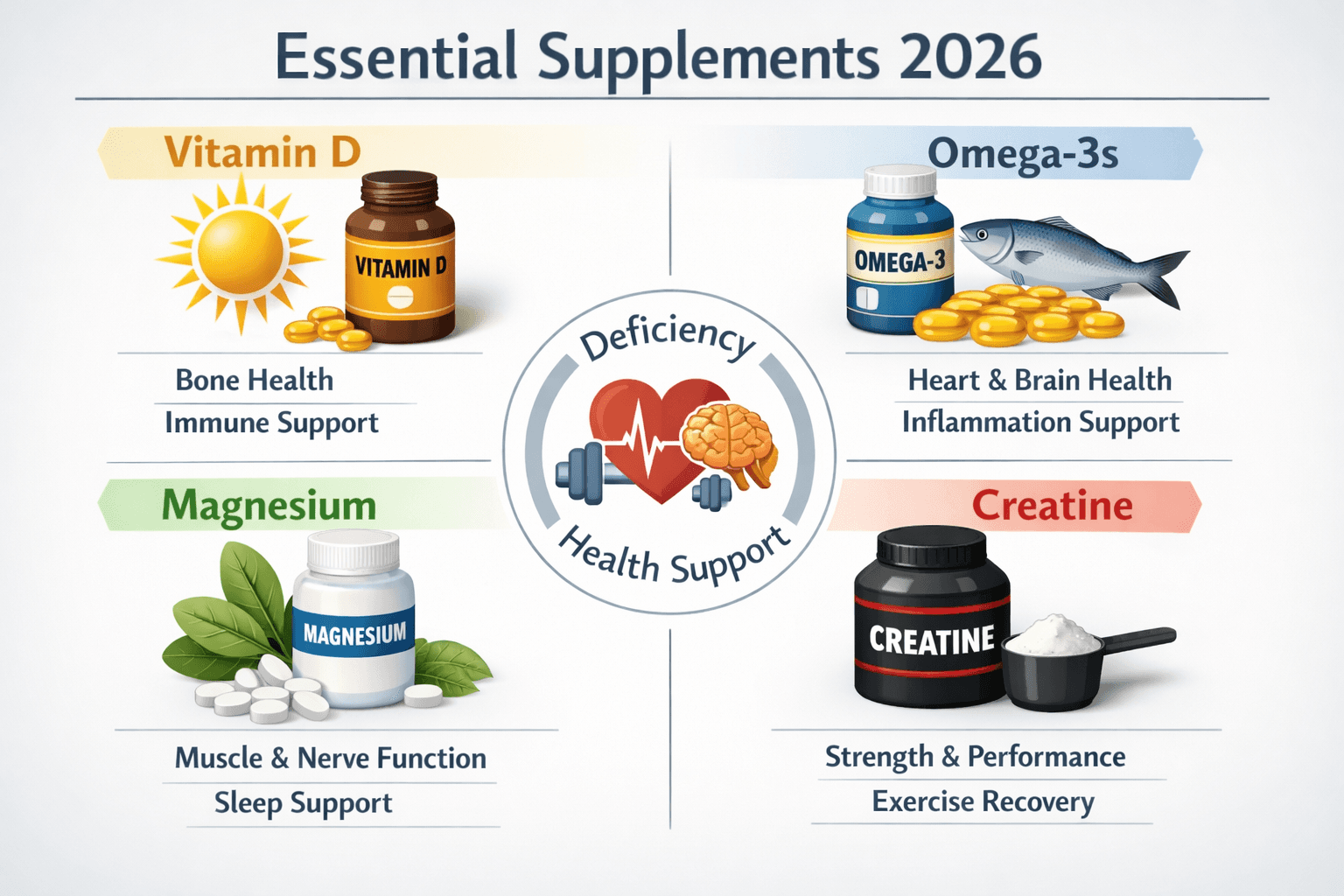
Tier 1 Supplements: Clinical Implementation
50-80% of the population has suboptimal vitamin D levels (<30 ng/mL). Deficiency is associated with increased infection risk, bone loss, depression, cardiovascular disease, and all-cause mortality.
Omega-3s (eicosapentaenoic acid, docosahexaenoic acid) are essential fatty acids with anti-inflammatory, cardioprotective, and neuroprotective effects.
Magnesium is involved in 300+ enzymatic reactions. 50% of US adults consume less than the recommended daily allowance.
Creatine is one of the most studied supplements, with benefits beyond athletic performance.
Protein requirements increase with age, activity level, and certain conditions. Supplementation ensures adequacy.
3. Tier 2: Longevity and Healthy Aging Compounds
Emerging compounds show promise for longevity, cellular health, and healthy aging through mechanisms such as NAD+ boosting, senolytic activity, and mitochondrial support. Evidence is evolving; human trials are ongoing.
| Compound | Mechanism | Proposed Benefits | Evidence Level (2026) | Dose | Safety | Key Considerations |
|---|---|---|---|---|---|---|
| NAD+ Precursors (NMN, NR) | Boost NAD+ (nicotinamide adenine dinucleotide); activates sirtuins; mitochondrial function; DNA repair | Energy; cognitive function; metabolic health; healthy aging; potential lifespan extension | Moderate (human trials ongoing; mixed results) | NMN: 250-500 mg/day; NR: 300-600 mg/day | Generally safe; mild GI; long-term safety data limited | NAD+ declines with age; human translation from animal studies still emerging; NR more studied; NMN currently restricted (FDA) |
| Vitamin K2 (MK-7, MK-4) | Activates matrix Gla-protein (MGP) and osteocalcin; directs calcium to bone, away from arteries | Bone health; cardiovascular health (arterial calcification reduction); dental health | Moderate-strong (Rotterdam Study; observational; RCTs emerging) | 100-200 mcg/day (MK-7) | Safe; vitamin K interactions with anticoagulants (warfarin) | Often combined with vitamin D3; MK-7 (menaquinone-7) > MK-4; food sources: natto, fermented foods |
| Collagen Peptides | Provides amino acids (glycine, proline, hydroxyproline) for collagen synthesis | Skin elasticity; joint health; bone density; muscle recovery; gut health | Moderate (systematic reviews show modest benefits; industry-funded bias concern) | 10-20 g/day | Safe; well-tolerated | Hydrolyzed collagen (peptides) best absorbed; animal-derived; vegan alternatives emerging; food sources: bone broth |
| Berberine | AMPK activator; improves insulin sensitivity; lipid lowering; anti-inflammatory | Blood sugar control; lipid lowering (LDL, triglycerides); weight management; cardiovascular health | Moderate-strong (glucose, lipids; many RCTs) | 500-1,500 mg/day (divided doses) | Safe; GI upset (diarrhea, constipation); drug interactions (CYP450, digoxin) | Natural compound from plants; effects similar to metformin (weaker); contraindicated in pregnancy |
| Resveratrol | Sirtuin activator; antioxidant; anti-inflammatory; cardioprotective | Cardiovascular health; cognitive function; longevity | Mixed (human trials disappointing; animal studies promising) | 150-500 mg/day | Safe; mild GI; limited absorption | Poor bioavailability; trans-resveratrol form; food source: red wine (controversial benefit) |
| Quercetin | Senolytic (with dasatinib); antioxidant; anti-inflammatory; antiviral | Cellular senescence clearance; allergy; immune function; cardiovascular health | Moderate (human senolytic trials ongoing; antioxidant well-established) | 500-1,000 mg/day | Safe; mild GI; kidney concerns (high dose) | Senolytic combination: quercetin + dasatinib (Fisetin also studied); food sources: onions, apples, capers |
| Fisetin | Senolytic; antioxidant; anti-inflammatory | Cellular senescence clearance; cognitive function; healthy aging | Emerging (animal studies promising; human trials ongoing) | 100-500 mg/day (studied) | Generally safe; limited human data | Natural flavonoid; strawberries, apples; senolytic potential; human trials in progress |
| Spermidine | Autophagy inducer; polyamine | Cellular renewal; cardiovascular health; cognitive function; lifespan extension | Moderate (observational; human trials emerging) | 1-5 mg/day (dietary; supplements) | Generally safe; limited human supplement data | Food sources: wheat germ, soybeans, aged cheese; dietary intake associated with reduced mortality |
| Coenzyme Q10 (CoQ10) | Mitochondrial electron transport chain; antioxidant | Energy; cardiovascular health (heart failure); statin side effects (myalgia) | Moderate (heart failure meta-analyses show benefit) | 100-300 mg/day (ubiquinone); 50-200 mg/day (ubiquinol) | Safe; mild GI | Ubiquinol (reduced form) better absorbed; statins deplete CoQ10; heart failure: 2-3 g/day in studies |
| Omega-3s (Tier 1) | See Tier 1—also longevity benefits | Cardiovascular; cognitive; anti-inflammatory; telomere length | Strong | 1-4 g/day | Safe | Omega-3 index >8% optimal; telomere length association |
| Taurine | Osmolyte; antioxidant; mitochondrial function; calcium homeostasis | Cardiovascular health; metabolic health; exercise performance; healthy aging | Moderate (animal studies; human trials emerging) | 1-3 g/day | Safe; well-tolerated | Amino acid; declines with age; food sources: seafood, meat; emerging longevity compound |
Longevity Compounds: Evidence and Implementation
NAD+ (nicotinamide adenine dinucleotide) is a critical coenzyme for energy metabolism, DNA repair, and sirtuin activation. NAD+ levels decline 30-50% with age, contributing to age-related decline.
Vitamin K2 activates matrix Gla-protein (MGP)—which inhibits arterial calcification—and osteocalcin—which incorporates calcium into bone.
Collagen is the most abundant protein in the body, providing structure to skin, bone, tendon, ligament, and cartilage. Endogenous collagen synthesis declines with age.
Berberine is a natural compound (from plants like goldenseal, barberry) that activates AMPK—the master energy sensor—improving insulin sensitivity and lipid metabolism.
Senescent cells ("zombie cells") accumulate with age, secreting inflammatory factors that drive age-related disease. Senolytics selectively clear these cells.
4. Tier 3: Targeted Supplements for Specific Conditions
These supplements have evidence for specific indications but are not generally recommended for healthy individuals without the targeted condition. They should be used under clinical supervision.
| Supplement | Indication | Evidence Level | Dose | Duration | Safety | Clinical Considerations |
|---|---|---|---|---|---|---|
| Probiotics | Antibiotic-associated diarrhea; IBS; C. diff prevention; ulcerative colitis; eczema (pediatric) | Strong (specific strains for specific indications) | Strain-specific; 1-100 billion CFU/day | 2-12 weeks (acute); ongoing (chronic) | Generally safe; theoretical risk in immunocompromised | Strain matters: L. rhamnosus GG (AAD); B. infantis (IBS); S. boulardii (C. diff) |
| Melatonin | Delayed sleep phase; jet lag; shift work; insomnia (limited efficacy) | Moderate (circadian disorders strong; insomnia weak) | 0.5-5 mg (low dose for phase shift) | Short-term; intermittent | Safe; morning drowsiness; vivid dreams; drug interactions | Not for chronic insomnia (CBT-I superior); low dose (0.5-1 mg) often sufficient |
| Curcumin (Turmeric) | Osteoarthritis; inflammatory conditions; metabolic syndrome | Moderate (osteoarthritis; bioavailability limitations) | 500-1,500 mg/day (with piperine for absorption) | 8-12 weeks (acute); ongoing (chronic) | Safe; GI upset; theoretical bleeding risk | Bioavailability: piperine (black pepper) increases absorption 2,000%; formulations with enhanced bioavailability |
| Folate (MTHFR variants) | MTHFR C677T polymorphism; pregnancy; neural tube defect prevention | Strong (pregnancy; MTHFR-specific evidence mixed) | 400-1,000 mcg/day (methylfolate for MTHFR) | Ongoing (pregnancy); as indicated | Safe; water-soluble | MTHFR variants: methylfolate > folic acid; test MTHFR genotype |
| Ashwagandha | Stress; anxiety; sleep; athletic performance; testosterone | Moderate (stress, anxiety; studies often small, short-term) | 300-600 mg/day (root extract); 300-500 mg/day (withanolides) | 8-12 weeks | Generally safe; GI upset; thyroid effects (caution in hyperthyroidism) | Adaptogen; standardized to withanolides (5-10%); effects modest |
| Rhodiola Rosea | Fatigue; stress; cognitive function; athletic performance | Moderate (fatigue, stress; short-term studies) | 200-600 mg/day (3% rosavins, 1% salidroside) | 4-12 weeks; cycling | Safe; mild stimulation; insomnia (late dosing) | Adaptogen; acute fatigue, burnout; cycling recommended |
| NAC (N-Acetylcysteine) | Mucolytic; glutathione precursor; OCD; addiction; psychiatric conditions | Moderate (OCD; psychiatric adjunct; respiratory) | 600-1,200 mg/day (divided) | As indicated | Safe; GI upset; rare kidney stones | Glutathione precursor; mucolytic; emerging for psychiatric (OCD, trichotillomania, addiction) |
| L-Theanine | Anxiety; sleep quality; relaxation without sedation; cognitive focus | Moderate (anxiety, sleep; modest effects) | 100-400 mg/day | As needed; ongoing | Safe; well-tolerated | Amino acid in green tea; often combined with caffeine for focus; promotes alpha brain waves |
| SAMe (S-Adenosylmethionine) | Depression; osteoarthritis; liver disease | Moderate (depression; cost, GI side effects limit use) | 400-1,600 mg/day (divided) | 2-12 weeks | Generally safe; GI upset; mania risk (bipolar); drug interactions | Methyl donor; antidepressant effect comparable to SSRIs (older studies); expensive |
| Glucosamine/Chondroitin | Osteoarthritis; joint health | Mixed (modest benefit; large RCTs negative) | 1,500 mg glucosamine + 1,200 mg chondroitin/day | Ongoing | Safe; mild GI; shellfish allergy (glucosamine) | GAIT trial: modest benefit in moderate-severe OA; effect size small; glucosamine sulfate > hydrochloride |
Targeted Supplements: Clinical Guidance
Probiotics are live microorganisms with health benefits—but effects are strain-specific, not generic.
Melatonin is often misused for chronic insomnia—where CBT-I is superior—but is effective for circadian rhythm disorders.
Curcumin (from turmeric) has anti-inflammatory effects but poor bioavailability limits efficacy.
Ashwagandha is an adaptogenic herb with modest evidence for stress, anxiety, and sleep.
NAC replenishes glutathione (the body's master antioxidant) and has mucolytic and psychiatric applications.
5. Supplements to Avoid or Use with Caution
Many supplements lack evidence, carry risks, or are marketed with exaggerated claims. Some have established harms and should be avoided.
| Supplement | Claimed Benefits | Evidence Reality | Safety Concerns | Recommendation | Regulatory Status |
|---|---|---|---|---|---|
| Multivitamins (General) | Fill nutrient gaps; prevent disease; improve health | No benefit for cardiovascular disease, cancer, cognitive decline, or mortality in well-nourished populations (USPSTF Grade D) | Generally safe; risk of excessive intake (vitamin A, iron, etc.) | Not recommended for well-nourished individuals; targeted supplementation better | Well-regulated; widely used |
| Green Tea Extract (High Dose) | Weight loss; antioxidant; cancer prevention | Modest weight loss (0.5-2 kg); hepatotoxicity risk | Liver injury (rare but serious); high EGCG doses (≥800 mg/day) | Avoid high-dose extracts; moderate consumption of green tea safe | FDA warning letters for hepatotoxicity |
| Red Yeast Rice | LDL cholesterol reduction | Contains monacolin K (natural lovastatin); effect comparable to low-dose statin | Same risks as statins (myopathy, hepatotoxicity); variable potency, contamination | Standardized statins preferred (dose control, safety monitoring) | FDA enforcement; some products removed |
| St. John's Wort | Depression | Modest efficacy for mild depression; comparable to SSRIs (older studies) | Major drug interactions (CYP3A4, P-gp); reduces efficacy of oral contraceptives, anticoagulants, immunosuppressants, antiretrovirals, etc. | Avoid with prescription medications; not recommended | OTC; significant interactions |
| Kava Kava | Anxiety | Modest anxiolytic effects | Hepatotoxicity (rare but severe; liver failure, transplant) | Avoid; risk outweighs benefit | Banned in some countries |
| Colon Cleanses/Detox | Toxin removal; weight loss; energy | No evidence; colon cleansing can cause electrolyte imbalance, perforation | Serious adverse events (electrolyte disturbances, perforation, kidney injury) | Avoid; body has natural detoxification systems | Unregulated; aggressive marketing |
| High-Dose Antioxidants (Vitamins A, C, E, beta-carotene) | Cancer prevention; antioxidant protection | No benefit; beta-carotene increases lung cancer risk in smokers; high-dose vitamin E increases mortality | Increased cancer risk; increased mortality | Avoid high-dose supplements; obtain from diet | Well-regulated but high-potency products available |
| Testosterone Boosters | Increase testosterone; muscle gain; libido | No evidence for most products; may contain undeclared steroids | Hepatotoxicity, cardiovascular risk, hormonal disruption | Avoid; DHEA, testosterone requiring prescription | FTC enforcement for deceptive marketing |
| Weight Loss Supplements | Weight loss; fat burning | No evidence for most; some contain banned stimulants (ephedra, DMAA) | Cardiovascular events, stroke, death; adulteration common | Avoid; lifestyle interventions (diet, exercise) only proven safe, effective approach | FDA enforcement; adulterated products persist |
| Colloidal Silver | Immune support; infection | No evidence; no known physiological role | Argyria (permanent blue-gray skin discoloration); kidney injury | Avoid; no benefit, documented harm | FDA warning |
Supplements to Avoid: Evidence and Safety
Despite widespread use (50% of US adults), multivitamins have not demonstrated benefit for cardiovascular disease, cancer, cognitive decline, or mortality in well-nourished populations.
High-dose antioxidant supplements have failed to demonstrate benefit and, in some cases, cause harm.
The weight loss supplement market is rife with unproven claims, adulteration, and dangerous ingredients.
6. Supplement Quality, Safety, and Regulation
The supplement industry operates under different regulations than pharmaceuticals. Quality, purity, and potency vary widely. Understanding how to select quality supplements is essential for safety and efficacy.
| Quality Indicator | What It Means | What to Look For | Examples | Limitations |
|---|---|---|---|---|
| Third-Party Testing | Independent lab verifies ingredients, potency, purity, absence of contaminants | USP, NSF International, ConsumerLab.com seal | USP Verified; NSF Certified for Sport; ConsumerLab.com Approved | Voluntary; not all products tested; adds cost |
| GMP (Good Manufacturing Practices) | Manufacturer follows FDA GMP regulations (21 CFR 111) | GMP-certified facility (NSF, USP, or FDA inspection) | NSF GMP; USP GMP; FDA-registered facility | Does not guarantee product efficacy; quality control varies |
| Contaminant Testing | Screens for heavy metals (lead, mercury, arsenic), pesticides, microbes | Certificate of Analysis (CoA) available; third-party tested | Products with USP/NSF seal; reputable brands with CoA | Many brands do not test; CoA may not be third-party |
| Form/Bioavailability | Formulation affects absorption, utilization | Specific forms: magnesium glycinate (absorption), methylfolate (MTHFR), fish oil triglycerides | Liposomal, phytosome, micronized, etc. | Enhanced formulations often more expensive; evidence varies |
| Dose Accuracy | Labeled dose matches actual content | Third-party testing verifies; reputable brands | USP Verified; brands with quality reputation | Many products fail potency testing; ConsumerLab.com reports |
| Source/Origin | Ingredient source affects purity, sustainability | Wild-harvested vs. cultivated; country of origin; sustainable sourcing | Marine Stewardship Council (fish oil); organic; non-GMO | May impact cost, environmental impact; clinical significance varies |
Supplement Quality: Clinical Guidance
The Dietary Supplement Health and Education Act (DSHEA, 1994) regulates supplements as foods, not drugs. Manufacturers are responsible for safety and labeling; FDA has limited pre-market authority.
1. Look for third-party seals: USP, NSF, ConsumerLab.com (if available)
2. Check Certificate of Analysis (CoA): Available on manufacturer website; verify third-party testing
3. Choose reputable brands: Established reputation, transparency about sourcing, testing
4. Avoid proprietary blends: Cannot verify individual ingredient doses
5. Check for unnecessary additives: Fillers, artificial colors, preservatives
6. Consider form: Well-absorbed forms (magnesium glycinate > oxide; methylfolate > folic acid for MTHFR)
7. Review expiration date: Potency declines over time
7. Personalized Supplementation: Testing and Individualization
Personalized supplementation based on nutrient status testing is superior to guesswork. Testing identifies deficiencies, guides dosing, and monitors response.
| Test | Markers | What It Identifies | Optimal Range | Frequency | Intervention |
|---|---|---|---|---|---|
| Vitamin D (25(OH)D) | 25-hydroxyvitamin D | Vitamin D deficiency/insufficiency | 30-60 ng/mL (optimal); <20 deficiency; 20-30 insufficiency | Annually; after supplementation (3 months) | 1,000-4,000 IU/day maintenance; higher for deficiency; re-test 3 months |
| Omega-3 Index | Red blood cell EPA+DHA | Omega-3 status | >8% optimal; 4-8% moderate; <4% deficiency | Annually; after supplementation (3-6 months) | 1-4 g/day EPA+DHA; re-test 3-6 months |
| Magnesium | RBC magnesium (serum less accurate) | Magnesium status | 4.2-6.8 mg/dL (RBC) | As indicated; deficiency common | 200-400 mg/day elemental; re-test 3 months |
| Vitamin B12 | Serum B12; methylmalonic acid (MMA) | B12 deficiency | >500 pg/mL; MMA <0.27 µmol/L | Annually (older adults; vegetarians) | 1,000-2,000 mcg/day oral; re-test 3 months |
| Ferritin | Ferritin (iron stores) | Iron deficiency (ferritin <30 ng/mL); overload | 30-200 ng/mL (women); 50-300 ng/mL (men) | Annually (women; vegetarians) | 18-65 mg/day elemental if deficient; re-test 3 months |
| Zinc | Plasma zinc | Zinc deficiency | 70-120 mcg/dL | As indicated | 15-30 mg/day elemental; re-test 3 months |
| Homocysteine | Plasma homocysteine | B vitamin status (B12, folate, B6) | <10 µmol/L optimal | As indicated (CVD risk; cognitive decline) | Methylfolate, B12, B6; re-test 3 months |
| Comprehensive Nutrient Panel | Multiple vitamins, minerals, antioxidants | Multiple deficiencies | Reference ranges vary | Annually (high-risk individuals) | Targeted supplementation; re-test 3-6 months |
| Genetic Testing (MTHFR, etc.) | MTHFR, VDR, etc. | Genetic variants affecting nutrient metabolism | Variant vs. wild-type | Once | Methylfolate for MTHFR; vitamin D for VDR variants |
Personalized Supplementation: Testing-Guided Approach
Testing identifies deficiencies, guides dosing, and monitors response. Guesswork leads to wasted money, missed deficiencies, and potential harm.
Beyond deficiency, supplement selection based on specific health goals:
8. Supplement Interactions and Safety
Supplements can interact with medications, have adverse effects, and may be contraindicated in certain conditions. Clinical supervision is essential for individuals taking prescription medications or with underlying health conditions.
| Supplement | Common Drug Interactions | Adverse Effects | Contraindications | Clinical Management |
|---|---|---|---|---|
| Vitamin K | Anticoagulants (warfarin)—reduces efficacy | Generally safe | Warfarin therapy | Avoid vitamin K supplements; consistent dietary intake; monitor INR |
| St. John's Wort | CYP3A4, P-gp inducer—reduces efficacy of oral contraceptives, anticoagulants, immunosuppressants, antiretrovirals, statins, etc. | Photosensitivity, GI upset | Pregnancy, lactation; concomitant medications | Avoid entirely if taking prescription medications |
| Magnesium | Antibiotics (tetracyclines, quinolones)—reduced absorption; diuretics—hypomagnesemia; bisphosphonates—reduced absorption | Diarrhea (citrate > glycinate); hypotension (high dose) | Renal impairment (dose adjustment) | Separate magnesium from antibiotics/bisphosphonates by 2-4 hours; monitor renal function |
| Iron | Levothyroxine—reduced absorption; antibiotics—reduced absorption; PPIs—reduced absorption | Constipation, nausea; iron overload (hemochromatosis) | Hemochromatosis; thalassemia; frequent transfusions | Separate from levothyroxine, antibiotics by 2-4 hours; monitor ferritin |
| Calcium | Levothyroxine—reduced absorption; bisphosphonates—reduced absorption; antibiotics—reduced absorption | Constipation; kidney stones (high dose) | Hypercalcemia; kidney stones (history) | Separate from levothyroxine, bisphosphonates, antibiotics by 2-4 hours; maintain hydration |
| Fish Oil (Omega-3) | Anticoagulants, antiplatelets—theoretical increased bleeding risk (clinical significance minimal) | Fishy aftertaste; GI upset | Fish allergy | Monitor INR if on warfarin (minimal effect); discontinue pre-surgery (controversial) |
| Berberine | CYP450 substrates (statins, calcium channel blockers, digoxin, etc.) | Diarrhea, constipation, bloating | Pregnancy (uterine stimulation) | Monitor drug levels; separate by 2-4 hours; avoid in pregnancy |
| Creatine | Nephrotoxic drugs—theoretical risk (limited evidence) | Weight gain (water); GI upset (loading) | Renal impairment | Avoid in renal impairment; monitor creatinine |
| Zinc | Antibiotics—reduced absorption; penicillamine—reduced absorption | GI upset; copper deficiency (high dose, long-term) | Wilson's disease (copper chelation) | Separate from antibiotics by 2-4 hours; supplement copper if high-dose long-term |
| Melatonin | Anticoagulants—theoretical increased bleeding risk; immunosuppressants—theoretical interaction; CNS depressants—additive sedation | Morning drowsiness; vivid dreams; headache | Autoimmune conditions (caution) | Low dose; monitor for excessive sedation |
Supplement Safety: Clinical Guidance
| Medication Class | Supplements to Avoid/Monitor |
|------------------|------------------------------|
| Anticoagulants (warfarin) | Vitamin K, high-dose vitamin E, fish oil (monitor INR), St. John's Wort |
| Antidepressants (SSRIs) | St. John's Wort (serotonin syndrome risk), 5-HTP, tryptophan |
| Oral contraceptives | St. John's Wort (reduces efficacy) |
| Immunosuppressants | St. John's Wort, high-dose antioxidants |
| Chemotherapy | High-dose antioxidants (may interfere), St. John's Wort |
| Thyroid hormone (levothyroxine) | Calcium, iron, magnesium (separate by 4 hours) |
| Antibiotics | Calcium, magnesium, iron, zinc (separate by 2-4 hours) |
| Diuretics | Potassium (with potassium-sparing diuretics), magnesium (with loop diuretics) |
9. Challenges and Considerations
Despite the growing evidence base, challenges remain for supplement use—from lack of regulation and quality variability to misinformation and overuse.
Persistent Challenges in 2026:
Lack of Regulation:
- ✓DSHEA (1994): Supplements regulated as foods, not drugs; no FDA pre-market approval for safety or efficacy
- ✓Adulteration: 10-20% of supplements contain undeclared pharmaceutical ingredients (ConsumerLab.com, FDA)
- ✓Contamination: Heavy metals, pesticides, microbes in poorly manufactured products
- ✓Potency variability: 30-50% of supplements fail potency testing (ConsumerLab.com)
Misinformation and Marketing:
- ✓Exaggerated claims: "Cures," "miracle," "revolutionary"—despite no evidence
- ✓Influencer marketing: Social media influencers promoting unproven products
- ✓Confirmation bias: Consumers seeking evidence supporting pre-existing beliefs
- ✓Sensationalized media: Individual studies reported as "breakthroughs" without context
Food-First vs. Supplement-First:
- ✓Nutrient synergy: Whole foods provide synergistic compounds (fiber, phytochemicals) not present in isolated supplements
- ✓Food matrix: Nutrients from food are better absorbed and utilized
- ✓Cost: Supplements cost $30-200/month; whole foods may be more cost-effective
- ✓Over-reliance: Supplements cannot compensate for poor diet
Evidence Gaps:
- ✓Long-term safety: Most supplements lack long-term safety data (>5-10 years)
- ✓Hard outcomes: Many studies use surrogate markers (blood levels), not clinical outcomes (mortality, disease)
- ✓Population vs. individual: Group-level benefits may not apply to individuals
- ✓Comparative effectiveness: Few head-to-head trials of supplements vs. pharmaceuticals or lifestyle
Cost and Access:
- ✓Financial burden: Supplement costs add up ($30-200/month)
- ✓Insurance coverage: Rarely covered; out-of-pocket
- ✓Health disparities: Lower access to quality supplements in disadvantaged populations
- ✓Testing costs: Nutrient testing ($100-300) often not covered
Overuse and Polypharmacy:
- ✓Supplement stacking: 10+ supplements common; interactions unknown
- ✓"More is better" fallacy: Higher doses not better; potential harm
- ✓Duplication: Multiple supplements with overlapping ingredients
- ✓Medicalization: Normal nutrient status pathologized
Special Populations:
- ✓Children: Limited safety data; higher vulnerability
- ✓Pregnancy: Teratogenicity risk; limited safety data
- ✓Older adults: Polypharmacy; medication interactions; renal/hepatic impairment
- ✓Chronic disease: Interactions; contraindications
Ethical and Environmental:
- ✓Sustainability: Overharvesting of wild plants (e.g., saw palmetto, echinacea)
- ✓Marine sources: Fish oil sustainability (overfishing); algal oil alternative
- ✓Packaging waste: Plastic bottles; single-use packaging
- ✓Animal testing: Some supplement testing involves animals
Future Directions:
- ✓Regulatory reform: Calls for FDA pre-market review; improved enforcement
- ✓Third-party testing: Consumer demand driving quality
- ✓Personalized supplementation: Testing-guided; AI-driven recommendations
- ✓Evidence standards: Higher bar for marketing claims
- ✓Sustainability: Eco-friendly sourcing, packaging
10. Future Outlook: 2027-2030
The next five years will bring continued evolution in supplementation—from personalization and quality assurance to novel compounds and regulatory reform.
The Future of Supplements
Conclusion: Evidence-Based Supplementation
2026 marks a maturation of supplement science—moving from blanket, guesswork supplementation to targeted, evidence-based, personalized approaches. The evidence is clear: certain supplements—vitamin D, omega-3s, magnesium, creatine—have strong support for addressing common deficiencies and supporting specific health outcomes. Emerging compounds—NAD+ precursors, vitamin K2, berberine—show promise for longevity and metabolic health, though evidence continues to evolve. However, the supplement industry faces persistent challenges: lack of regulation, quality variability, misinformation, and the reality that for most individuals, a nutrient-dense whole foods diet should precede supplementation. The future (2027-2030) promises personalized, testing-driven supplementation; third-party quality assurance as standard; novel compounds with human evidence; and integration into clinical care. For individuals, the approach should be: test nutrient status (vitamin D, omega-3 index, magnesium, B12, ferritin) to identify deficiencies; choose quality supplements (third-party tested); prioritize food first; and avoid unnecessary supplements. For clinicians, supplement reconciliation should be routine; evidence-based guidelines should guide recommendations; and patients should be counseled on quality, safety, and interactions. For healthcare systems, supplement management is part of comprehensive care—addressing nutrient deficiencies, preventing adverse events, and optimizing outcomes. Supplements are powerful tools when used appropriately—but they are not a substitute for a healthy diet, lifestyle, and medical care. In 2026, we have the science, testing, and quality assurance to make supplementation safe, effective, and personalized.
📘 **Download the Complete Supplement Guide 2026** — Detailed protocols, testing recommendations, quality assessment, safety considerations, and investment analysis for the $200B+ supplement market.
Share This Article
📤 Share This